
Citronella
Cymbopogon nardus (L.) Rendle
Poaceae
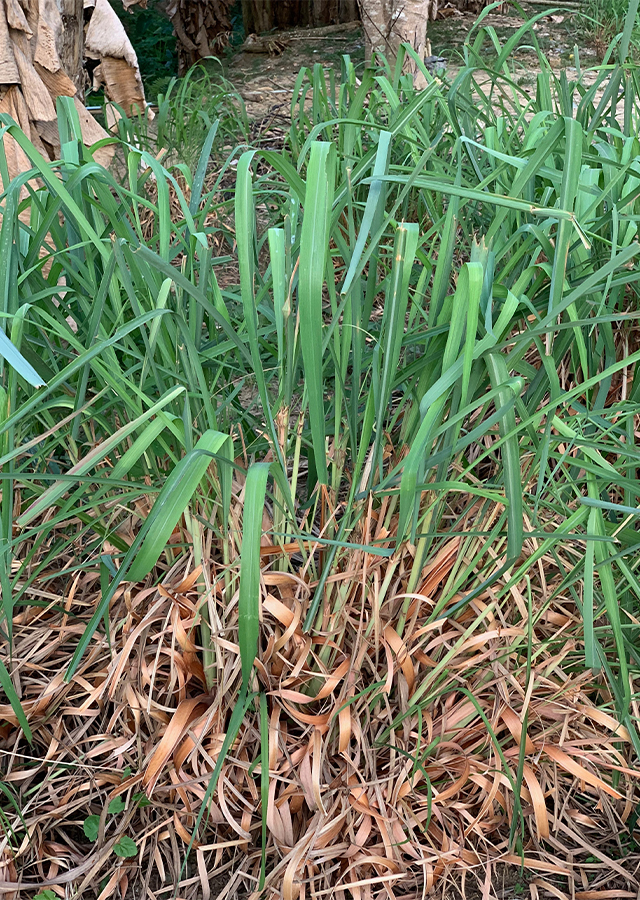
Location in our garden
Principal


Synonym
Andropogon citrosus Steud.
Andropogon confertiflorus Steud.
Andropogon grandis Nees ex Steud.
Habitus

Herbaceous. An aromatic, evergreen, clump-forming perennial grass growing up to 2.5 meters tall from a stout rootstock
Part Used
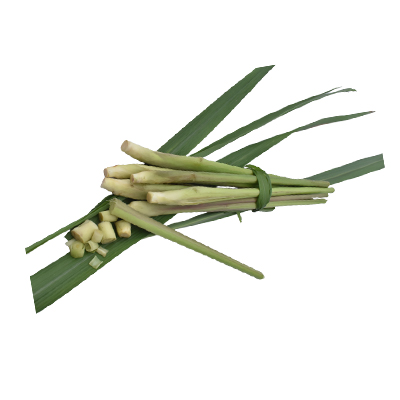
 Leaves
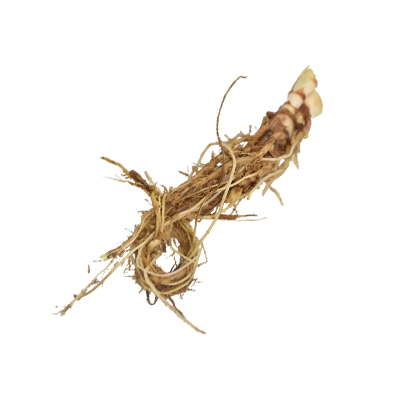
 Roots
Roots Stem
Stem
Growing Requirements
 Full Sunshine
 Drought Resistant
Habitat
 Shrublands
 Grassland
Overview
C. nardus is native to Southeast Asia and is commercially grown in Sri Lanka, Indonesia, India, Myanmar, and Java. It is commonly naturalized and cultivated as ornamental in South Florida and southern California in tropical Asia. The range and population of other pasture species in the grasslands can be affected. The plant is often grown for its essential oil, used as a food flavoring in tropical areas.
Vernacular Names
Citronelle (French), Java Citronellgras (German), Ya xiang mao (Chinese), Ta khrai hom (Thai), Lenabatu citronella (Sri Lanka), Cu sa (Vietnam), Naid grass (India).
Agroecology
Citronella can grow in the hot lowland tropics and can be found up to 1,500 m. It grows best in areas where annual daytime temperatures are within the 20-30 ° C range but can withstand 16-36 ° C. In full sun, it prefers moisture-retentive soil. A pH in the 4.5-6 range is favored, tolerating 4-8. It prefers average annual precipitation ranging from 1,300 to 2,000 mm but tolerates 750 to 4,100 mm.
Morphology
- Roots - shallowly rooted rhizome.
- Culms - robust, tufted, up to 3 m long
- Spikelets - in pairs, Fertile spikelets sessile; 1 in the cluster. Companion sterile spikelets pedicelled; 1 in the cluster.
- Leaf sheaths - drooping; flat; 20–60 cm long; 3– 15 mm wide; aromatic. Leaf-blade surface smooth, or scaberulous.
- Spathate - compound panicle large, lax, up to 50 cm.
Cultivation
- By seeds - At the 3 - 4 leaf level, prick the seedlings out into individual pots and expand on until large enough to plant out.
- Vegetatively by separating existing clumps
Chemical Constituents
Geraniol, citronellal, citronellol, nerol, elemol, citral, geranyl acetate and linalool.
Traditional Medicinal Uses
- Studies have shown antioxidant, anti-free radicals, anti-inflammatory, analgesic and antimicrobial properties.
- The study looked at the behavior of Cymbopogon nardus essential oil against S. aureus E. coli and P. aeruginosa.
- Practitioners say that citronella oil is a stimulant when inhaled or rubbed on the skin.
- In China, leaves are used for rheumatism, fever, intestinal parasites, digestive and menstrual problems.
Part Used
Reference Sources
Abena, A. A., Gbenou, J. D., Yayi, E., Moudachirou, M., Ongoka, R. P., Ouamba, J. M., and Silou, T. 2007. Comparative chemical and analgesic properties of essential oils of Cymbopogon nardus (L) Rendle of Benin and Congo. African journal of traditional, complementary, and alternative medicines: AJTCAM, 4(3), 267–272.
Bayala, B., Coulibaly, AY., Djigma, F.W., Nagalo, B.M., Baron, B., Figueredo, G., Lobaccaro, J.M.A., and Simpore, J. 2020. Chemical composition, antioxidant, anti-inflammatory and antiproliferative activities of the essential oil of Cymbopogon nardus, a plant used in traditional medicine. BioMol Concepts, 11: 86–96.
Royal Botanic Gardens. 2021. Cymbopogon nardus (L.) Rendle. https://powo.science.kew.org/taxon/urn:lsid:ipni.org:names:396972-1. (Accessed on 17-12-2021)
Saputra, N.A., Wibisono, H.S., Darmawan, S., and Pari, G. 2020. Chemical composition of Cymbopogon nardus essential oil and its broad-spectrum benefit. IOP Conf. Series: Earth and Environmental Science 415: 012017.