
Beach Morning Glory
Ipomoea pes-caprae (L.) R.Br.
Convolvulaceae
Location in our garden
Aquatic
Synonym
Batatas maritima (R.Br.) Bojer
Convolvulus bauhiniifolius Salisb.
Convolvulus biglandulosus Stokes
Habitus

Climbers. Creeping, evergreen, glabrous vine, stems prostrate, sometimes twining, perennial plant with 5-30 m long.
Part Used
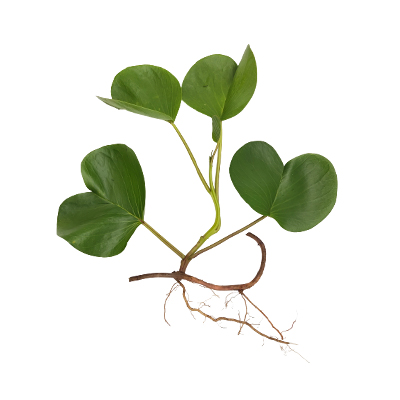
 Leaves
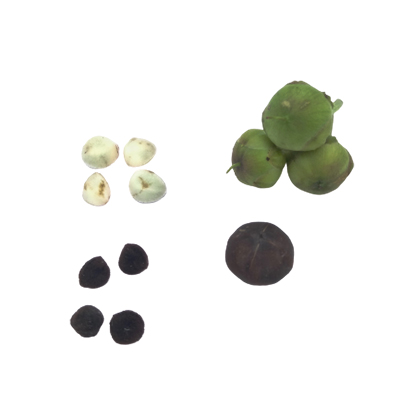
 Seeds
Seeds Roots
Roots
Growing Requirements
 Full Sunshine
 Drought Resistant
Habitat
 Coastal
 Roadside
Overview
This plant is found everywhere on tropical shores, including all over South-East Asia. The plant is widely used in traditional medicine and is mostly harvested from the wild, providing a valuable source of fiber and emergency food as well.
Vernacular Names
Ma an teng (Chinese), Geissfuss (German), Adambu (India), Gunbaihirugao (Japanese), Bagasua (Tagalog-Philippines), Tapak kuda (Malaysia), Pinlakazum (Burmese), Trakuon kantek (Cambodia), Phak bung thale (Thailand), Rau muống biển (Vietnam), Katang-katang (Indonesia).
Agroecology
I. pes-caprae occurs just behind the flood-line on beaches often colonizing these completely. It also occurs inland, along roadsides and ditches, and up to 800 m altitude. This plant is cultivated along windswept beaches as its deep tap-roots have the ability to bind sand. At the highest water mark, this creeper plant is often seen growing wild on sandy beaches.
Morphology
- Stem - the long stoloniferous stems are relatively strong.
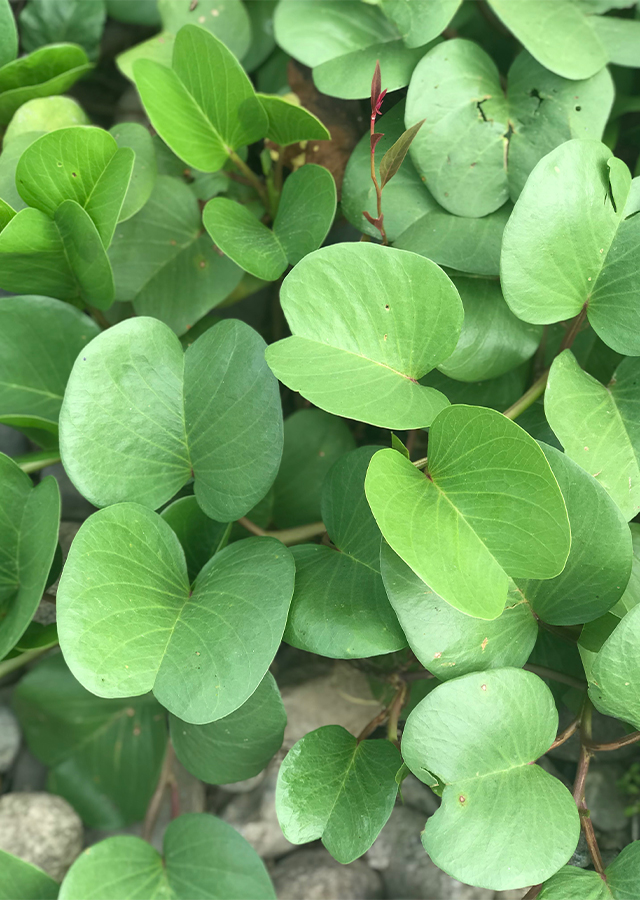
- Leaves - Alternate, orbicular to elliptical, thick, shiny, 6 to 14 cm long, with tip and wide base notched or lobed.
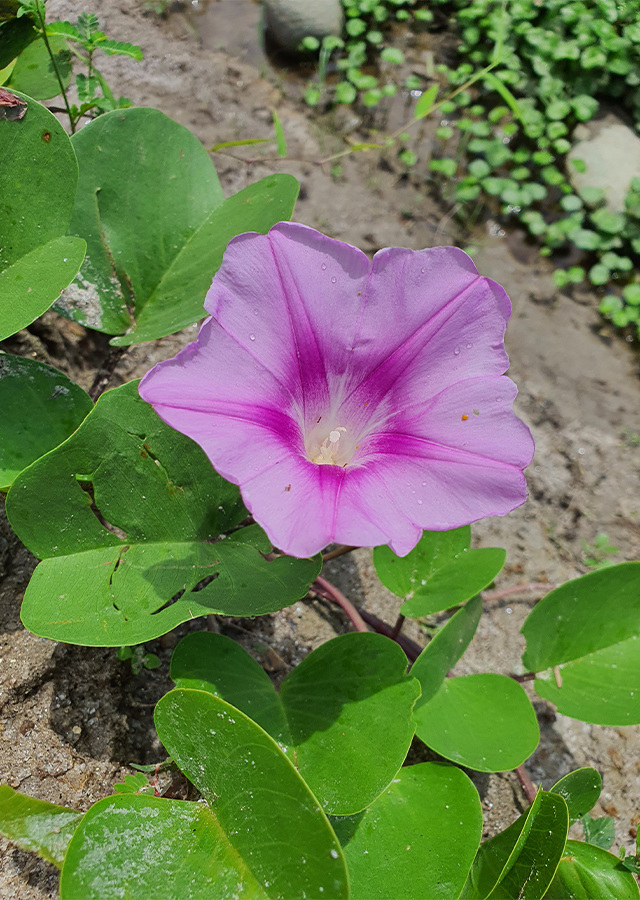
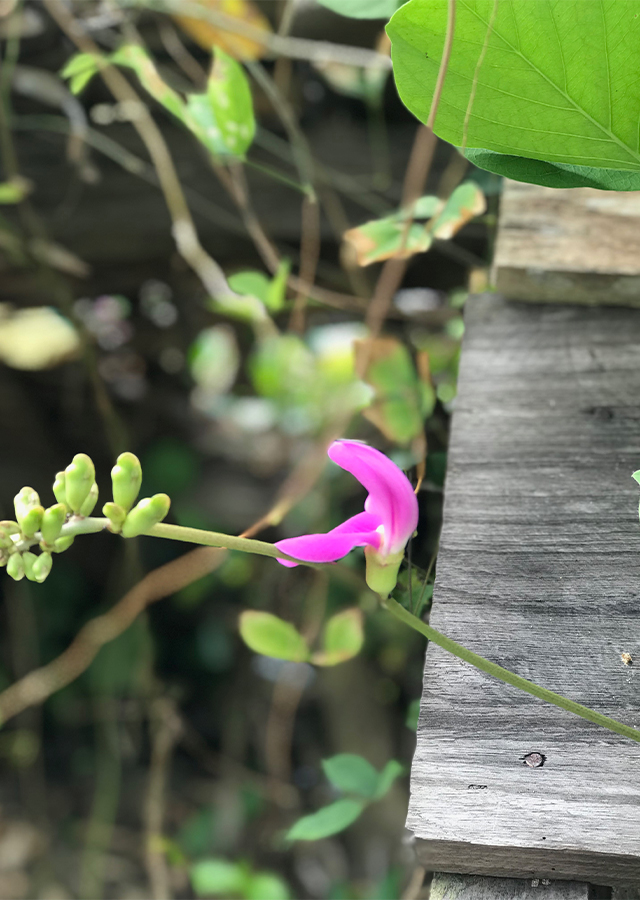
- Flowers - The stalk is erect and has one to six flowers, often opening one at a time; the sepals are green, elliptical and 8 mm long; the corolla is purple, bell-shaped and 5 cm long.
- Fruits - ripens to a small (about 1 cm), capsules are smooth, ovoid.
- Seed - four black, densely hairy seeds. The seeds float and are resistant to salt water.
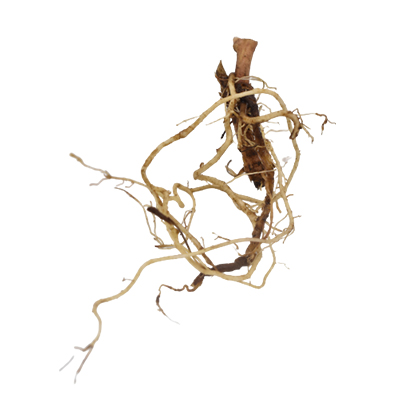
- Roots - a creeper that taking root at the nodes and having thick, deep tap roots.
Cultivation
By seed generative propagation. A dry capsule that bursts and is dispersed by the sea to release seeds. The plant is often cultivated, especially near the coast, making it an excellent ornamental soil cover and soil stabilizer.
Chemical Constituents
Steroids, alkaloids, terpenoids, flavonoids, saponins, phenol, sterols, tannins.
Traditional Medicinal Uses
- In Brazil, it is used as an analgesic for inflammation and gastrointestinal disorders.
- The research examined the in vivo ability of Ipomoea pes-caprae to treat melanoma cancer as an antitumor.
- A research evaluating Ipomoea pes-caprae's vitro antioxidant activity showed free radical scavenging effects that increased with concentration.
- Three times greater than Calophyllum brasiliense, I. pes-caprae showed immunostimulatory activity.
- There is a diuretic and purgative starchy root. The boiled root is used in bladder diseases to provide relief.
- The leaves help to be alterative, anodyne, astringent, diuretic, laxative, emollient and tonic.
- Leaves are boiled in India and applied externally as an anodyne for colic; as a rheumatism decoction.
- In Australia, headache remedies are traditionally used.
- When chewed, the seed is a good cure for stomach pain and cramping.
- In order to hasten the birth, a few young leaf buds are often eaten by women in labor.
Part Used
Reference Sources
- Dibiyantoro, A.L.H and Schmelzer, G.H. 2016. Ipomoea pes-caprae (L.) R.Br. in Auxiliary plants (PROSEA). https://uses.plantnet-project.org/en/Ipomoea_pes-caprae_(PROSEA). (Accessed 8-12-2021).
- Fern, K. (2014). Useful Tropical Plants Database. Ipomoea pes-caprae. http://tropical.theferns.info/viewtropical.php?id=Ipomoea+pes-caprae. (Accessed 15-09-2020).
- Flora and Fauna Web. (2021). Ipomoea pes-caprae (L.) R.Br. https://www.nparks.gov.sg/florafaunaweb/flora/1/4/1431. (Accessed 8-12-2021).
- Philippine Medicinal Plants. (2016). Bagasua. http://www.stuartxchange.org/Bagasua.html. (Accessed 15-09-2020).
- Wild Fact Sheets. (2008). Beach morning glory. http://www.wildsingapore.com/wildfacts/plants/coastal/ipomoea/pescaprae.htm. (Accessed 15-09-2020).