
Java Cedar
Bischofia javanica Blume
Phyllanthaceae
Location in our garden
Principal
Synonym
Habitus

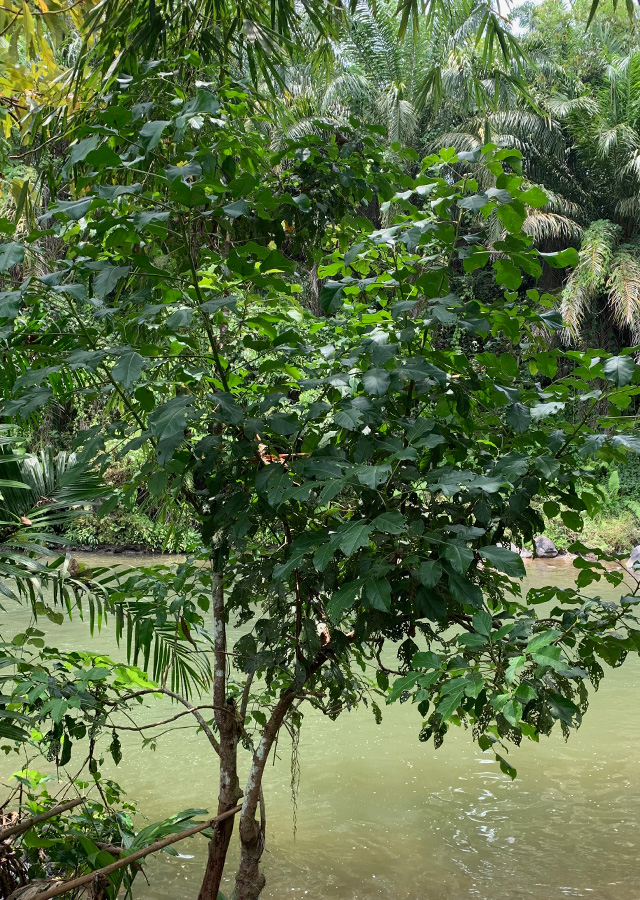
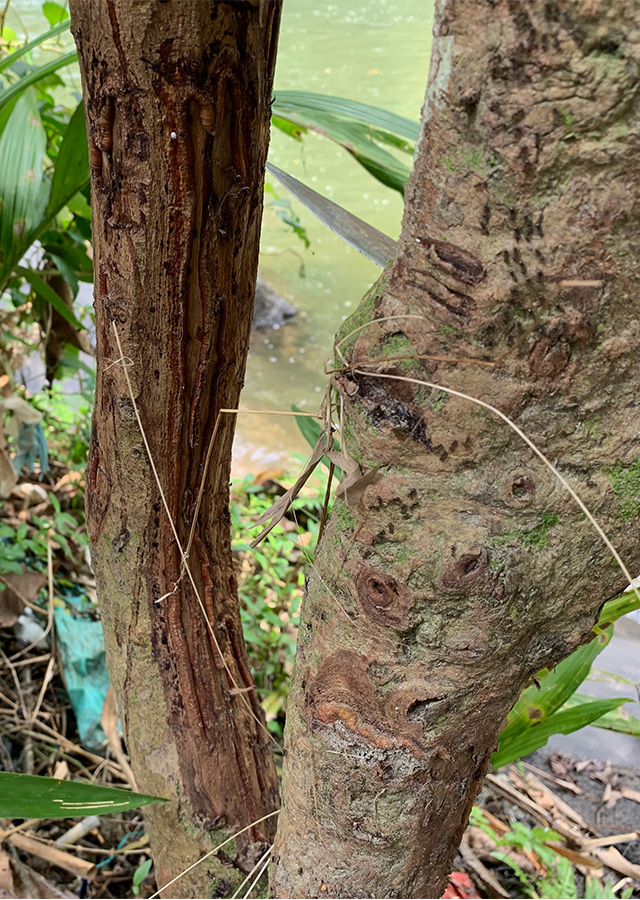
Trees. An evergreen, medium to fairly large, and perennial tree, growing 4–15 m. tall, with a narrow crown and drooping branches; bark brown, slightly scaly; wood very soft
Part Used
 Leaves
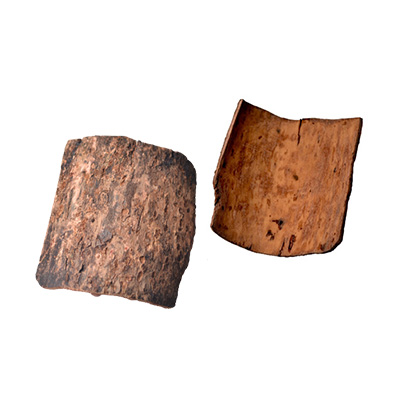
 Bark
Bark
Growing Requirements
 Full Sunshine
 Need Shade
 Drought Resistant
Habitat
 Riverbanks
 Forest
 Grassland
Overview
The natural occurrence of Java cedar spreads to Tropical & Subtropical Asia to the Pacific. In its natural area of distribution and elsewhere like East Africa and South Africa, it is locally cultivated. In traditional agriculture, the tree is used for reforestation and is also inter-cropped.
Vernacular Names
Bois de l' eveque (French), Java bishopwood (China), Akagi (Japan), Tuai (Malaysia/Philippine), Balzuru (India), Boolunza (Myanmar), Kainjal (Nepal), Koka (Fiji), Sikkam (Indonesia).
Agroecology
Java cedar grows mostly in regions with a distinct dry season in the tropics and subtropics, being found at altitudes from sea level to 1,800 m. A location in full sun is favored, while seedlings and young trees are more tolerant of shade. On riverbanks, shady ravines, it is most frequent and prefers deep loose soils with ample water content.
Morphology
- Root - taproot, tuberous for a short length and then tapers quickly.Thin but long secondary roots are present below the collar region.
- Trunk - straight, poorly shaped, branchless, 80-170 cm in diameter, bark surface fissured and scaly with small thick shaggy scales, reddish brown, inner bark fibrous, exuding a red sap.
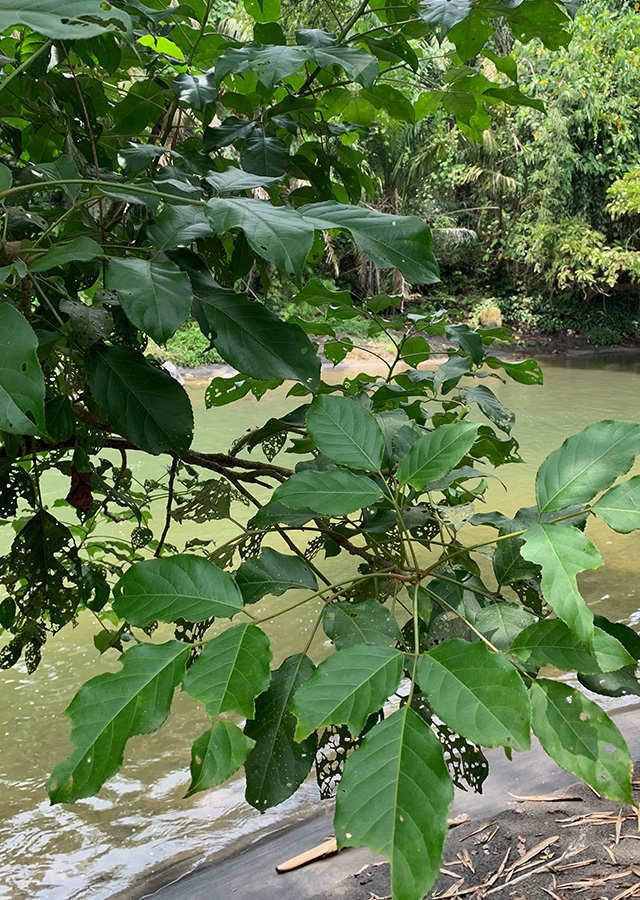
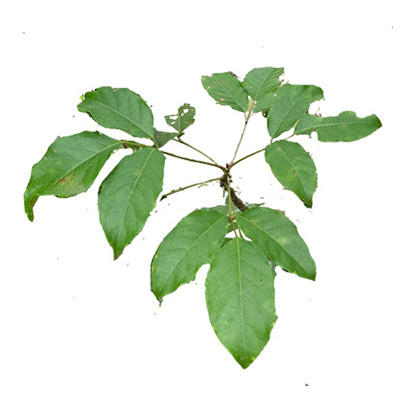
- Leaves - spirally arranged, compound of 3 leaflets, glabrous, oblong-triangular stipules, 7-22 mm long, 8-20 cm long petiole, elliptical to ovate leaflets, base rounded to narrowly cuneate, finely dented margin, pinnately veined.
- Flowers - unisexual, 5-mere, thin, greenish, absent corolla and disk. Male flower with base-fused sepals, hooded, rudimentary ovary. Female flower with early dropping sepals, superior uvary, globose, 3-4 cellulose with 3 long stigmas.
- Fruit - globose drupe 1-1.5 cm in diameter, bluish black, fleshy pulp, 3-6 seeded.
- Seeds - oblong to obovoid, 5 mm long, brown.
Cultivation
B. javanica can be propagated by seeds and stem cuttings.
Chemical Constituents
Flavonoids, lenersetin, sitosterols, stearate acid, linolenat acid, palmitat acid, elagit acid.
Traditional Medicinal Uses
- It has been shown that the plant has antiulcer, anthelmintic, and antidysenteric operations.
- For cough relief, the leaf is used as an anti-tussive.
- Bark sap, mixed with lime, is used for the treatment of sore feet.
- They rub the crushed leaves on an aching stomach.
- For the prevention of diarrhoea and dysentery, tree bark decoction is used in Assam (India).
- In case of stomach ache, the young stem is consumed. In the tribal area, leaves are taken orally toward diphtheria.
- To treat nervous disorder issues, stem bark paste is applied externally to the affected section. Stem bark for irregular menstruation and discomfort is also used.
- For tonsillitis and for the treatment of throat pain, young leaves and buds are used.
Part Used
Reference Sources
- CABI. (No date). Invasive Species Compendium. Bischovfia javanica (bishopwood). https://www.cabi.org/isc/datasheet/9219. 03-08-2020.
- Fern, Ken, (2019). Useful Tropical Plants Database. Bischofia javanica. http://tropical.theferns.info/viewtropical.php?id=Bischofia+javanica 03-08-2020.
- Pl@nt Use. (2017). Bischofia javanica (PROTA). https://uses.plantnet-project.org/en/Bischofia_javanica_(PROTA). 03-08-2020.
- Rajbongshi, P.P, Zaman, Md. Kamaruz, Boruah Sangeeta, Das Simanti. (2014). A Review on Traditional Use and Phytopharmacological Potential of Bischofia javanica Blume. https://globalresearchonline.net/journalcontents/v24-2/05.pdf. 28-11-2020.
- Royal Botanic Gardens. Plant of the World Online: Bischofia javanica Blume. https://powo.science.kew.org/taxon/urn:lsid:ipni.org:names:339921-1. 03-08-2020.