
Congo Fig
Dorstenia elata Gardner
Moraceae
Location in our garden
Green House
Synonym
Dorstenia elata var. strigosa Regel
Dorstenia exaltata Miq.
Dorstenia longifolia Moric.
Habitus

Herbaceous. An evergreen perennial herbaceous that grows about 30-45 cm tall, with a spread of 45 to 60 cm.
Part Used
 Leaves
 The Whole Plant
Growing Requirements
 Need Shade
Habitat
 Forest
Overview
Dorstenia elata is native to Brazil, where it is an endangered species. It is found in the states of Espirito Santo, Minas Gerais, and Rio de Janeiro. Dorstenia is named for Theodor Dorsten (1492–1552), a German botanist, elata is from the Latin elatus, exalted, lofty, high. It is grown for its ornamental flower and leaves. The plant is used in traditional medicines due to its high antioxidant activity, and also as a culinary herb.
Vernacular Names
No found data on this. Need further research.
Agroecology
This tropical plant prefers sandy moist locations. It makes a great low-light houseplant, being able to endure wet soil, dry soil, bright light and near darkness. It does best with filtered light and moist soil that is allowed to dry out a bit between waterings. Average water is needed and water regularly. It will not tolerate overly wet soils. Suitable for growing in containers.
Morphology
- Stem - subterranean stem
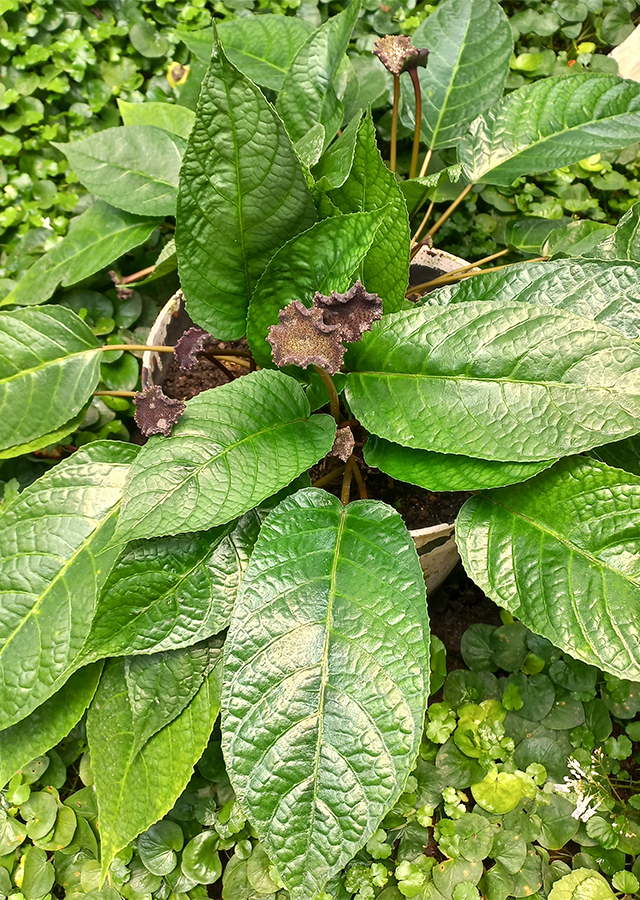
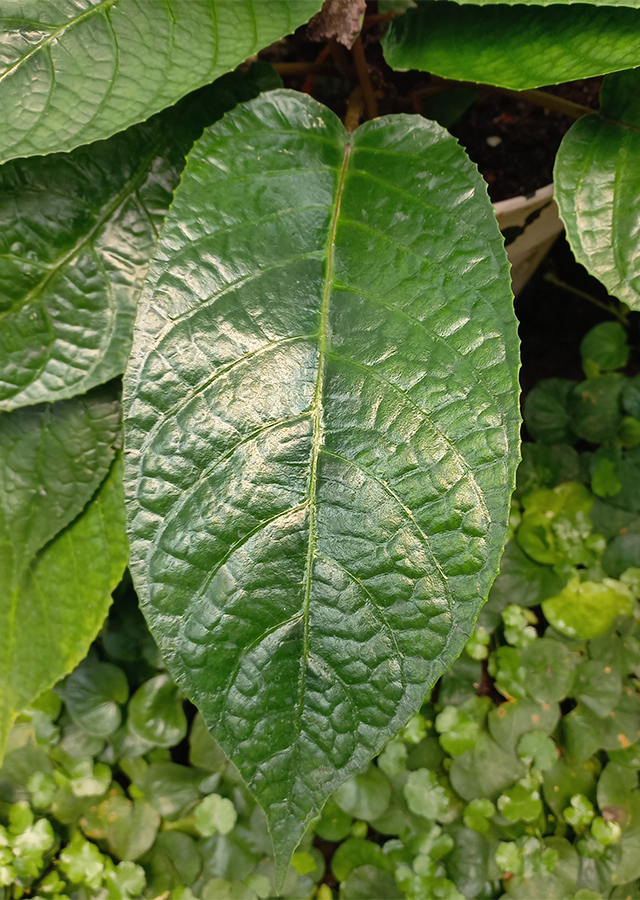
- Leaves - glossy dark green lanceolate leaves, up to 25 cm long and 10 or 11 cm wide, create a beautiful rosette of foliage. Petioles are up to 15 cm long.
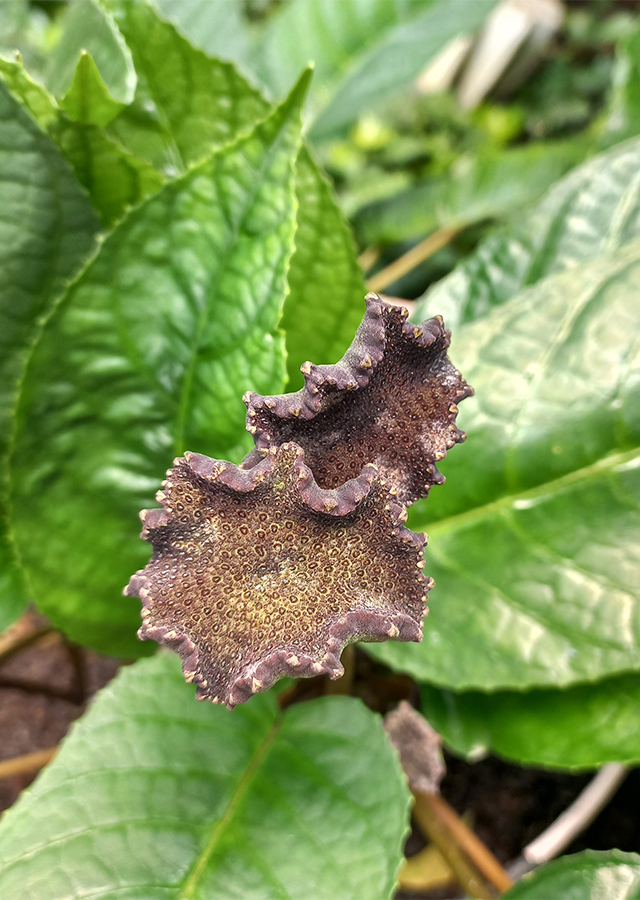
- Flower - dark purple, the flowering structure is called a hypanthodium, in which the receptacle is fleshy and forms a hollow ball-like structure with an apical opening. Three types of flowers develop on the inner surface of the receptacle: the female flowers are towards the base, the male flowers are towards the orifice, and short-styled sterile flowers are in between. The inflorescence is held on a sturdy stalk, and peaks above the foliage.
Cultivation
Generatively propagated by seed. At maturity, the seeds are ejected up to about a metre from the mother plant, and the plant will spread rapidly.
Chemical Constituents
No found data on this. Need further research.
Traditional Medicinal Uses
It has antioxidant activity. Further research or study is needed to confirm the uses of this species.
Part Used

Reference Sources
- Dave's garden. (2022). Dorstenia Species, Congo Fig. https://davesgarden.com/guides/pf/go/76973/#b. 14-04-2022.
- Kew Royal Botanic Gardens. (No date). Plants of the World Online: Dorstenia elata Gardner. https://powo.science.kew.org/taxon/urn:lsid:ipni.org:names:851542-1#image-gallery. 14-04-2022.
- Some Magnetic Island Plants. (2018). Dorstenia elata. https://somemagneticislandplants.com.au/mattress-button-plant. 14-04-2022.