
Lady of the Night
Cestrum nocturnum L.
Solanaceae
Location in our garden
Principal


Synonym
Cestrum graciliflorum Dunal
Cestrum spicatum Mill.
Cestrum suberosum Jacq.
Habitus

Shrubs. An evergreen shrub growing up to 3.5 m tall.
Part Used
 Leaves
 Flowers
 Fruit
Fruit
Growing Requirements
 Full Sunshine
 Need Shade
Habitat
 Riverbanks
 Coastal
 Roadside
 Terrestrial
Overview
C. nocturnum is considered native to the Americas, but has been cultivated for its strong-scented flowers and has become naturalized and even invasive in many parts of both the New and Old World tropics, especially the Pacific region. The plant is widely cultivated in the tropics and subtropics, mainly as an ornamental and hedge plant, but also sometimes for its medicinal uses.
Vernacular Names
Ye xiang mu (Chinese), Jasmin de nuit (French), Nacht jasmin (German), Sedap malam (Malay), Huelo do noche (Spanish), Vitnattjasmin (Swedish).
Agroecology
Grows on moist and wet forests and open areas, often forming dense, impenetrable thickets. The mature plant is hardy to about -4 °C, but without protection, the new growth is likely to be killed at around 1 °C. Grows well in full sun and in light shade. Succeeds in any reasonably fertile, free-draining soil.
Morphology
- Stems - branches somewhat flexuous, sparsely pubescent with crisped, simple hairs and a few minute glandular hairs.
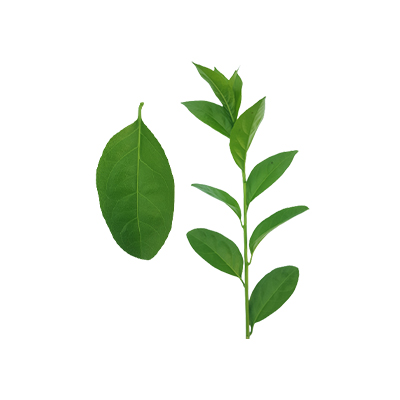
- Leaves - lanceolate-elliptic, often 10 cm long, 4 cm wide, apex acuminate, base rounded or broadly cuneate, petioles 10-15 mm long.
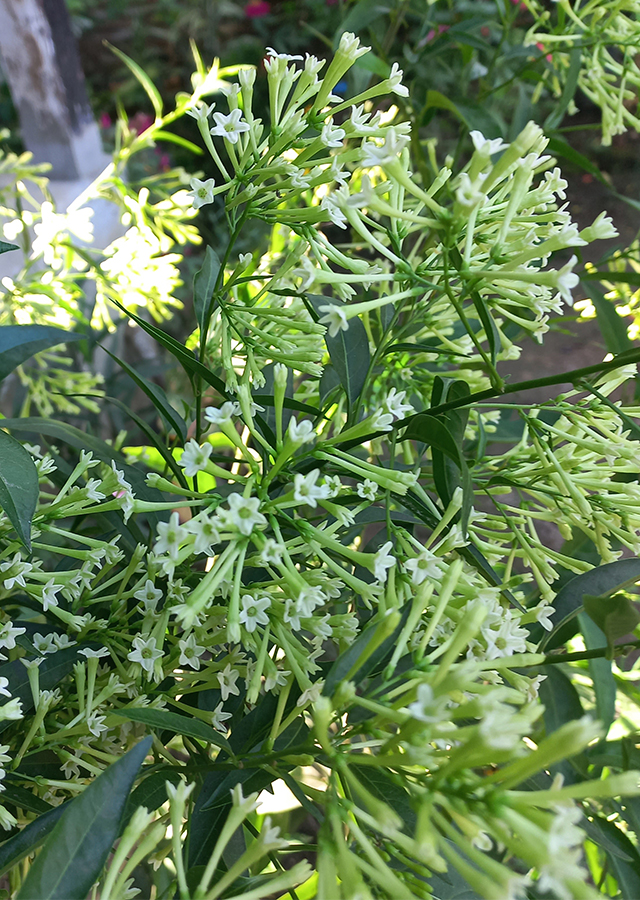
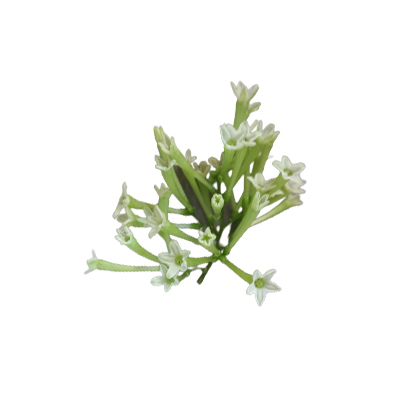
- Flowers - in spicate, often congested racemes, forming terminal leafy panicles. Calyx campanulate, ca. 2.5 mm long, upper 1/3 divided into triangular lobes. Corolla vespertine, strongly sweet-scented by night, greenish yellow, tubular, slender, slightly enlarged toward apex. Stamens 5, inserted high in corolla tube. Filaments with an erect process projecting below point of insertion, 3 mm long. Anthers 0.5 mm long, ovary with an annular disk, style 1, 15-16 mm long; stigma shortly bifid, exceeding anthers.
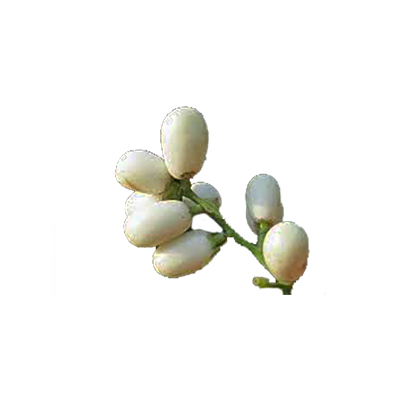
- Fruits - berries white, hard or juicy, 8-10 mm in diameter.
- Seeds - few, prismatic, outer face convex, inner faces concave, hilum scar elliptic, minutely reticulate.
Cultivation
Propagated by seeds, soft tip cuttings and cutting of semi-ripe wood.
Chemical Constituents
Flavonoids, steroidal saponins (nocturnoside A, tigogenin, smilagenin, and yuccagenin), tannins, monoterpenes, sesquiterpenes, triterpenes, sterols, coumarins, cardiac glycosides, essential oils (ß-phellandrene, a-phellandrene, (E)-ß-ocimene, linalool), alkaloids (nicotine and nornicotine), ethyl citrate, phytol, 4-isobutylmorphine, n-hexadecanoic acid.
Traditional Medicinal Uses
- In Mexico, extract of the plant used as antispasmodic and treatment of epilepsy.
- In the Antiles, fruits used for treatment of epilepsy.
- In India, Malasar people use its juice for cataracts.
- Yucatec Maya use flowers and leaves in hot bath treatments for ogjt sweats.
- Leaves used for treating swelling and burns.
- In Africa, oil used for treatment of malaria.
Part Used
Reference Sources
- Fern, Ken. Useful Tropical Plants. (2021). Cestrum nocturnum L. https://tropical.theferns.info/viewtropical.php?id=Cestrum+nocturnum. 14-03-22.
- Stuartxchange. 2019. Philippine Medicinal Plants: Dama de noche. http://www.stuartxchange.org/DamaDeNoche.html. 14-03-22.
- CAB International. 2022. Invasive Species Compendium: Cestrum nocturnum (night jessamine). https://www.cabi.org/isc/datasheet/12031#tosummaryOfInvasiveness. 14-03-22.