
Napa Cabbage
Brassica rapa subsp. pekinensis (Lour.) Kitam.
Brassicaceae
Location in our garden
Vegetable


Synonym
Brassica campestris pekinensis (Lour.) G.Olsson
Brassica pekinensis (Lour.) Rupr.
Brassica pe-tsai L.H.Bailey
Habitus

Herbaceous. An annual to biennial plant, growing around 45 cm tall
Part Used
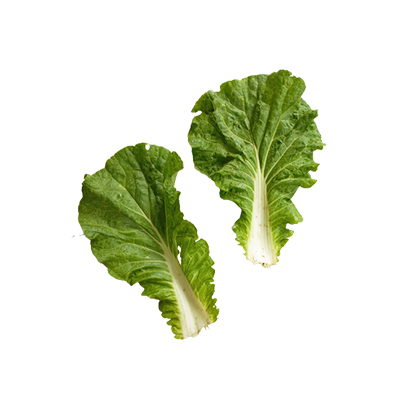
 Leaves
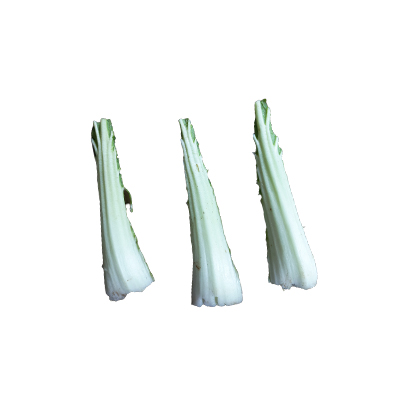
 Stem
Stem
Growing Requirements
 Full Sunshine
Habitat
 Mountains
 Terrestrial
Overview
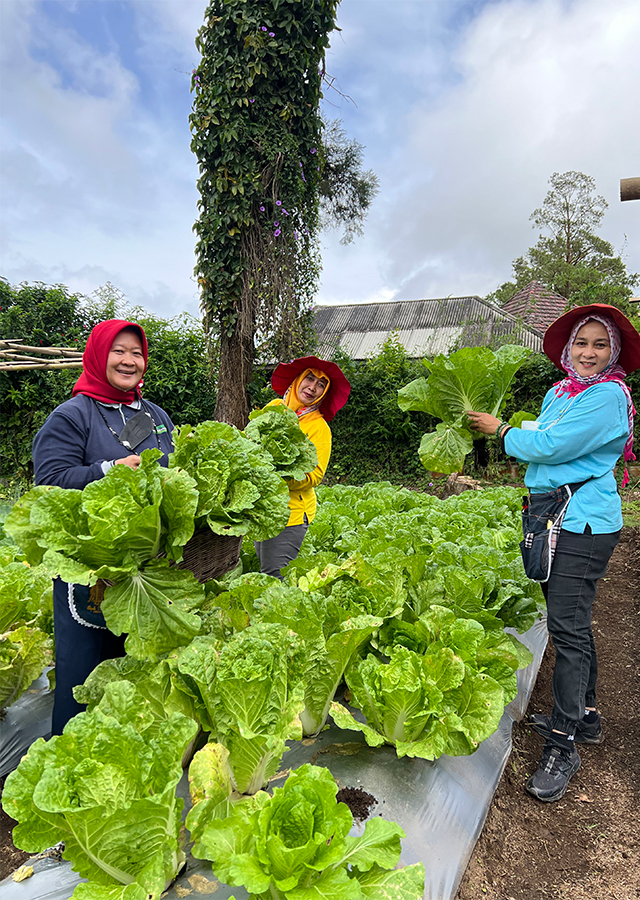
Napa cabbage is a type of Chinese cabbage originating near the Beijing region of China that is widely used in East Asian cuisine. Since the 20th century, it has also become a widespread crop in Europe, the Americas and Australia. The plant is one of the most important vegetables in China and Japan, where it is widely cultivated for its edible leaves and stem. The oil contained in the seed of some varieties of this species can be rich in erucic acid which is toxic. However, modern cultivars have been selected which are almost free of erucic acid.
Vernacular Names
Chou de Chine (Chinese), Schantungkohl (German).
Agroecology
Plants prefer coolish weather during their growing season, a temperature range of 13 - 20 °C is ideal. Succeeds in a well-drained fertile preferably alkaline soil. Prefers a pH in the range 6.5 to 7. Tolerates a pH in the range 4.3 to 6.8. Prefers full sun and sheltered position.
Morphology
- Roots - taproot with fibrous roots that grow and develop in all directions around the soil surface.
- Stems - short and winged located at the base which is in the ground. Stems are not hard and whitish in color, 1.5 cm long and 3.5 cm in diameter.
- Leaves - elliptical (oval) and somewhat wide, rough, wrinkled, downy to coarse (but some are smooth and hairless), light green to dark green. Leaves have long petioles, white, slightly wide and flat, limp and smooth. The midribs are arranged to wrap around each other with the younger leaf midribs to form a head (crop), but the older leaves (bottom) open. In addition, the leaves also have pinnate and branched leaf bones.
- Flowers - stalks out of the leaf axils grow to the top. The flower structure consists of green leaf petals, light yellow corolla, short-stemmed stamens.
- Seeds - hard, shiny, smooth and blackish brown in color.
Cultivation
Napa mustard reproduces generatively using seeds. Before planting in the land, the seeds are better sown first. Seedlings are planted in the field (transplanting) after 2 pieces of true leaf (age 18-20 days). Planting using a spacing of 50 x 60, planting holes are made according to the spacing as deep as a hoe or with a size of 30 x 30 x 30 cm.
Chemical Constituents
1, 2-Benzenedicarboxylic acid and 2, 3-dicyanopropionamide.
Traditional Medicinal Uses
- Reduces the risk of heart disease.
- Keeps the body from inflammation.
- Maintains bone health and strength, digestive tract health, eye health, kidney health
- Helps lower blood pressure,
- Regulates blood sugar levels.
- Prevents anemia.
- Keeps the body hydrated and helps lose weight.
- Has good non-cytotoxic antimicrobial and antioxidant properties against pathogenic bacteria.
Part Used

Reference Sources
- Useful Tropical Plants. 2022. Brassica rapa pekinensis. https://tropical.theferns.info/viewtropical.php?id=Brassica+rapa+pekinensis. 03-03-22.
- Sukendar. 2013. Budidaya Sawi Putih. http://shukendar.blogspot.com/2011/12/budidaya-sawi-putih.html. 03-03-22.
- Hello Sehat. 11 Manfaat Sawi Putih yang Sayang untuk Dilewatkan. https://hellosehat.com/nutrisi/fakta-gizi/manfaat-sawi-putih/. 03-03-22.
- Heru. Klasifikasi Tanaman Sawi Putih. http://bertanamhiasan.blogspot.com/2013/11/klasifikasi-tanaman-sawi-putih.html. 03-03-22.
- Rubab M, dkk. Preservative effect of Chinese cabbage (Brassica rapa subsp. pekinensis) extract on their molecular docking, antioxidant and antimicrobial properties. Published online 2018 Oct 3. doi: 10.1371/journal.pone.0203306. https://www.ncbi.nlm.nih.gov/pmc/articles/PMC6169867/.