
Blue Water Hyssop
Bacopa caroliniana (Walter) B.L.Rob.
Plantaginaceae
Location in our garden
Aquatic
Synonym
Obolaria caroliniana Walter
Bacopa amplexicaulis (Michx.) Wettst.
Moniera caroliniana Kuntze
Habitus

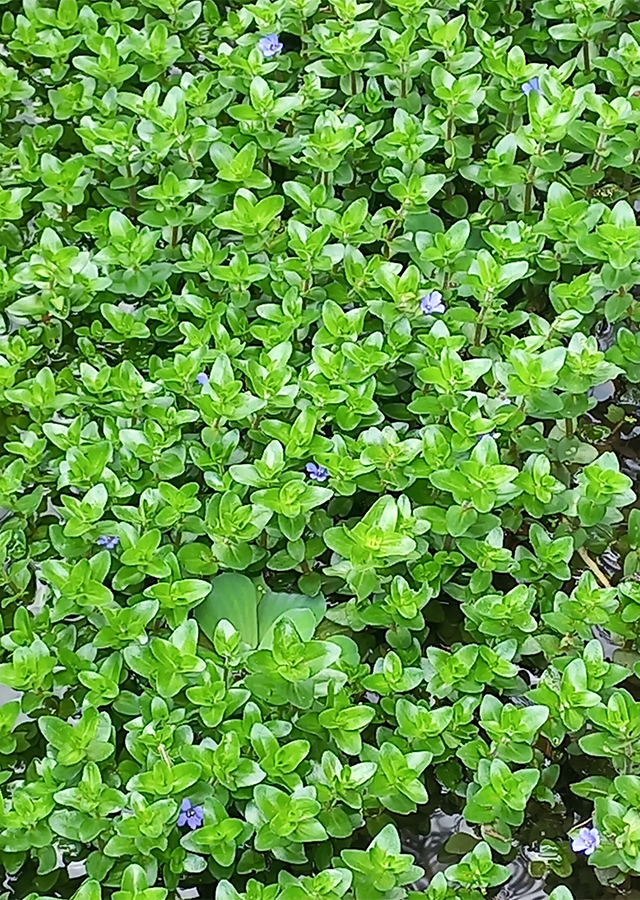
Aquatic. An aquatic, hydrophyte (emergent, submerged), creeping perennial herb, growing 10-30 cm height.
Part Used
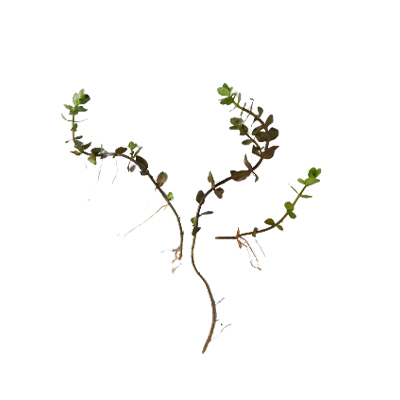
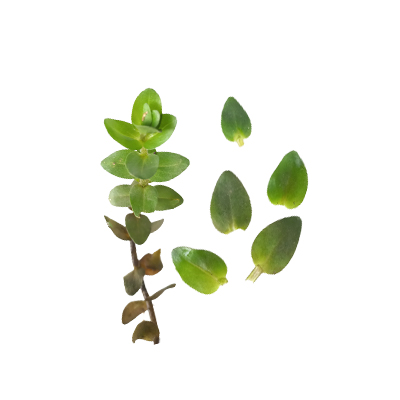
 Leaves
Growing Requirements
 Full Sunshine
 Need Shade
Habitat
 Aquatic
 Wetland
Overview
Bacopa caroliniana is native to South-East of United States of America to Texas, and Cuba, then introduced to Brazil Northeast, Brazil West-Central, and Réunion. This species is very popular and often planted in aquariums. The leaves are edible as salad, herb, spice, and sometimes used as a garnish. Its lemon scented of leaves is also used as tea. This species is believed to have health benefits and used in traditional medicines.
Vernacular Names
No found data on this. Need further research.
Agroecology
Blue water hyssop is a great low-growing bog plant for trailing over edges, cascading down a waterfall, bogs or submerged, common to lime sink ponds and the coastal plain, lakes, cypress ponds, ox box lakes, slow moving streams and rivers, and in ditches and canals. It can grow submerged in water as deep as 1.8 m. It prefers full sun and lots of water.It tolerates drought and could be planted in bioswales. It has become invasive in ponds where grass carp have been used to control submersed weeds such as Hydrilla. Blue water hyssop is very hard to control because most treatments use either a contact herbicide that requires repeat applications or an expensive systemic herbicide like fluridone at a high rate and expense.
Morphology
- Root - fibrous, roots at the nodes.
- Stem - short ascending stem, hairy upper stem, spongy, green in colour and pubescent.
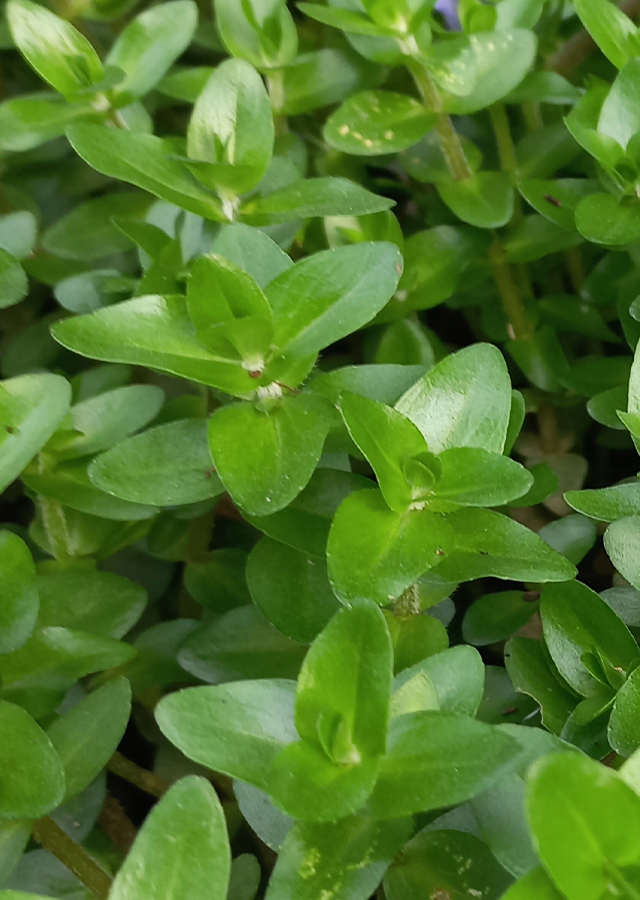
- Leves - oblong, fleshy leaves are densely arranged in stems. Crushed leaves produce a lemon-like scent. opposite, sessile, ovate in outline, slightly toothed or entire, with clasping bases. The leaves are green in colour, thick and spongy in texture, and pubescent along the veins on the lower surface.
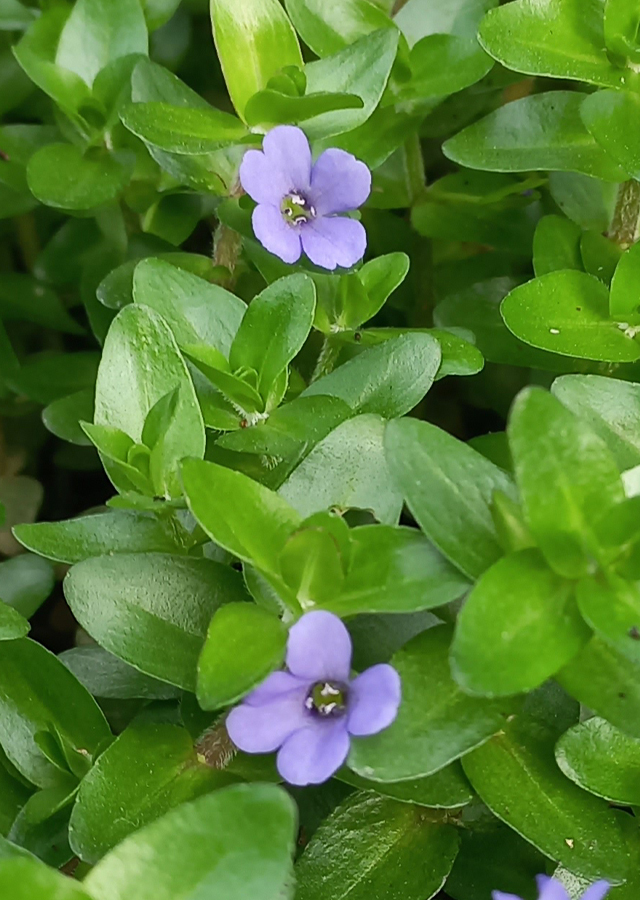
- Flowers - tiny, light blue flowers are composed of 4-5 obovate petals, solitary from the axils of the leaves. There are 2 subulate bracts just below the flower. The flowers have 4-5 nearly distinct sepals and 3-5 corolla lobes. The corolla is bright or deep blue or purple in colour.
- Fruits - capsule, smooth, hairless fruit is egg-shaped.
Cultivation
Vegetatively propagated by stem cutting and clumps division.
Chemical Constituents
Essential oils (α-terpinolene).
Traditional Medicinal Uses
- A leaf infusion can be taken to treat respiratory problems, like chronic cough and shortness of breath.
- It is laxative, sedative, cathartic, diuretic, and nerve tonic. Has activity as an antimicrobial.
Part Used
Reference Sources
- Alabama Plants Atlas. (2022). Bacopa caroliniana. http://floraofalabama.org/Plant.aspx?id=3435. 05-03-2022.
- Liu, Tai-Ti, et al. (2019). Composition and Insecticidal Activity of Essential Oil of Bacopa caroliniana and Interactive Effects of Individual Compounds on the Activity. DOI:10.3390/insects11010023
- National Park of Singapore. (2022). Bacopa caroliniana (Walter) B.L. Rob. https://www.nparks.gov.sg/florafaunaweb/flora/1/7/1713. 05-03-2022.
- Ponds Plant Online. (2022). Lemon Bacopa. https://www.pondplantsonline.com/products/lemon-bacopa-bacopa-caroliniana?variant=7623282373. 05-03-2022.
- University of Georgia Extension. (2014). Lemon Bacopa/Water Hyssop Control in Ponds. https://site.extension.uga.edu/colquittag/2014/10/lemon-bacopawater-hyssop-control-in-ponds/. 05-03-2022.