
Sorrel
Oxalis latifolia Kunth
Oxalidaceae
Location in our garden
Beneficial Weed

Synonym
Acetosella violacea subsp. latifolia (Kunth) Kuntze
Ionoxalis latifolia (Kunth) Rose
Sassia latifoloa (Kunth) Holub
Habitus

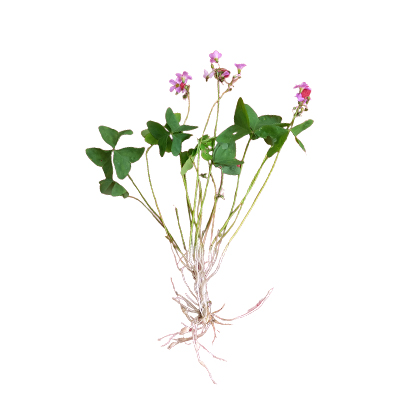
Herbaceous. An erect perennial plant producing clusters of leaves up to 30 cm tall from a bulb
Part Used
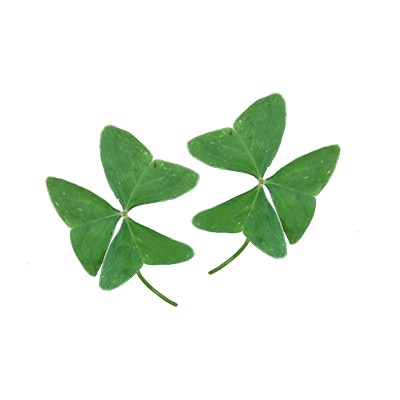
 Leaves
 The Whole Plant
Growing Requirements
 Need Shade
Habitat
 Terrestrial
Overview
O. latifolia is a native of Central America and equatorial South America but has been introduced very widely in Africa, Asia and Australasia; to some extent deliberately as an ornamental, but also as ground cover under coffee in Uganda, and as rabbit food in India. The plant is harvested from the wild for local use as a food.
Vernacular Names
Trebol de huerta (Spanish), Trevo (Brazil), Acedera (Colombia), Breitblaettriger sauerklee (German), Khati-buti (Hindi), Acedera (Mexican)
Agroecology
Oxalis latifolia is a plant of the humid tropics, especially at higher elevations (up to 3.000 m in Colombia), and also of the subtropics; it has also spread as a weed into warmer areas of the temperate zone. It is a major weed in India, New Zealand, Australia, South Africa and Uganda, particularly in cassava, maize, upland rice, tea, potato, coffee, cereals, sugarcane, orchards and vegetables.
Morphology
- Bulbs - 1-2 cm diameter, is complex with two main types of scale refers to as 'membranous' and 'true scales'.
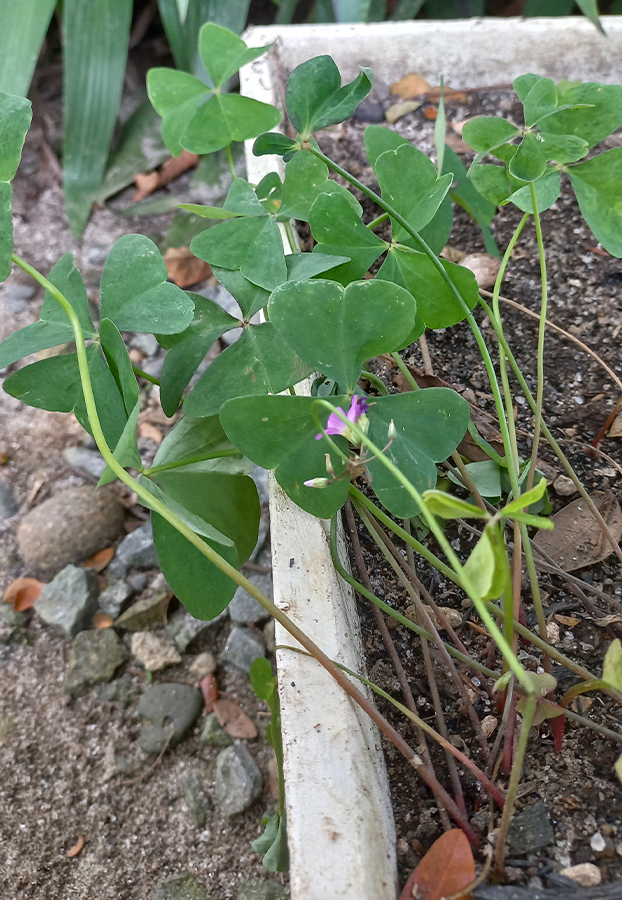
- Leaves - on petioles up to 30 cm long, are glabrous, trifoliate, with individual leaflets broadly fish-tail shaped, 3-6 cm across.
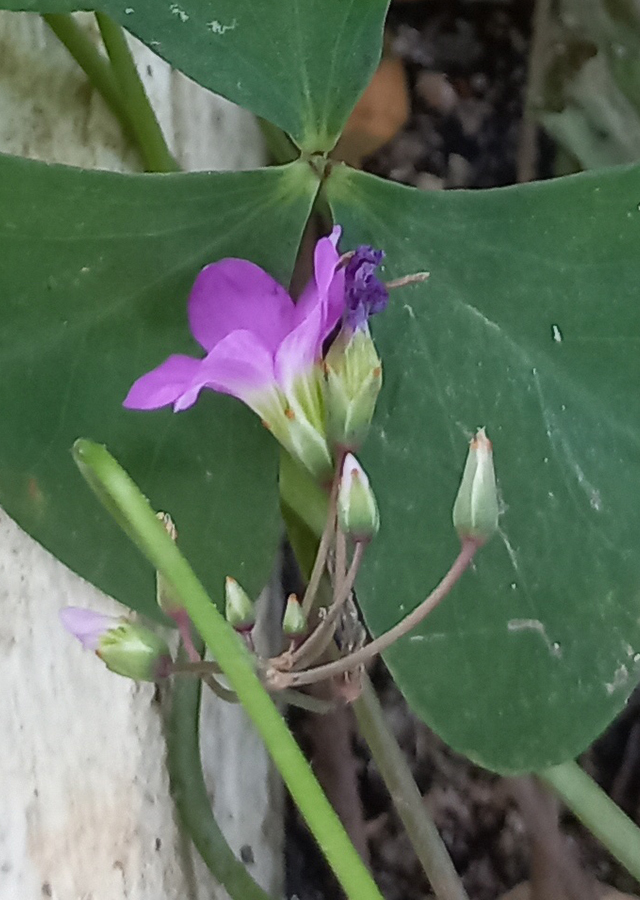
- Flowers - The peduncles, about the same length, carry an umbel of 5-12 flowers, each flower 10-20 mm across, erect while open but reflexed before and after. The five sepals each have two orange glands at the tip. The five petals are greenish on the outside, a rich purple inside, changing abruptly to become paler towards the base. O. latifolia has the potential for tristyly, having two sets of five stamens of different length but weedy populations are almost invariably short-styled, with medium and long stamens.
- Fruits - explosive capsule, green, broad cylindrical, slightly longer than sepals, glabrous, carpels with 4-8 seeds but rarely fruiting.
- Seeds - orange to dark yellow, about 1 mm long and ribbed.
Cultivation
Propagated by seeds.
Chemical Constituents
Tannins, alkaloids, phenols, saponins, flavonoids, and oxalic acid.
Traditional Medicinal Uses
- Treating ulcers.
- Healing wounds, dysentery and diarrhea.
- Quarten fever, skin diseases.
- Removing warts and corneal cloudiness.
- Overcoming vomiting in children.
- Has activity as antibacterial, antifungal, anti-inflammatory, and antiscorbut.
Part Used
Reference Sources
- Fern, Ken. Useful Tropical Plants. (2021). Oxalis latifolia. http://tropical.theferns.info/viewtropical.php?id=Oxalis+latifolia. 17-01-22.
- Cabi. Oxalis latifolia. https://www.cabi.org/isc/datasheet/38157. 17-01-22.