
Ivy
Hedera helix L.
Araliaceae
Location in our garden
Principal

Synonym
Hedera communis Gray
Hedera poetica Salisb.
Habitus

Climbers. An evergreen climber up to 15 m tall
Part Used
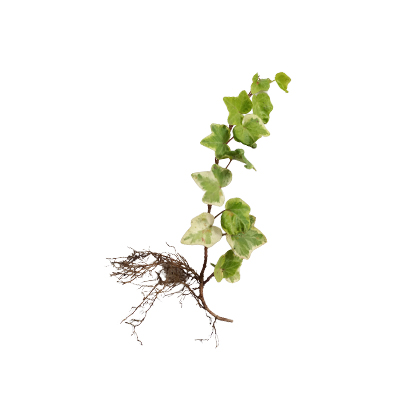
 Leaves
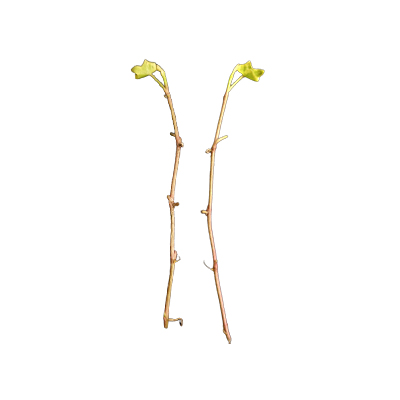
 Twigs
Twigs The Whole Plant
Growing Requirements
 Full Sunshine
 Need Shade
 Drought Resistant
 Low Temperature
Habitat
 Terrestrial
Overview
Hedera helix is native to Europe, North Africa and the Near East. It is harvested from the wild for local use as a food, medicine and source of materials. The plant is said to be poisonous in large doses.
Vernacular Names
Hiedra (Spanish), Bourreau des arbres (French), Gemeiner Efeu (German), Edera (Italian), Klimop (Dutch), Murgroena (Swedish).
Agroecology
This versatile plant is commonly found in a variety of natural and human-induced habitats. It is a common forest species, growing on the forest floor or up the trunks of canopy trees. It is readily found on rocks and cliffs including those located in the close vicinity of the sea. In human-dominated habitats it is readily found on walls, houses, fences, posts, hedges and ornamental trees. Found on all types of soils.
Morphology
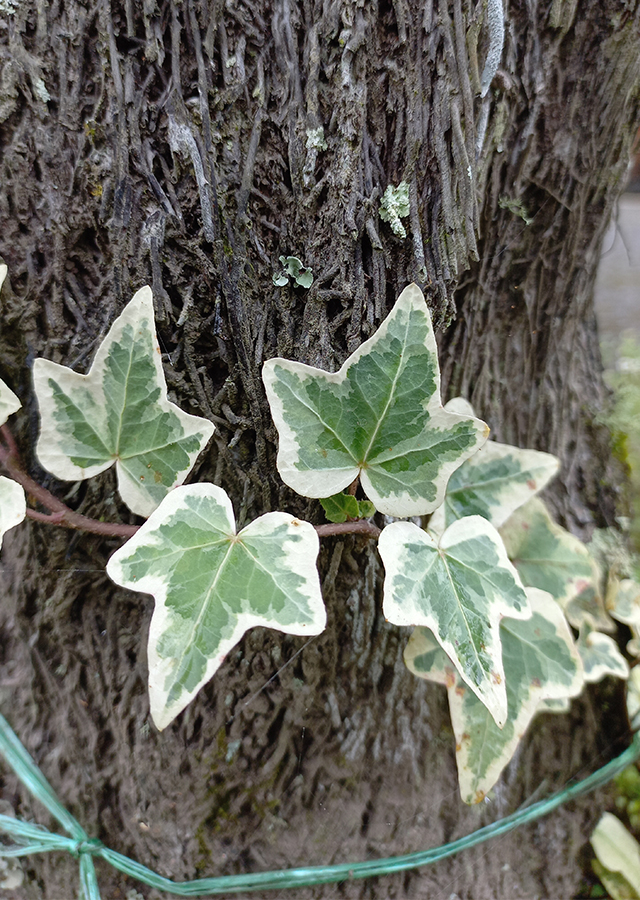
- Stems - long, either creeping or climbing and may attain a length of up to 30 m. When old, stems may reach a diameter of over 10 cm and even produce a short trunk. The stem is attached to the substrate by numerous small roots produced at each leaf node, which bear vascular-arbuscular mycorrhiza.
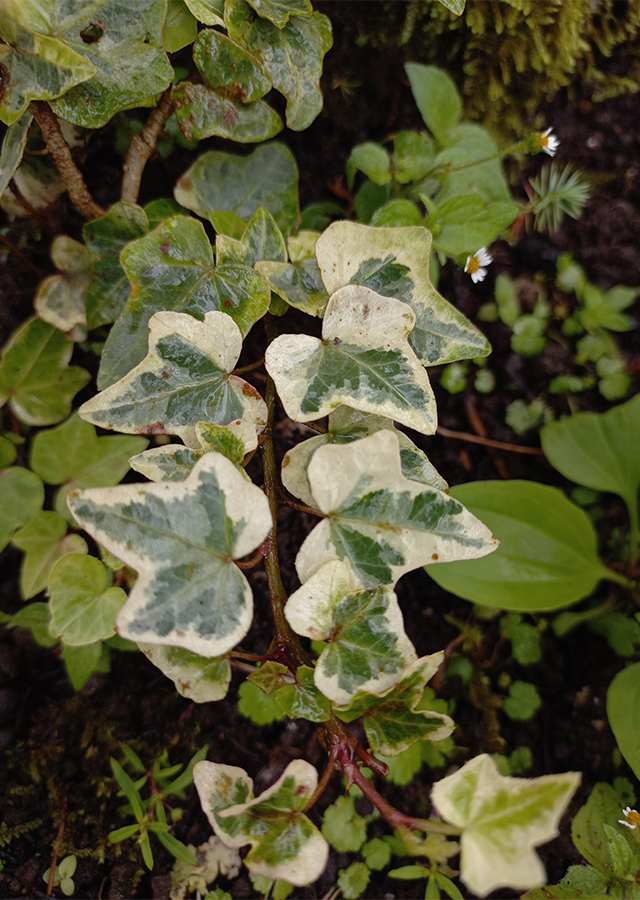
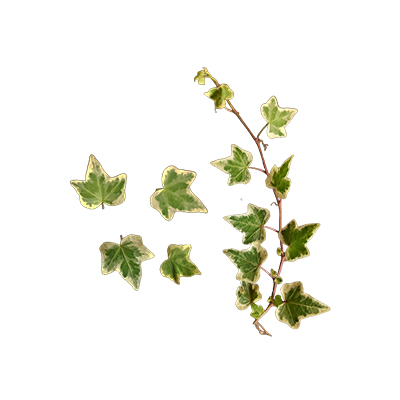
- Leaves - the deep green, glossy, leathery leaves are evergreen, heterophyllous, and mostly palmately lobed on sterile stems whereas those on flowering stems are ovate and larger. Leaves of H. helix are usually less than 8 cm across. Leaves are long-lived and have a strong smell when crushed.
- Flowers - perfect, sometimes protandrous, yellow-green, 5-7 mm across, clustered on terminal inflorescences born on stems climbing to canopy height.
- Fruits - a drupe 6-9 mm in diameter, is green turning dark purplish/black when mature and contains 2-5 seeds.
Cultivation
- Propagated by seeds - remove the flesh, which inhibits germination, and sow the seed in spring in a cold frame. When they are large enough to handle, prick the seedlings out into individual pots and grow them on in the cold frame for their first winter. Plant them out into their permanent positions in late spring or early summer, after the last expected frosts.
- By cuttings of half-ripe wood - mid summer in a shady position in a frame. Good percentage.
- By cuttings of mature wood, 12 cm long, late autumn in a cold frame.
- By layering - plants often do this naturally.
Chemical Constituents
Sterols (cholesterol, campesterol, stigmasterol, sitosterol, -spinasterol; 5α-stigma-7-en-3β-ol), tannins, phenolic compounds, terpenoids, glycosides, alkaloids (emetin), flavonoids (quercetin, kaempferol, rutin, isoquercitrin, astragalin, kaempferol 3-O-rutinoside), saponins, triterpene saponins, polyacetylenes (falcarinon, falcarinol, panaxidol), β-lectins, monodesmosides (α-hederin, hederagenin 3-O-β-glucoside), phenolic acids, coumarins (scopoletin 7-O-glycoside), amino acids, essential oils (germacrene B, β-elemene, γ-elemene (elixen), methylethyl ketone, methylisobutyl ketone, trans-2-hexanal, trans-2-hexanol, germacrene D, β-caryophyllene, sabinene, α-, β-pinene, limonene, furfurol).
Traditional Medicinal Uses
- The leaves are antibacterial, antirheumatic, antiseptic, antispasmodic, astringent, cathartic, diaphoretic, emetic, emmenagogue, stimulant, sudorific, vasoconstrictor, vasodilator and vermifuge.
- The plant is used internally in the treatment of gout, rheumatic pain, whooping cough, bronchitis and as a parasiticide.
- Recent research has shown that the leaves contain the compound 'emetine', which is an amoebicidal alkaloid, and also triterpene saponins, which are effective against liver flukes, molluscs, internal parasites and fungal infections.
- An infusion of the twigs in oil is recommended for the treatment of sunburn.
Part Used
Reference Sources
- Fern, Ken. Useful Tropical Plants. (2021). Hedera helix. http://temperate.theferns.info/plant/Hedera+helix. 20-12-21.
- Cabi. Hedera helix. https://www.cabi.org/isc/datasheet/26694. 20-12-21.