
Joseph's Coat
Amaranthus tricolor L.
Amaranthaceae
Location in our garden
Vegetable
Synonym
Albersia polygama Boiss.
Amaranthus gangeticus L.
Glomeraria tricolor (L.) Cav.
Habitus

Herbaceous. A usually much-branched, vigorous, erect or ascending annual plant with a stout stem, growing up to 125 cm tall
Part Used
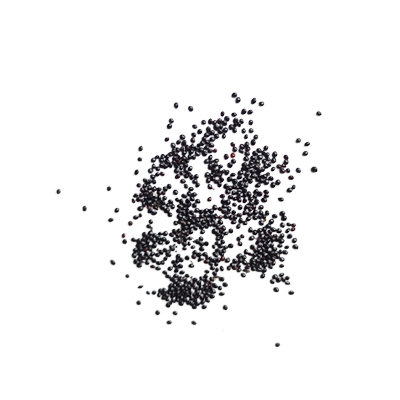
 Seeds
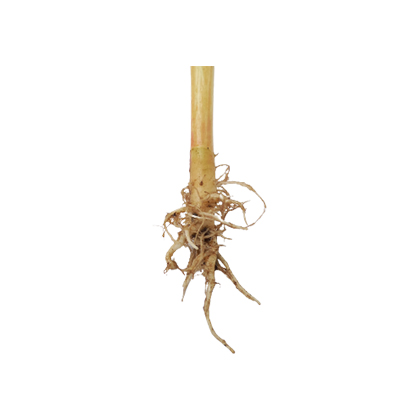
Seeds Roots
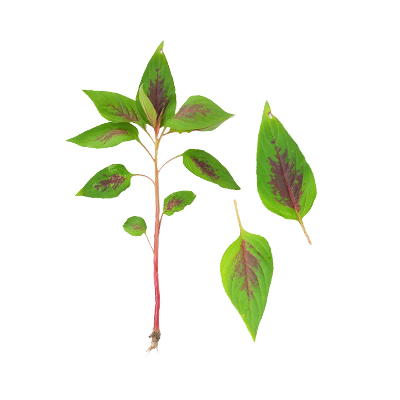
Roots The Whole Plant
Growing Requirements
 Full Sunshine
 Drought Resistant
Habitat
 Roadside
 Terrestrial
Overview
A. tricolor is native to Asia from India to China and Japan in the north and Indonesia in the south; also in New Guinea and New Hebrides and smaller Pacific Island groups. The plant is often cultivated in tropical and warm temperate regions, especially in Asia, for its edible leaves and seed. It is a very ornamental plant and is also often grown in the flower garden.
Vernacular Names
Amarante comestible (French), Xian (Chinese), Bredo (Portuguese), Gemüseamarant (German), Bishalya (India), Hageito (Japanese), Saegbireum (Korean).
Agroecology
A widely cultivated plant, it is not known in a truly wild situation, though sometimes occurs on cultivated land, flood plains, roadsides and wasteland as a non-persistent escape from cultivation. It can be grown in a wide range of climates from the temperate zone to the tropics, where it thrives from near sea level to about 800 m. Grows best in areas where annual daytime temperatures are within the range 22 - 30 °C, but can tolerate 8 - 45 °C. Prefers a mean annual rainfall in the range 1,200 - 1,500 mm, but tolerates 300 - 2,700 mm. Prefers a light well-drained fertile soil in a sunny position and pH in the range 5.5 - 7.5, tolerating 4.3 to 8.
Morphology
- Stems - erect or ascending, much branched, angular, glabrous.
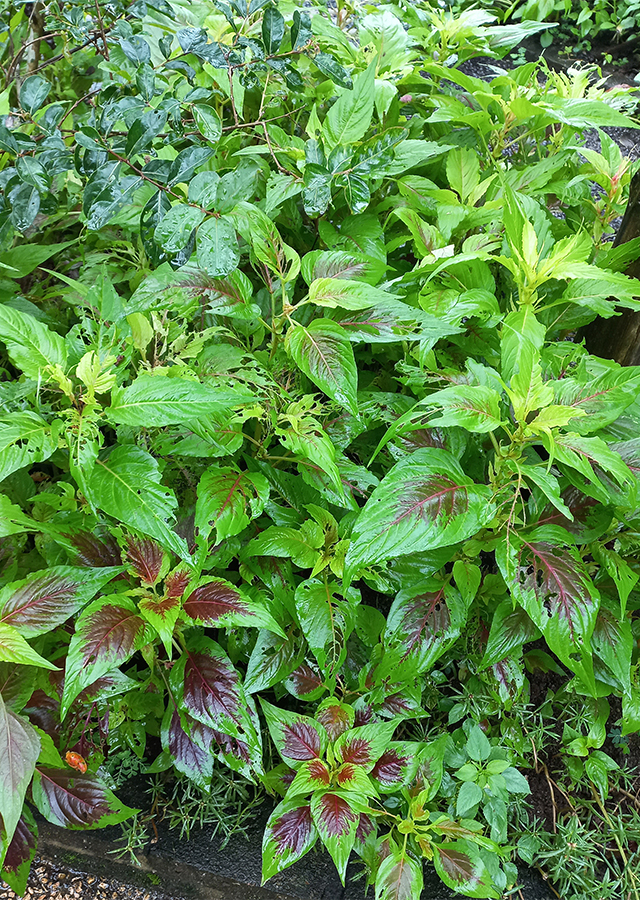
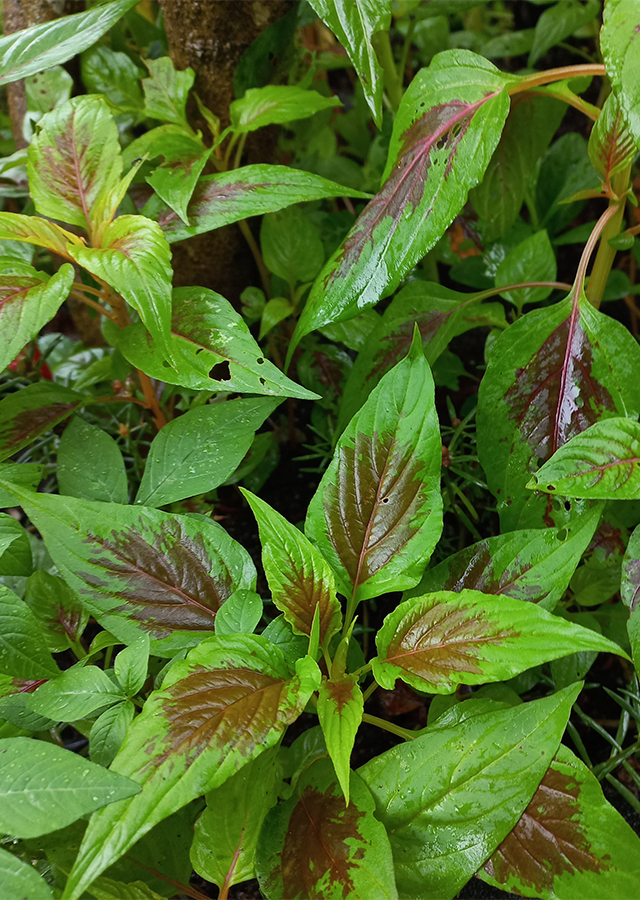
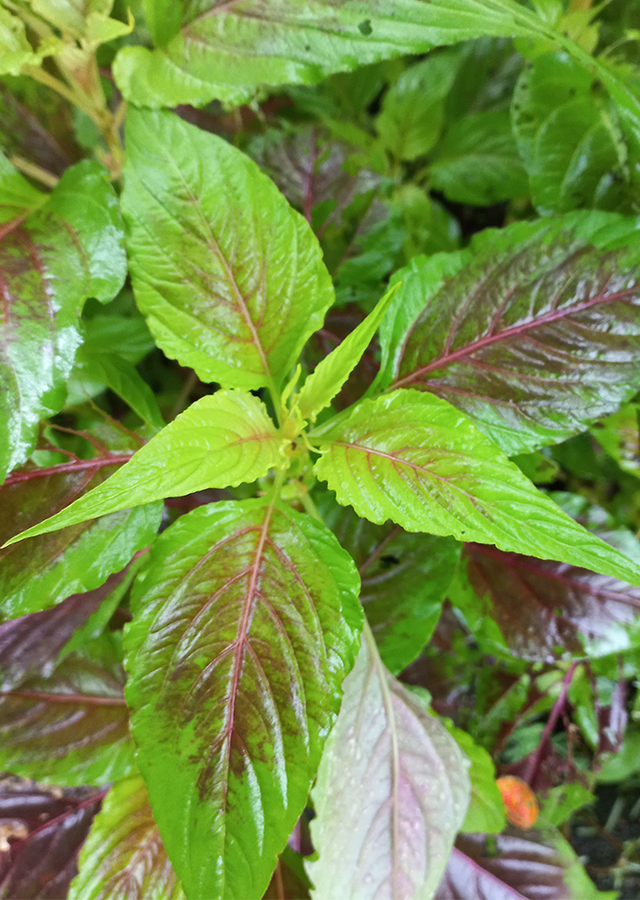
- Leaves - arranged spirally, simple, broadly ovate, elliptic to lanceolate, petiolate, 4–10 cm long, shortly cuneate to attenuate at the base, emarginate to obtuse or acute at apex. Leaf colour dark green, light green or red. Terminal leaves may be red, purple, yellow or variegated.
- Flowers - unisexual, subsessile with three tepals <5 mm long, with long awn. Male flowers have three stamens, female flowers have superior single celled ovary with three stigmas.
- Fruits - ovoid-urceolate capsule, circumsessile below the middle, 3 mm long with single seed.
- Seeds - ovoid, brown or black, smooth or faintly reticulate, lenticular in shape, 1–1.5 mm long.
Cultivation
Propagated by seeds - can be sown in situ or in a nursery seedbed and then transplanted to their permanent position 2 - 3 weeks later. Germination is usually rapid and good if the soil is warm, but poor germination rates are experienced in cool or cold soils. A drop in temperature overnight aids germination.
Chemical Constituents
Squalene, saponins, Amaranthine and Isoamaranthine, amino acids, steroids, cardiac glycosides, alkaloids, tannins, flavonoids (kaempferol and quercetin), ascorbic acid. Betaline pigments are betacyanin and Betaxanthin, phenolic acid, linoleic acid, linolenic acid, palmitic acid, sterols and Spinasterol, 24-methylenecycloartenol.
Traditional Medicinal Uses
- The whole plant is astringent and diuretic.
- The seeds are said to have aphrodisiac properties.
- A decoction of the root is used with Cucurbita moschata to control haemorrhage following abortion.
- A decoction of very old plants is taken internally to improve vision and strengthen the liver.
Part Used
Reference Sources
- Fern, Ken. Useful Tropical Plants. (2021). Amaranthus tricolor. http://tropical.theferns.info/viewtropical.php?id=Amaranthus+tricolor. 17-11-21.
- CAB International. 2021. Invasive Species Compendium: Amaranthus tricolor (edible amaranth). https://www.cabi.org/isc/datasheet/112199. 17-11-21.