
Common Bean
Phaseolus vulgaris L.
Fabaceae
Location in our garden
Vegetable

Synonym
Phaseolus aborigineus Burkart
Phaseolus communis Pritz.
Phaseolus compessus DC.
Habitus

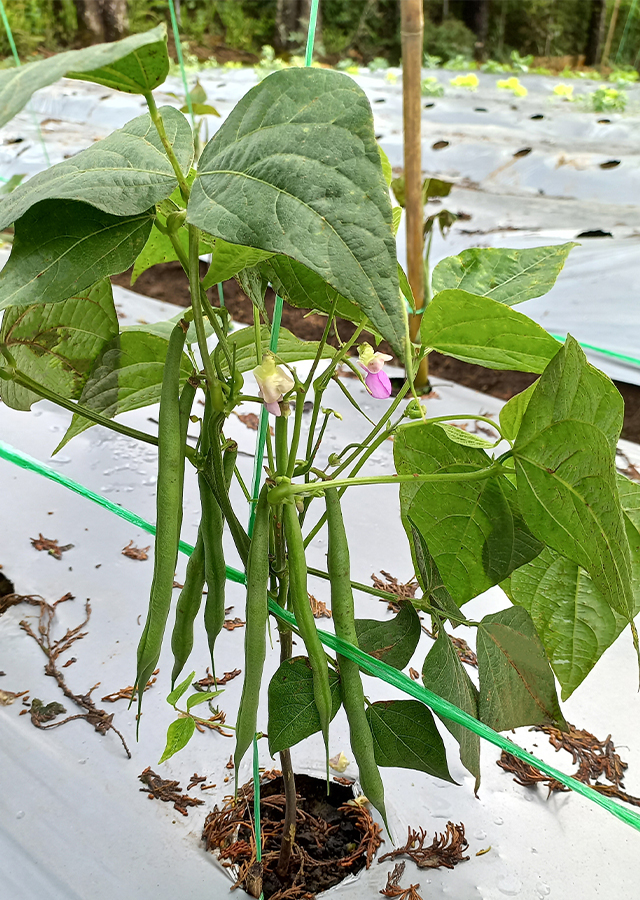
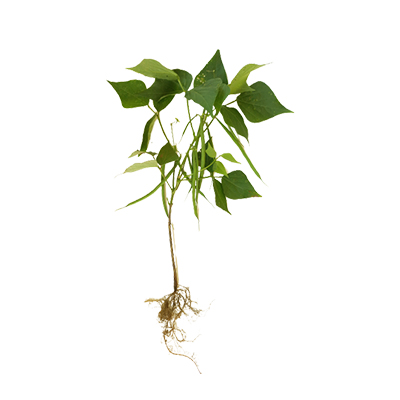
Herbaceous. An erect, bushy, climbing, annual herb, growing 20 to 60 cm tall.
Part Used
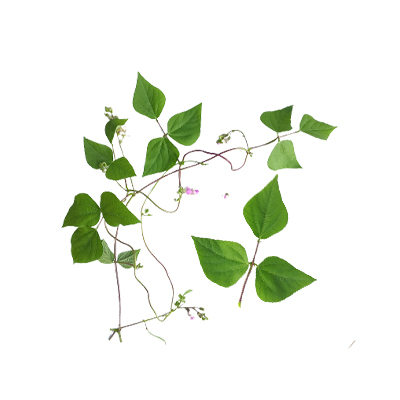
 Leaves
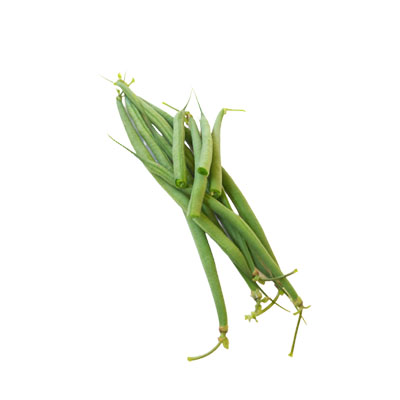
 Fruit
Fruit Roots
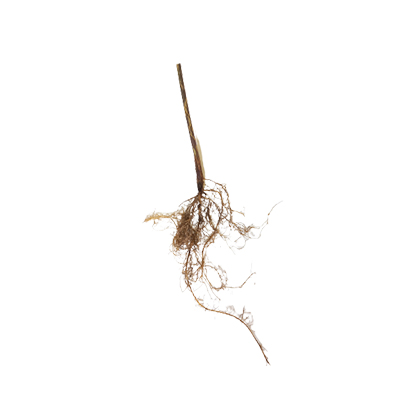
Roots
Growing Requirements
 Full Sunshine
Habitat
 Roadside
 Shrublands
 Terrestrial
Overview
Phaseolus vulgaris is native to Central and South America to Mexico. It is widely cultivated for its delicious seeds which add flavour and protein to the diets of millions of people throughout the world. Due to its high protein, in many parts of the world it is considered the 'meat of the poor'. Cultivated in the tropics, subtropics, and temperate regions. Roughly 30% of world production is in Latin America. The immature pods are cooked and eaten as vegetable, and marketed fresh, frozen, or canned. In Java (Indonesia), young leaves are eaten as salad.
Vernacular Names
Caraota (Spanish), Haricot commun (French), Gartenbohne (German), Gartenbohne (Italian), Cai dou (Chinese), Ingen mame (Japanese), Boncis (Malay), Dou ve (Vietnamese), Thua khaek (Thai), Bo-sa-pè (Burmese), Bitsuelas (Tagalog-Philippines).
Agroecology
Usually found in drier localities of desert to thorny shrub, hillsides or steep slopes ín open pine-oak forests, growing in and over shrubs and brush. Often at edges of thickets, trails, and over stone walls, at elevations from 800-2,000 m. A temperature in the range 19-27 °C is preferred - above 30 °C many flowers will abort and above 35 °C seed is rarely produced. Climbing forms of the plant can succeed in areas of high rainfall, but dwarf forms appear to be more sensitive to high soil moisture levels. Heavy rain adversely affects fertilization. Plants require a dry season in order to mature the seed. Requires a warm sunny position in a rich well-drained preferably light soil with plenty of moisture in the growing season. Dislikes heavy, wet or acid soils. Grows well in moderately heavy loam soils so long as they are well drained. Prefers a pH in the range 5.5 to 6.5.
Morphology
- Root - well-developed taproot, laterals and adventitious roots.
- Stem - strongly twining, 1-6 m long, angular or nearly cylindrical.
- Leaves - alternate, green or purple, trifoliate, stipulate, petiolate, with a marked pulvinus at base. Leaflets are ovate, entire, 6 to 15 cm long, 3 to 11 cm wide.
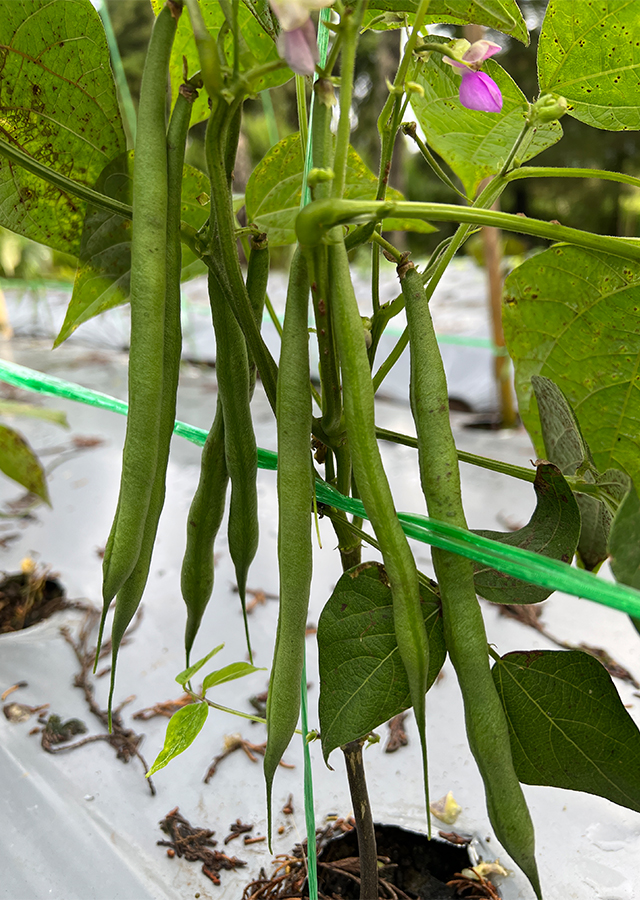
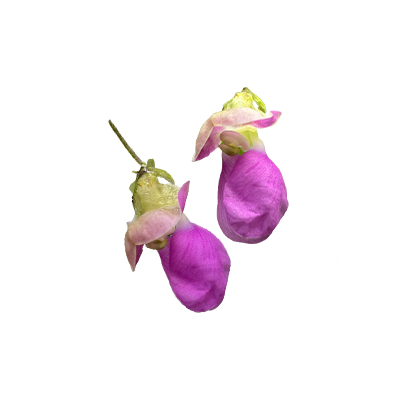
- Flowers - in lax, axillary, few-flowered racemes, variegated, white, pink or purple, about 1 cm long.
- Fruit - pods - slender, green, yellow, black, or purple, cylindrical or flat, 8 to 20 cm long, 1 to 1.5 cm wide.
- Seeds - 4 to 6, usually glabrous, sometimes puberulent, with prominent beaks, white, red, tan, purple, grey, or black, often variegated, reniform, oblong, or globose, up to 1.5 cm long.
Cultivation
- Propagated by seeds. Pre-soak the seed for 12 hours in warm water and sow in situ.
- Germination should take place within 10 days. A soil temperature of 18-20 °C is optimal for germination.
Chemical Constituents
Alkaloids, anthocyanin, catechin, flavonoids (quercetin), glycosides, phasine, phytic acid, polyphenols saponins, steroids, tannins, and terpenoids.
Traditional Medicinal Uses
- In Benin, the Adja use the juice from crushed leaves to treat wounds. Babies who cannot breastfeed are give leaf decoction to drink.
- The green pods are mildly diuretic and contain a substance that reduces the blood sugar level. The dried mature pod is used in the treatment of diabetes.
- Common beans have been used for acne, burns, diarrhea, dropsy, dysentery, eczema, sciatica and tenesmus.
- Studies has suggested antioxidant, antidiabetic, hypolipidemic, antiurolithiatic, osteoprotective, and antiproliferative properties.
Part Used
Reference Sources
- Fern, Ken. (2021). Useful Tropical Plants Database: Phaseolus vulgaris. http://tropical.theferns.info/viewtropical.php?id=Phaseolus%20vulgaris. 25-11-2021.
- Kew Royal Botanic Gardens. (2017). Plants of the World Online: Phaseolus vulgaris L. http://powo.science.kew.org/taxon/urn:lsid:ipni.org:names:514191-1. 25-11-2021.
- PROSEA (2016). Phaseolus vulgaris (PROSEA). https://uses.plantnet-project.org/en/Phaseolus_vulgaris_(PROSEA). 25-11-2021.
- Stuartxchange. (2019). Philippine Medicinal Plants. Bitsuelas. http://www.stuartxchange.org/Bitsuelas. 25-11-2021.