
White Bauhinia
Bauhinia acuminata L.
Fabaceae
Location in our garden
Orchard

Synonym
Bauhinia linnaei Ali
Casparia acuminata (L.) Heynh.
Mandarus acuminata (L.) Raf.
Habitus

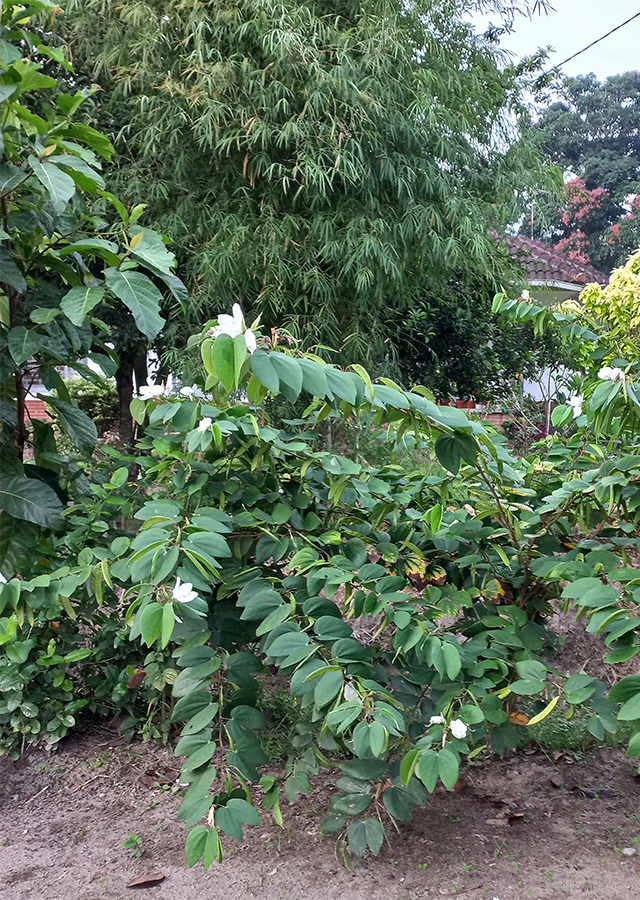
Shrubs. A shrub growing up to 3 m tall
Part Used
 Leaves
 Bark
Bark Flowers
 Roots
Roots Stem
Stem
Growing Requirements
 Full Sunshine
 Need Shade
Habitat
 Forest
 Terrestrial
Overview
Bauhinia acuminata is a species of flowering shrub native to tropical southeastern Asia. The exact native range is obscure due to extensive cultivation, but probably from Malaysia, Indonesia (Java, Borneo, Kalimantan, Lesser Sunda Islands), and the Philippines. An extremely widespread species, with only the general threats of associated habitat loss and degradation as a result of expanding human populations. The plant is classified as 'Least Concern' in the IUCN Red List of Threatened Species(2011).
Vernacular Names
Bai hua yang ti jia (Chinese), Ebènier de montagne (French), Bergebenholz (German), Kaanchanaara (India), Ebano montano (Italian), Moku-wan-ju (Japanese), Ka long (Thai).
Agroecology
Grows on well-drained and sunny places on hillsides and plains and in dry dipterocarp forests, mainly in secondary formations. Succeeds in full sun to partial shade. Prefers a fertile, well-drained but moisture-retentive soil. Succeeds in a variety of soils. Prefers a pH in the range 5.6 - 6.5.
Morphology
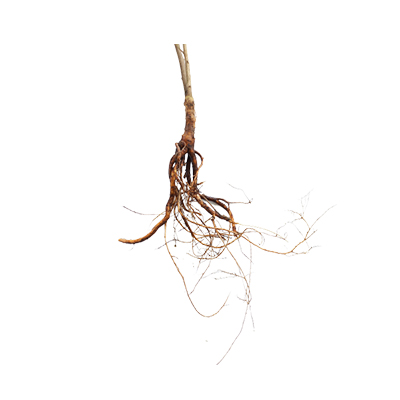
- Roots - taproot.
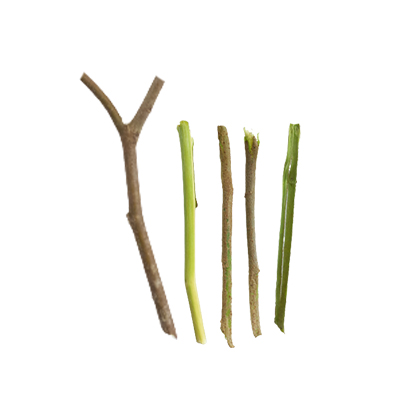
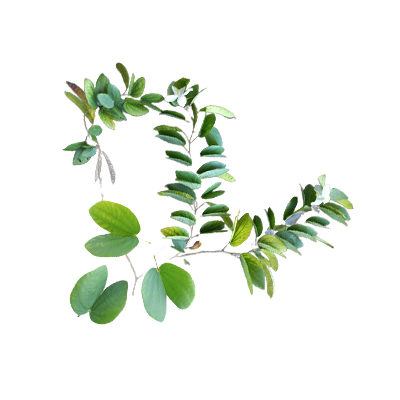
- Stems - Strong, smooth, upright stems with many slender branches, young twigs are usually pubescent.
- Leaves - Ovate to cordate leaves, measuring 9 - 12 by 8 - 12 cm, abaxial is greyish pubescent, adaxial is glabrous, petiole measuring about 2.5 - 4 cm long.
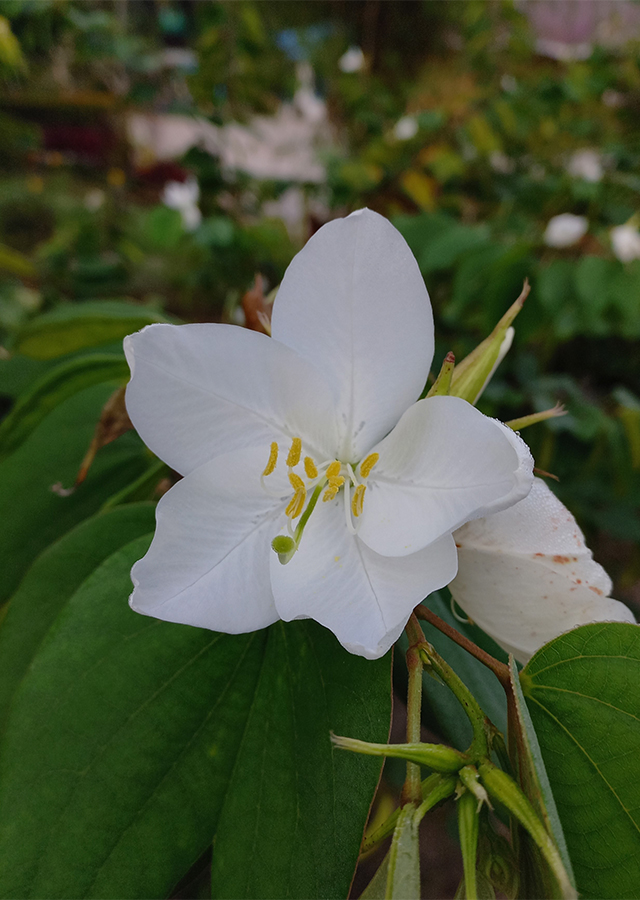
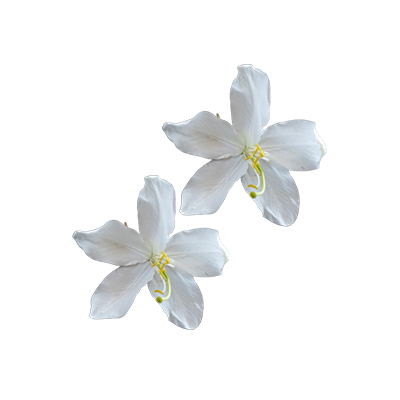
- Flowers - Flowers white, petals elliptic to oblanceolate, sometimes 3 - 15 flowers in a raceme.
- Pods - dark brown, glabrous, usually contain 5 - 12 seeds.
- Seeds - suborbicular, up to 7-10 mm in diameter.
Cultivation
Propagated by seeds and cuttings of half ripe wood.
Chemical Constituents
Alkaloids, flavonoids, tannins, palmitic acid, three phallic acid esters, gallic acid, ursolic acid, essential oils (phytol, sesquiterpenoids ß-caryophyllene, caryophyllene oxide, α-humulene, isomethyl-α-ionone, α-farnesene, β-ionone, humulene epoxide, caryophylla-4(12),8(13)-dien-5α-ol, α-muurolol, α-cadinol, isoaromadendrene), phenolic compounds, saponins, glycosides, steroids, terpenoids, cardiac glycosides, kaempferol, quercetin, apigenin, quercetin derivative (quercetin-3-glucoside).
Traditional Medicinal Uses
- Treats asthma, coughs and colds, headaches, hypertension, bladder stones, venereal disease, skin diseases (including leprosy), burns, nasal ulceration.
- The plant is thrombolytic (breaks up or dissolves dangerous blood clots in the veins), cytotoxic, antidiarrheal, antibacterial, antimicrobial, anti-inflammatory, anthelmintic, antioxidant, and hemolytic.
Part Used
Reference Sources
- Royal Botanic Gardens. 2021. Plants of the World Online: Bauhinia acuminata L. http://www.plantsoftheworldonline.org/taxon/urn:lsid:ipni.org:names:481080-1. 21-01-22.
- Useful Tropical Plants Database. 2021. Bauhinia acuminata. https://tropical.theferns.info/viewtropical.php?id=Bauhinia+acuminata. 21-01-22.
- Flora Fauna Web. 2021. Bauhinia acuminata L. https://www.nparks.gov.sg/florafaunaweb/flora/3/6/3605. 21-01-22.
- Stuartxchange. 2019. Philippine Medicinal Plants: Bambang. http://www.stuartxchange.org/Bambang.html. 21-01-22.