
Bugle
Ajuga reptans L.
Lamiaceae
Location in our garden
Green House

Synonym
Ajuga alpina Fr.
Ajuga barrelieri Ten.
Ajuga breviproles Borbás
Habitus

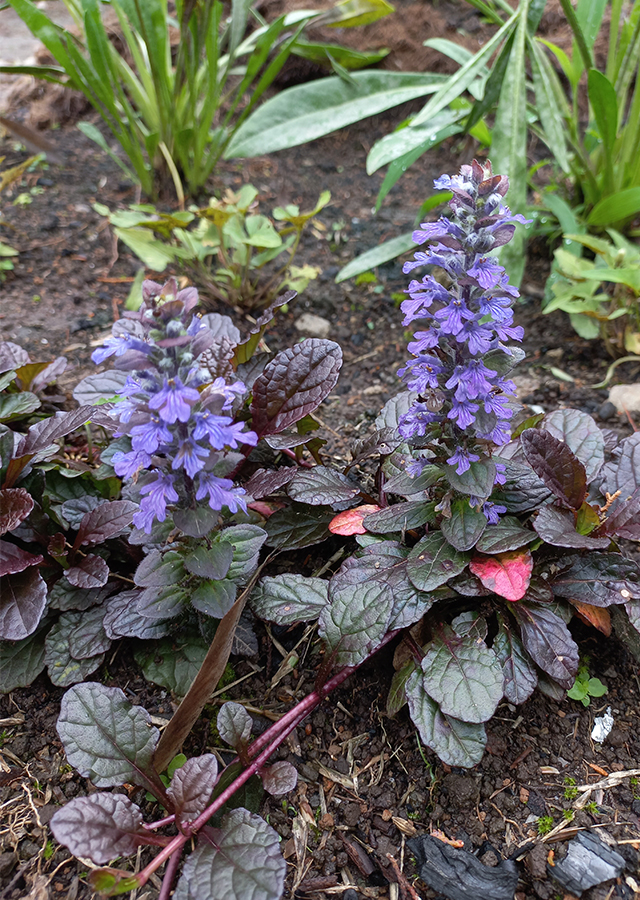
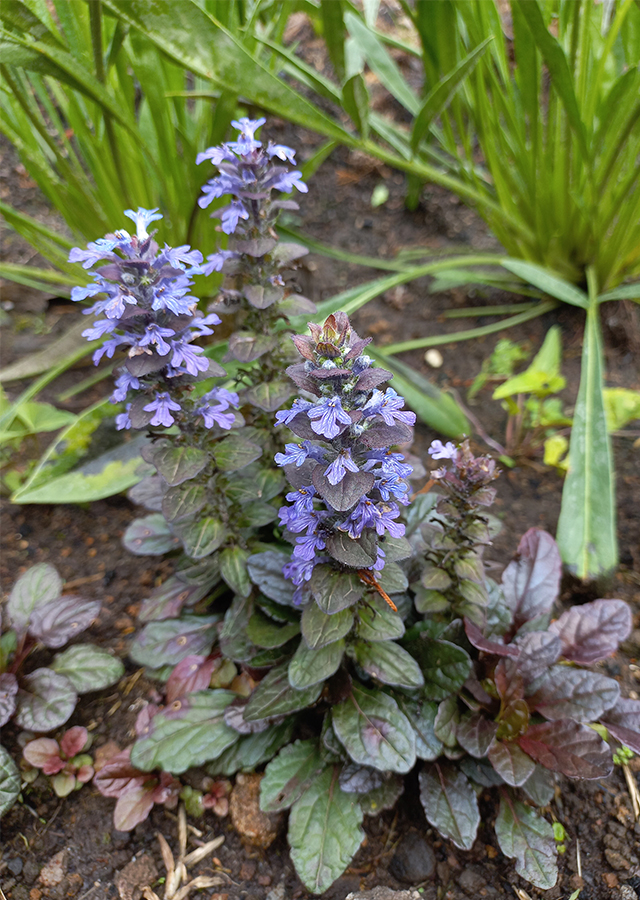
Herbaceous. A low-growing, evergreen perennial ground cover, growing up to 30 cm.
Part Used
 Leaves
 Flowers
 Stem
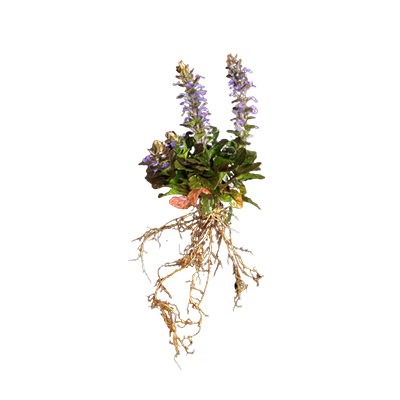
Stem The Whole Plant
Growing Requirements
 Full Sunshine
 Need Shade
 Drought Resistant
Habitat
 Forest
 Grassland
Overview
Ajuga reptans is native to Europe, south-western Asia, and northern Africa. The plant is harvested from the wild for local use as a medicine. It is often grown as an ornamental, particularly for its use as a ground cover in shady sites. The whole plant is aromatic, astringent and bitter. It is also commonly used fresh in ointments and medicated oils.
Vernacular Names
No found data on this. Need further research.
Agroecology
Found on damp grassy fields and damp woods. Prefers a humus-rich, moisture retentive soil and partial shade, though it can also succeed in full sun. Does well in marshy soil and in the spring meadow. Grows well in dry shade, and is fairly drought tolerant once established, though it shows distress in severe drought.
Morphology
- Root - fibrous, hairy, brownish yellow.
- Stem - acaulescent. The flowering stalk is 4-angled and slightly pubescent or hairy.
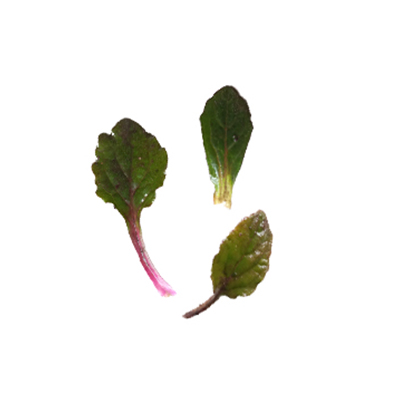
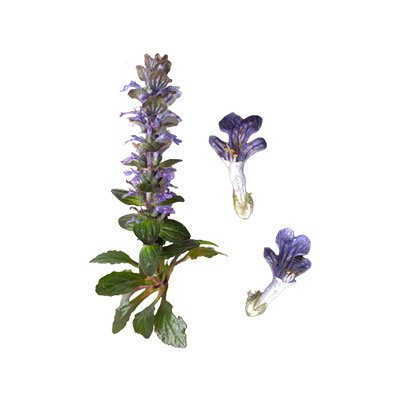
- Leaves - glossy, medium green, 7.5 to 15 cm long, oval-shaped leaves in tight rosettes. Whorled, simple, spatulate, irregularly toothed, glabrous; green, silver, bronze or purple; form basal rosette. Basal leaves are 7.5 cm long and 2.5 cm across, obovate, crenate. Opposite leaves along the stalk are similar to the basal leaves, except that they are smaller in size and ovate.
- Fruit - each fruit is replaced by 4 nutlets that are oval-shaped and pitted across the surface.
Cultivation
Generative propagation is by seed - sow spring or autumn in a cold frame. The seed usually germinates in 3-4 weeks at 10 °C, though it can be erratic. Prick out the seedlings when they are large enough to handle and plant them out in the summer.
Vegetative propagation is by division of runners at almost any time of year. The divisions can be planted straight out into their permanent positions if required.
Chemical Constituents
Ajugareptansone, ajugalactone, harpagide, aucubine, sterols, ecdysteroids, iridoids, flavonoids, polyphenols, tannins, and others.
Traditional Medicinal Uses
- A homeopathic remedy is made from the whole plant. It is widely used in various preparations against throat irritations and especially in the treatment of mouth ulcers.
- It is useful in arresting haemorrhages, and used in the treatment of coughs and spitting of blood in incipient consumption, and heart complaints.
- It was used in Mediterranean traditional medicine for cardiovascular complications and skin disorders.
- In traditional Austrian medicine as a medicinal tea for the treatment of respiratory tract disorders.
- It has antibacterial, anti-inflammatory, antidiarrhea, antiulcerogenic, wound healing and hepatoprotective effects.
Part Used

Reference Sources
- Fern, Ken. (2016). Useful Temperate Plants Database: Ajuga reptans L. http://temperate.theferns.info/plant/Ajuga+reptans. 16-11-2021.
- Goger, G., Kose, Y.B., Demirci, F., and Goger, F. (2021). Phytochemical Characterization of Phenolic Compounds by LC-MS/MS and Biological Activities of Ajuga reptans L., Ajuga salicifolia (L.) Schreber and Ajuga genevensis L. from Turkey. Turrkish Journal of Pharmaceutical Sciences, 18(5),(pg.616–627). doi: 10.4274/tjps.galenos.2021.33958.
- Kew Royal Botanic Gardens. (2017). Plant of the World Online: Ajuga reptans L. http://www.plantsoftheworldonline.org/taxon/urn:lsid:ipni.org:names:444664-1. 16-11-2021.
- North Carolina Cooperative Extention. (No date). North Carolina Extension Gardener Plant Toolbox: Ajuga reptans. https://plants.ces.ncsu.edu/plants/ajuga-reptans/. 17-11-2021.
- Plants For A Future. (2021). Ajuga reptans - L. https://pfaf.org/user/Plant.aspx?LatinName=Ajuga+reptans. 16-11-2021.
- U.S. Departement of Agriculture. (2021). Dr. Duke's Phytochemical and Ethnobotanical Databases: Ajuga reptans (Lamiaceae). https://phytochem.nal.usda.gov/phytochem/plants/show/73?et=#act-1454-close. 16-11-2021.