
African Hosta
Drimiopsis maculata Lindl. & Paxton
Asparagaceae
Location in our garden
Principal
Synonym
Drimia petiolata K.Koch & C.D.Bouché
Drimiopsis minor Baker
Ledebouria petiolata J.C.Manning & Goldblatt
Habitus

Herbaceous. A bulbous perennial herbaceous that grows up to 30 cm tall
Part Used
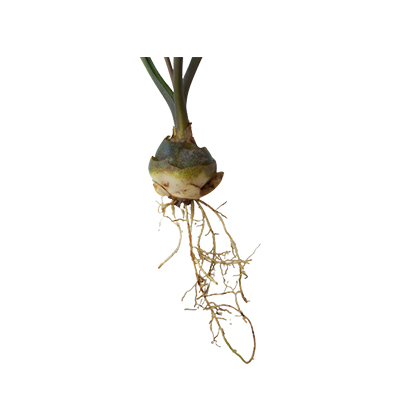
 Roots
Roots Tuber
Tuber
Growing Requirements
 Need Shade
Habitat
 Riverbanks
 Forest
 Coastal
 Grassland
 Terrestrial
Overview
Drimiopsis maculata is native to South Africa. It is desirable as ornamental indoor plants, and it has been used in South Africa as traditional medicine for babies and kids.
Vernacular Names
No found data on this. Need further research.
Agroecology
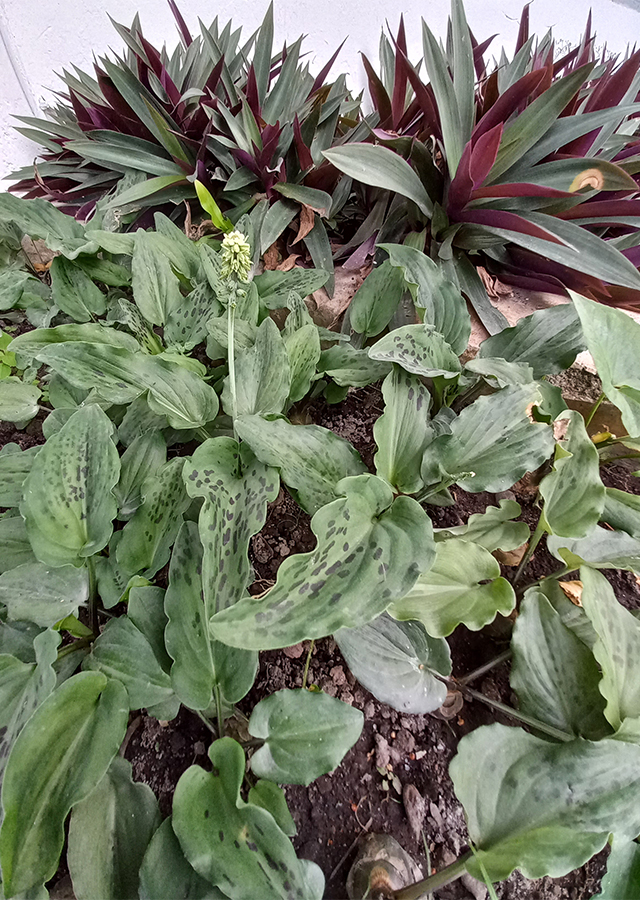
Found under trees and on banks by streams. Need semi-shade, and full shade, with moderate water. It requires a sheltered spot, outdoors associating well with Hostas and Ferns, but in cold areas it is best grown in a pot and kept under cover in the winter. The bulbs multiply rapidly, so they can be tried in various parts of the garden to see what pleases them. Above freezing they will keep some leaves, but in most gardens they will die down and will benefit from a mulch of leaves.
Morphology
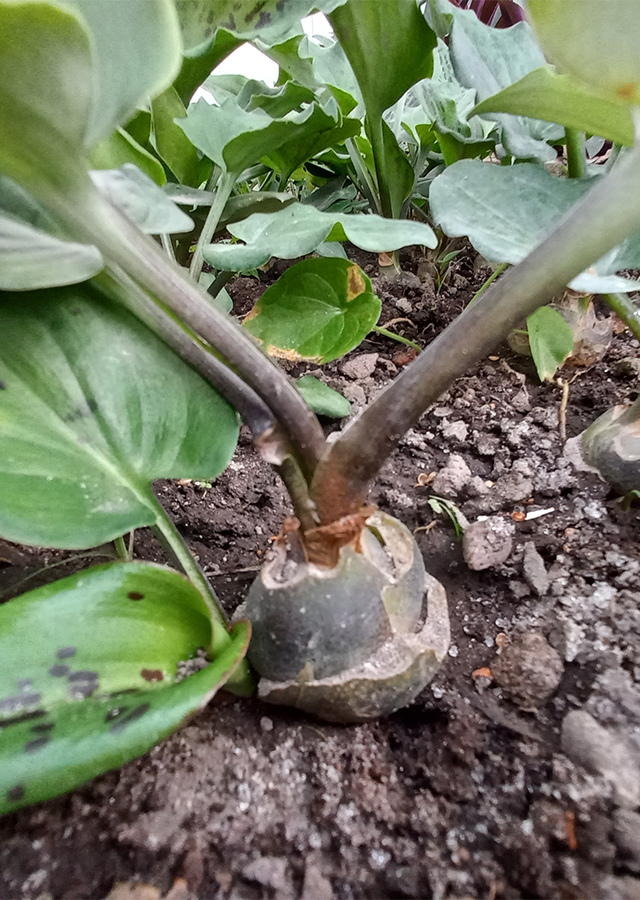
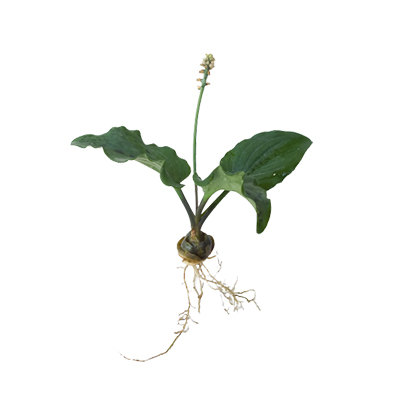
- Bulb - underground.
- Leaves - shiny green leaves have wavy margins and sport black spots, petiole 10 cm, ± 9 cm long and ± 4.5 cm wide.
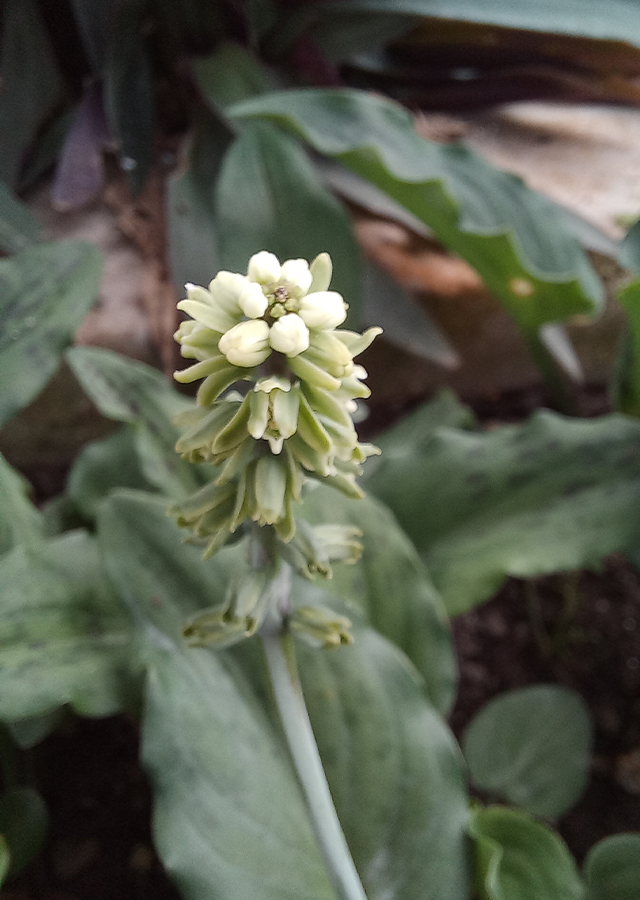
- Flower - spikes of tiny cream or off-white flowers.
- Fruit - capsules.
Cultivation
Propagated by sucker division (vegetative propagation).
Chemical Constituents
Norlignans, scillascillin-type homoisoflavanone and xanthones.
Traditional Medicinal Uses
- Decoctions prepared from shaved bulbs and roots boiled in water or milk. These decoctions are then used in infusions for the treatment of pain and fever.
- Drimiopsis maculata is frequently used in enema preparations for young children suffering stomach ailments.
- It has antimicrobial, and antioxidant activities.
Part Used
Reference Sources
- Dube, L., et al. (2018). Regulation of growth, nutritive, phytochemical and antioxidant potential of cultivated Drimiopsis maculata in response to biostimulant (vermicompost leachate,VCL) application, Springer. https://doi.org/10.1007/s10725-018-0441-1.
- Kew Royal Botanic Gardens. (2017). Plants of the World Online: Drimiopsis maculata Lindl. & Paxton. http://www.plantsoftheworldonline.org/taxon/urn:lsid:ipni.org:names:534585-1. 09-12-2021.
- National Park of Singapore. (2021). Flora Fauna Web: Drimioek of Singaporpsis maculata Lindl. & Paxton. https://www.nparks.gov.sg/florafaunaweb/flora/5/0/5080. 09-12-2021.
- Shrubland Nurseries. (No date). Drimiopsis maculata. https://www.shrublands.co.uk/drimiopsis-maculata.html. 09-12-2021.
- Toit, K.D., et al. (2007). Antibacterial activity and QSAR of homoisoflavanones isolated from six Hyacinthaceae species. South African Journal of Botany, Vol.73(2), (pg.236-241).