
Ghost's Foot
Trevesia burckii Boerl.
Araliaceae
Location in our garden
Green House
Synonym
Trevesia cheirantha (C.B.Clarke) Kuntze
Habitus

Shrubs. A shrub or small tree that grows up to 10 m tall.
Part Used
 Leaves
 Roots
Roots
Growing Requirements
 Need Shade
Habitat
 Forest
 Terrestrial
Overview
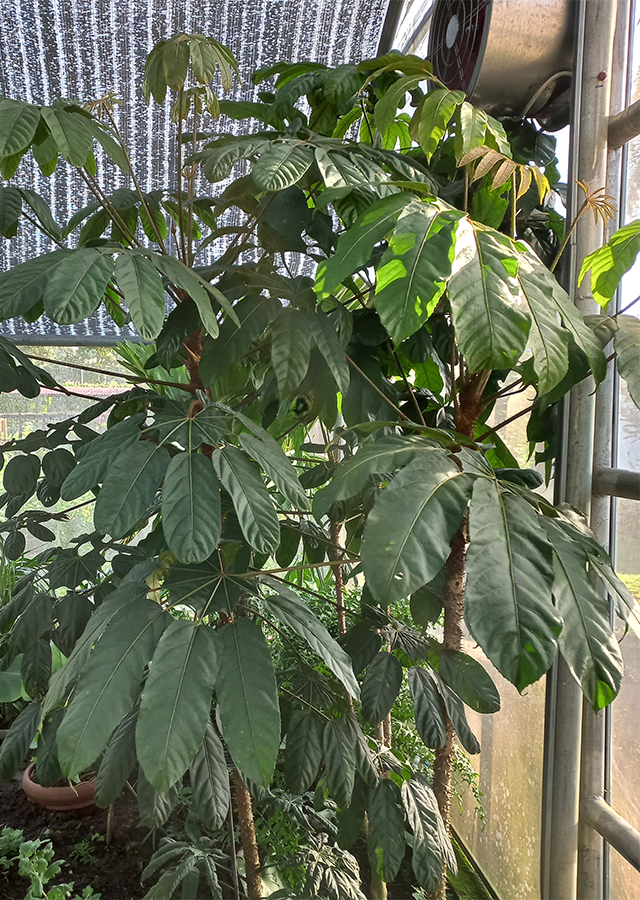
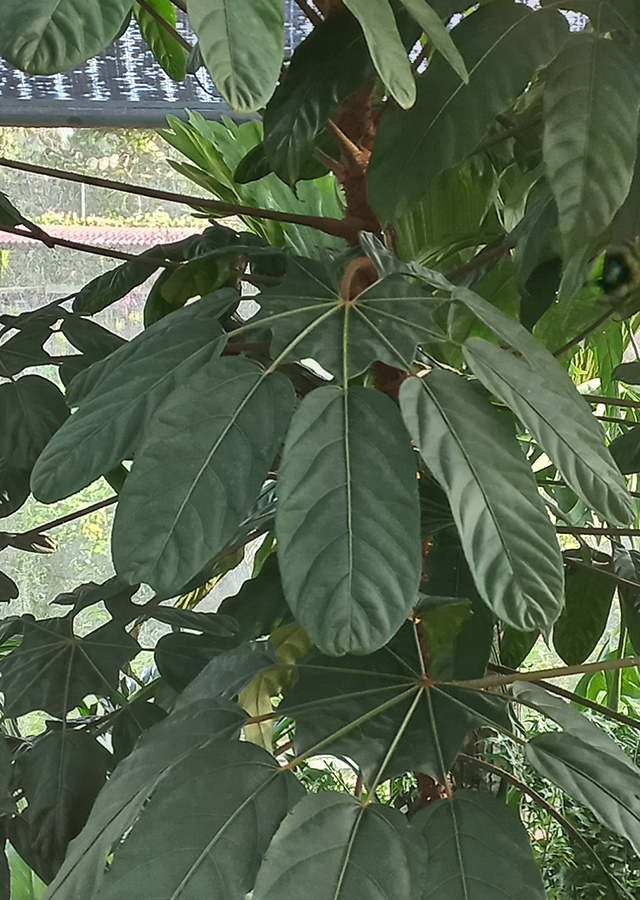
Trevesia burckii, its native range is South-East Asia, ranging from Thailand and Peninsular Malaysia as well as Indonesia (Sumatra, Kalinantan) and Singapore, where it is critically endangered in the wild. The unique “hand-shaped” or palmately-lobed leaves of this tree have inspired a number of common names for this plant, such as tapak badak (Malayan native), tapak itik (Indonesia). Because of its unique leaves, it is sometimes used as an ornamental plant. In traditional medicine, the leaves are pounded and used as a poultice to treat wounds and skin diseases.
Vernacular Names
Tapak harimau (Malaysia), Enrichetta Treves de Bonfili (Spanish).
Agroecology
T. burckii is an understorey tree of evergreen rain forest, from sea-level up to 900 m altitude. Prefers the shaded environment of a mountain rainforest. It is relatively widespread and locally common in humid, shady localities. It is a hardy indoor plant that can tolerate a very wide range of home environments from full sunshine to dark corners.
Morphology
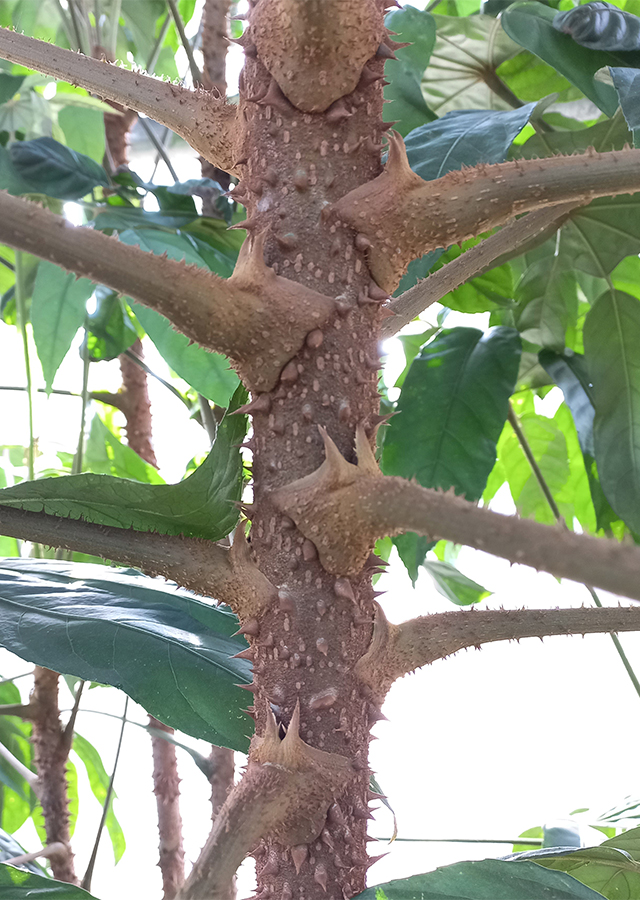
- Stem - branches upright to somewhat reclining, with scattered stout spines.
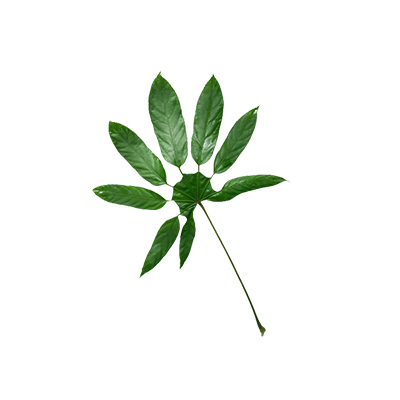
- Leaves - alternate, crowded at the end of branches, palmately lobed, but seemingly digitately compound, more or less circular in outline, up to 60 cm across; lobes 7-9, lanceolate-oblong to obovate, up to 36 x 15 cm, base cuneate to rounded, apex acuminate, margin serrate in the upper part; petiole 20-50 cm long; stipules ligulate.
- Flowers - inflorescence a terminal or lateral panicle up to 60 cm long, consisting of 6-12 secondary branches ending in 30-50-flowered umbellules, and with a terminal umbel of branches; bracts triangular, persistent. Flowers bisexual, regular, 7-10-merous; pedicel slender; calyx an irregular rim; corolla consisting of fused petals falling as a calyptra; stamens with short filaments; disk flattened-conical; ovary inferior, broadly obconical, 7-10-celled, styles united, stigmas slightly swollen, whitish flower..
- Fruit - drupe-like, globose, apically conical, up to 2 cm in diameter, pyrenes compressed.
Cultivation
T. burckii generatively propagated by seed. The fruits are probably eaten by birds and bats, which may serve as seed dispersers.
Chemical Constituents
We are lacking of information about the pharmacology of Trevesia. Need further research.
Traditional Medicinal Uses
- In Peninsular Malaysia the leaves are used for poulticing small sores, skin complaints in general, fractured bones, and, combined with rubbing, to treat rheumatism, ague and fever.
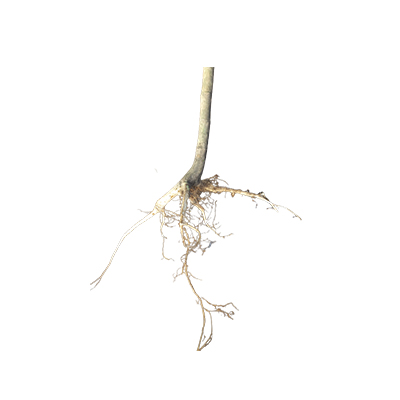
- Decoction of root bark and leaves drunk as a tonic with aphrodisiac properties.
Part Used
Reference Sources
- Boey, H. (2021). Ghost's Foot (Trevesia burckii). https://www.gardensbythebay.com.sg/en/learn-with-us/explore-resources/whats-blooming/ghosts-foot-trevesia-burckii.html. 12-03-2022.
- Kew Royal Botanic Gardens. (No date). Plants of the worl Online: Trevesia burckii Boerl. https://powo.science.kew.org/taxon/urn:lsid:ipni.org:names:92651-1. 12-03-2022.
- Top Tropicals. (2022). Trevesia burckii. https://toptropicals.com/catalog/uid/Trevesia_burckii.htm. 12-03-2022.
- Van-Valkenburg, J.L.C.H. (2016). Trevesia burckii (PROSEA). https://uses.plantnet-project.org/en/Trevesia_burckii_(PROSEA). 12-03-2022.