
Papyrus
Cyperus papyrus L.
Cyperaceae
Location in our garden
Orchard
Synonym
Chlorocyperus papyrus (L.) Rikli
Habitus

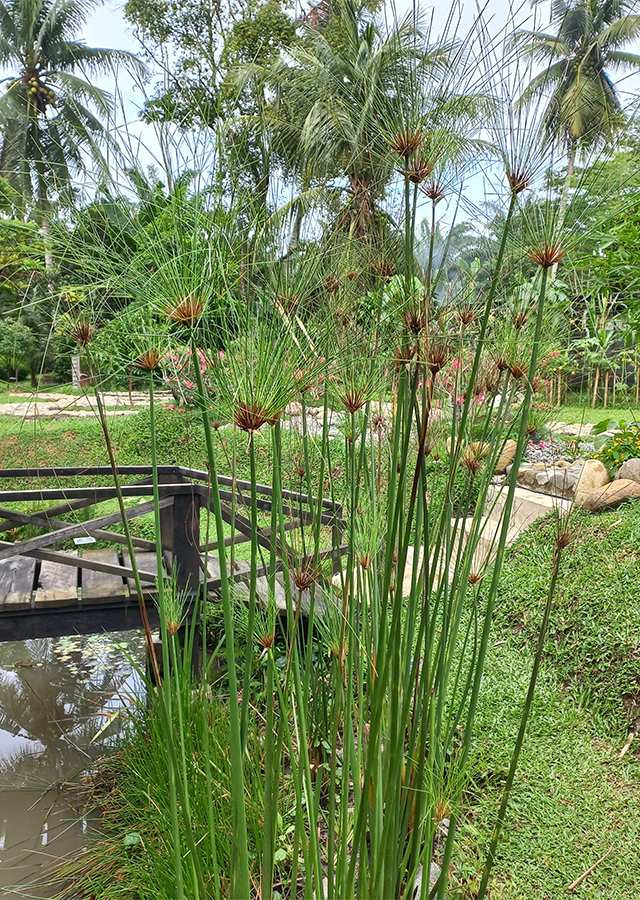
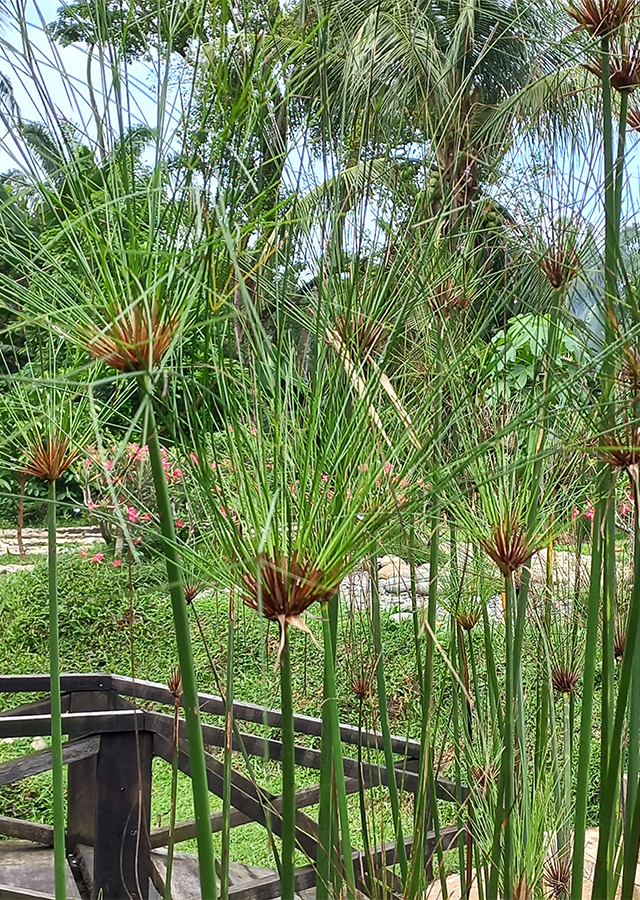
Herbaceous. A vigorous, grass-like, clump-forming, perennial plant with a spreading root system, growing up to 5 m tall.
Part Used
 Leaves
 Flowers
 Roots
Roots Stem
Stem The Whole Plant
Growing Requirements
 Full Sunshine
 Need Shade
Habitat
 Wetland
 Riverbanks
 Terrestrial
Overview
Papyrus is native to central Africa and the Nile Valley, and has been introduced, often as an ornamental species, to other warm parts of the world. The plant has been utilized by humans for over 4,000 years, having been used by the ancient Egyptians for making a kind of paper. It is often cultivated as an ornamental in tropical and warm temperate areas of the world. The plant is classified as 'Least Concern' in the IUCN Red List of Threatened Species.
Vernacular Names
Papiro del Nilo (Spanish), Jonc du Nil (French), Bardi (Arabic), Tjufy (Egypt), Papyrusstaude (German), Papiro (Italian).
Agroecology
Papyrus is a plant of the subtropics to the tropics. It can tolerate a mean annual precipitation in the range 100 - 4,200 mm, and a mean annual temperatures of 20 - 30 °C. Succeeds in full sun and in partial shade. Prefers a fertile, wet soil, or shallow water up to 30 cm deep. The plant can tolerate a pH in the range 6.0 - 8.5.
Morphology
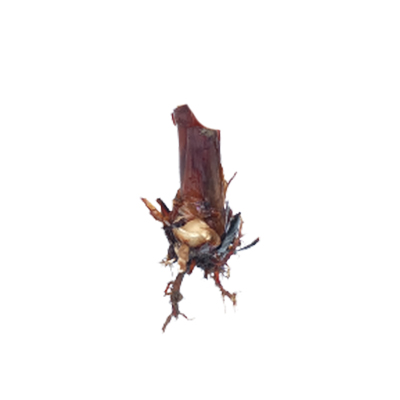
- Rhizomes - 2–6 cm thick, densely covered with black scales 5–10 cm × 5–10 cm.
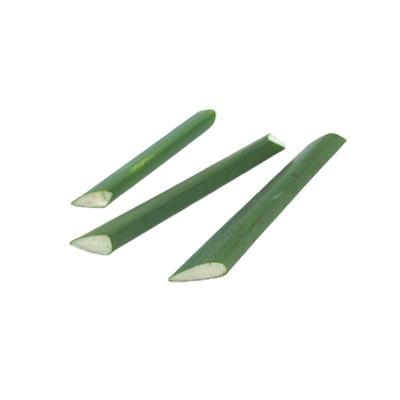
- Stems - up to 5(–9) m tall, trigonous, green.
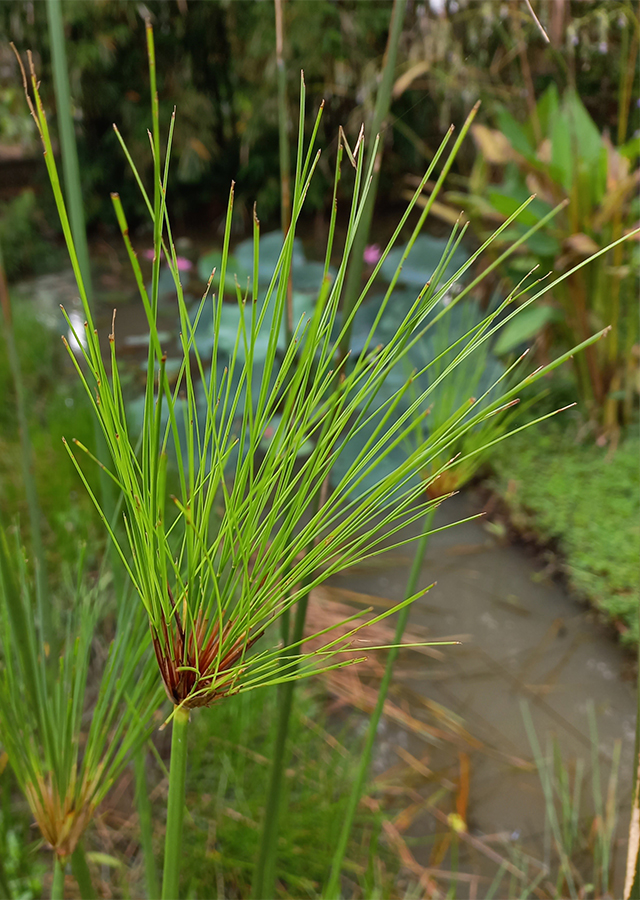
- Leaves - 3 vertical ranks, bladeless, except for sterile shoots; sheath 30–45 cm × 2–5 mm, the lowest ones much shorter.
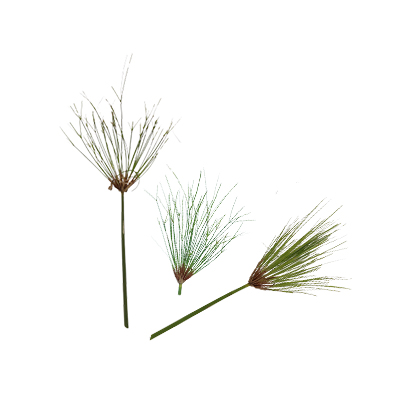
- Flowers - bisexual; stamens 3; ovary superior, stigmas 3. inflorescence branches 50–360 per stem, unequal, 5–40 cm × 1–1.5 mm, green, each with a simple umbel of 2–5 spikes; secondary bracts filiform, 4–12 cm long, green; spikes 15–30 mm × 6–12 mm, with 12–40 spreading spikelets. Spikelet cylindrical to slightly compressed, 3–12 mm × 0.5–1.5 mm, 5–17-flowered; glumes distichous, ovate, 1.5–2.5 mm long, pale brown with green midvein, the lower ones empty.
- Fruits - an ovate, trigonous nutlet c. 1 mm × 0.5 mm, grey, almost smooth.
Cultivation
Propagated by division of woody rhizomes at base of clumps.
Chemical Constituents
Alkaloids tyramine, octopamine, essential oils (caryophyllene oxide, cyperene, 1,8-cineole, humulene epoxide II, aristolene, and aromadendrene epoxide II).
Traditional Medicinal Uses
- The main use seems to have been confined to burnt papyrus sheets, the ash of which was reputed to have the action of pulverised charcoal and was used in the treatment of certain eye diseases
- The ash was also said to check malignant ulcers from spreading in the mouth or elsewhere.
- It was also said that, if macerated in vinegar and then burnt, the ash would heal wounds.
Part Used
Reference Sources
- Fern, Ken. Useful Tropical Plants. (2021). Cyperus papyrus. http://tropical.theferns.info/viewtropical.php?id=Cyperus+papyrus. 21-10-21.
- Cabi. Cyperus papyrus. https://www.cabi.org/isc/datasheet/17503. 21-10-21.
- Plant Resources of Tropical Africa. Cyperus papyrus. https://uses.plantnet-project.org/en/Cyperus_papyrus_(PROTA). 21-10-21.
- Flora & Fauna Web. (2019). Cyperus papyrus. https://www.nparks.gov.sg/florafaunaweb/flora/1/9/1922. 21-10-21.