
Teak
Tectona grandis L.f.
Lamiaceae
Location in our garden
Hardwood
Synonym
Jatus grandis (L.f.) Kuntze
Tectona grandis f. canescens Moldenke
Tectona grandis f. pilosula Moldenke
Habitus

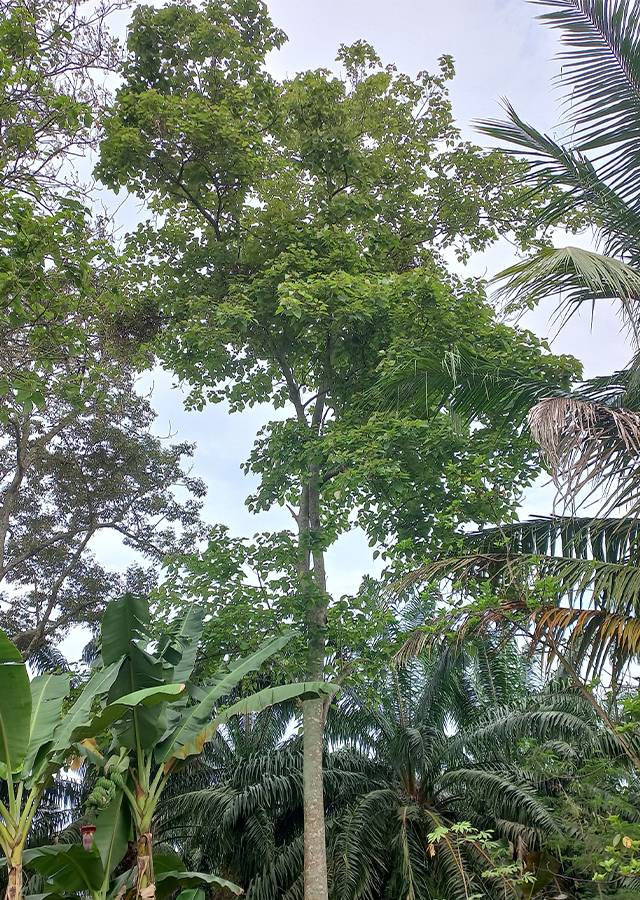
Trees. A large, erect, and deciduous tree with an open, wide spreading crown which can grow to a maximum height of 50 m.
Part Used
 Leaves
 Seeds
Seeds Bark
Bark Flowers
 Fruit
Fruit Roots
Roots Stem
Stem
Growing Requirements
 Full Sunshine
Habitat
 Riverbanks
 Forest
 Terrestrial
Overview
Teak originates from the tropical forests of southern and south-eastern Asia, where it may form almost pure stands. Natural stands are found in India, Burma, Thailand, and Laos. Also in small areas of China and Cambodia. It was probably introduced to Java several hundred years ago and now occurs more or less naturally. Teak is one of the most important and excellent timbers in the world and has been cultivated on a large scalein many countries. Teakwood is used for bridge building and other construction in contact with water (docks, quays, piers, and floodgates in fresh water), ship-building, furniture-making, doors, window frames, outdoor furniture, boat decks, parquet flooring, beams, cabinet work, and other fine wood works. Favored for its resistance to termites and other insect pests. Sawdust from teakwood is used as incense in Java, but the dust, however may irritate the skin. Both the root-bark and young leaves yield a yellowish-brown or reddish coloring matter, which is used for paper, textiles (silk, cotton or wool), and matting. In Indonesia, the leaves also used to colouring food such as egg and unripe jackfuit to making the Javanese dish 'Gudeg'. In addition, teak is used in Ayurvedic medicine, that considered sedative to gravid uterus and a tocolytic agent used to prevent the occurrence of preterm births. Also used in the treatment of piles, leucoderma and dysentery. Teak is often grown in botanical gardens and is occasionally cultivated in tropical countries as an ornamental for its large leaves and spreading flower clusters.
Vernacular Names
Kyun (Burma), Mai-sak, Sak (Thailand), Gỗ tếch, Tếch (Vietnamese), Tekla, Dalanang, Djati (Philippines), Sagun, Sagwan, Saigun, Sāgauna (Hindi), Deleg, Jati, Kembal, Kulidawa, Pokok jati, Semarang (Malay), Sak (Laos), Teca (Spanish), Chīku, Chīku no ki (Japanese), You mu (Chinese), Tiek, Teakbaum, Teakholz. (German), Teck (Itali).
Agroecology
Teak is occurs naturally in various types of tropical deciduous forests. It is found at elevations from sea level to 1.200 metres. It is able to survive and grow under a wide range of climatic and edaphic conditions, but grows best in a warm, moist, tropical climate with a significant difference between dry and wet seasons. It prefers the areas where the mean annual temperature is in the range 14 - 36 °C and the mean annual rainfall of 1.200 - 2.500 mm, but is able to succeed with as little as 600 mm, or as much as 4.000 mm. Requires a sunny position. The most suitable soil is deep, well-drained, fertile alluvial-colluvial soil with a pH of 6,5 - 8 and a relatively high calcium, magnesium, and phosphorous content, but is able tolerating with a pH in the range 4,5 - 8,5. Teak does not tolerate waterlogging or infertile lateritic soils.
Morphology
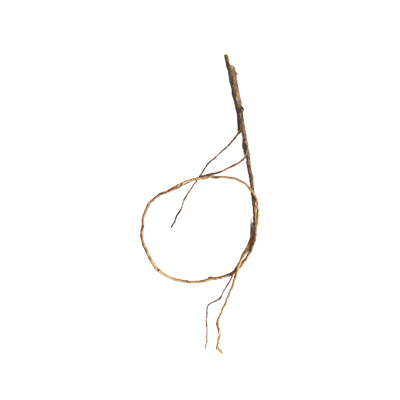
- Root - Taproot.
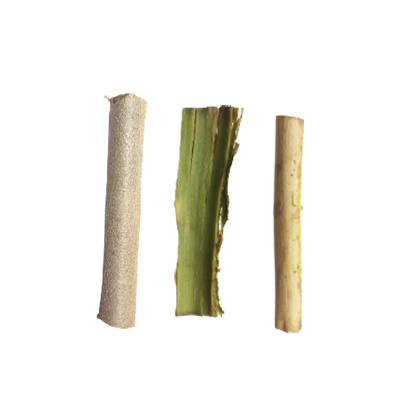
- Stem - Straight and branchless for up to 20(-25) m, up to 150(–200) cm in diameter, sometimes fluted or with low buttresses at base, bark surface with longitudinal cracks, greyish-brown, inner bark with red and sticky sap.
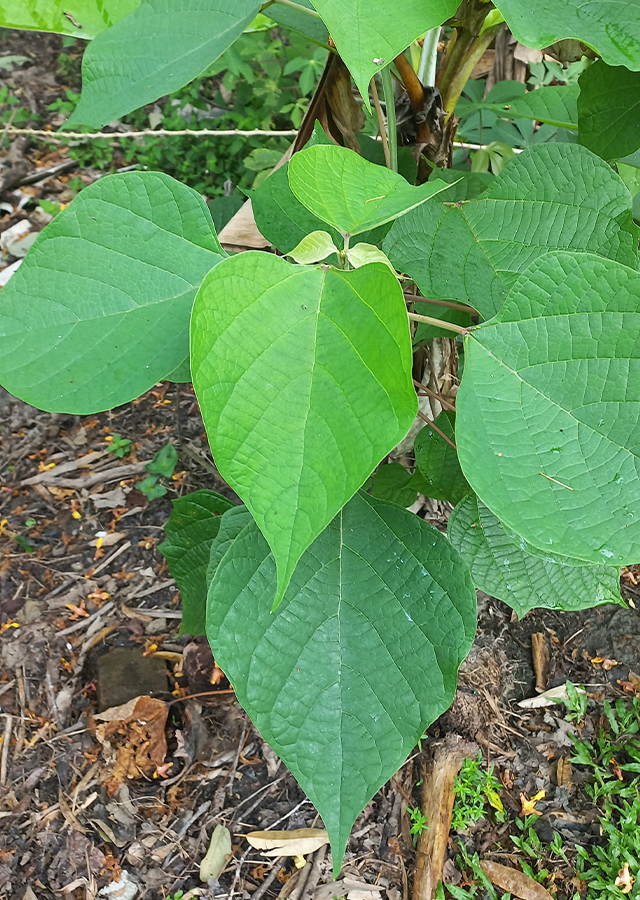
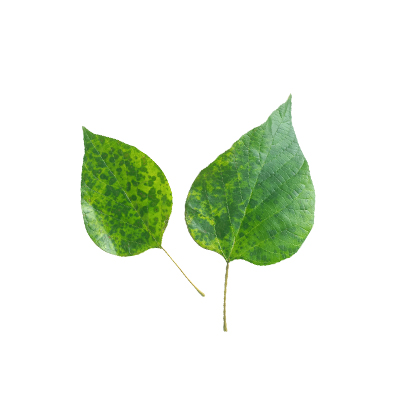
- Leaves - Opposite, large, simple, blade broadly ovate to elliptical-ovate or obovate, cuneate at base, acuminate at apex, thinly leathery, with entire margins. The upper surface rough and without hairs (glabrescent ) and the lower surface pubescent and is also densely covered with red glandular dots, grey or yellowish hairs, and scabrous. Pinnately veined.
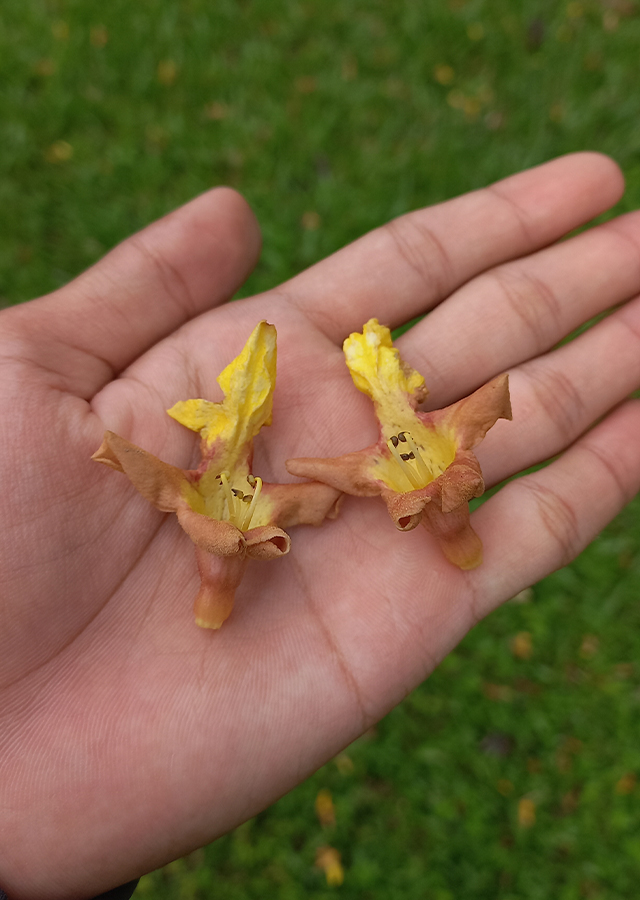
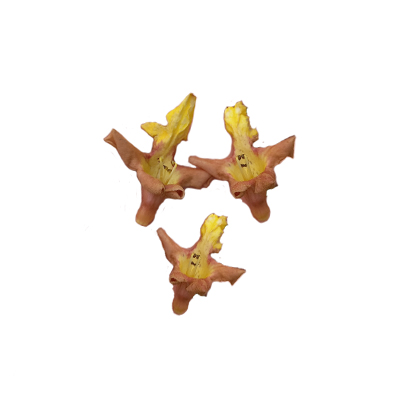
- Flowers - Bisexual, fragrant, numerous, short-stalked, and arranged in large, terminal, much-branched panicles 30 to 80 centimeters long. Calyx is small, bell-shaped, and covered with stellate hairs, with subequal and spreading lobes. Whole calyx is ultimately enlarged, up to 2.5 centimeters long and forming a membranous, blade-like covering to the fruit. Corolla is white, smooth, tube, with pink on the lobes. Stamens inserted at the base of the corolla tube.
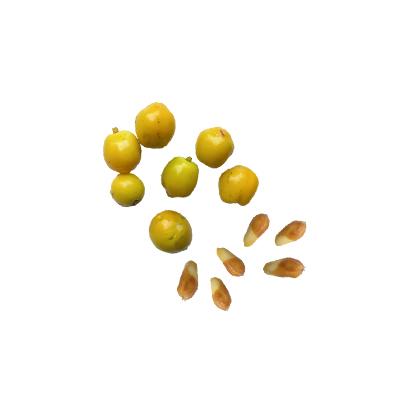
- Fruit - Globose drupe 1–1.5 cm in diameter, the soft pericarp densely clothed with felted, stellate hairs, pale yellow in colour, contains up to 4 seeds, enclosed by the accrescent calyx.
- Seeds - Oval and white in colour.
Cultivation
- Propagated by seed, semi-hardwood or hardwood cuttings, grafting and budding.
- Seed propagation, seeds must be scarified to overcome dormancy arising from the thick seed coat. Scarification is performed by alternately wetting and drying the seeds for 12-hour intervals over a period of 10 to 14 days. After this seeds are sown and germination takes place after 2 to 4 weeks, but the germination rate is low (30% - 50%).
Chemical Constituents
Resin, tectoquinone, alkaloids, glycosides, flavonoids, sterols, saponins, quinones (tektograndone, 6-methyl-1,4-dihydroxyanthraquinone), triterpene (2ß-hydroxyursolic acid), phenol, polyphenols, tannins.
Traditional Medicinal Uses
- Studies have shown antidiabetic, hypolipidemic, antifungal, antibacterial, antioxidant, anti-inflammatory, analgesic, wound healing, antipyretic, nephroprotective, tocolytic, cytotoxic, diuretic properties.
- The leaves have a reputation of being diuretic, depurative, purgative, stimulant, antidysenteric and vermifuge.
- It used in traditional medicine to treat asthenia, fever and malaria, amoebiasis, schistosomiasis.
- Decoction of leaves, fresh or dried, used for hemoptysis, as a gargle for sore throat, menstrual disorders and hemorrhages in general.
- Decoction of fallen yellow leaves used for anemia.
- Hindus used the plaster of powdered wood for bilious headaches and for dispersion of inflammatory swellings.
- The charred wood in poppy juice, reduced to a smooth paste, is used for eyelid swelling. Also, believed to strengthen the sight.
- Wood powder paste also used for bilious headaches and swellings, and internally for dermatitis and as vermifuge.
- The flowers are used against bilious affections, bronchitis and urinary complaints. They are diuretic, as are the seeds.
- An oil extracted from the seeds promotes hair growth also, for soothing skin itching.
- In Ayurveda, considered sedative to gravid uterus, a tocolytic agent used to prevent the occurrence of preterm births. Also used in the treatment of piles, leucoderma and dysentery.
- In Cameroon, used as laxative and in treatment of skin diseases and diarrhea.
- An oil extracted from the roots is used to treat eczema, ringworms and inflammation.
- An oil extracted from the tender shoots is used against scabies in children.
Part Used
Reference Sources
- Stuartxchange. 2018. Philippine Medicine Plants: Tekla. http://www.stuartxchange.org/Tekla. 15-11-2021.
- Useful Tropical Plants Database. 2021. Tectona grandis. https://tropical.theferns.info/viewtropical.php?id=Tectona+grandis. 15-11-2021.
- PROSEA. 2020. Tectona grandis (PROSEA). https://uses.plantnet-project.org/en/Tectona_grandis_(PROSEA). 15-11-2021.
- Flora Fauna Web. 2021. Tectona grandis. https://www.nparks.gov.sg/FloraFaunaWeb/Flora/3/1/3178. 15-11-2021.