
Beggar's Ticks
Ohwia caudata (Thunb.) H.Ohashi
Fabaceae
Location in our garden
Principal

Synonym
Catenaria caudata (Thunb.) Schindl.
Desmodium caudatum (Thunb.) DC.
Hedysarum caudatum Thunb.
Habitus

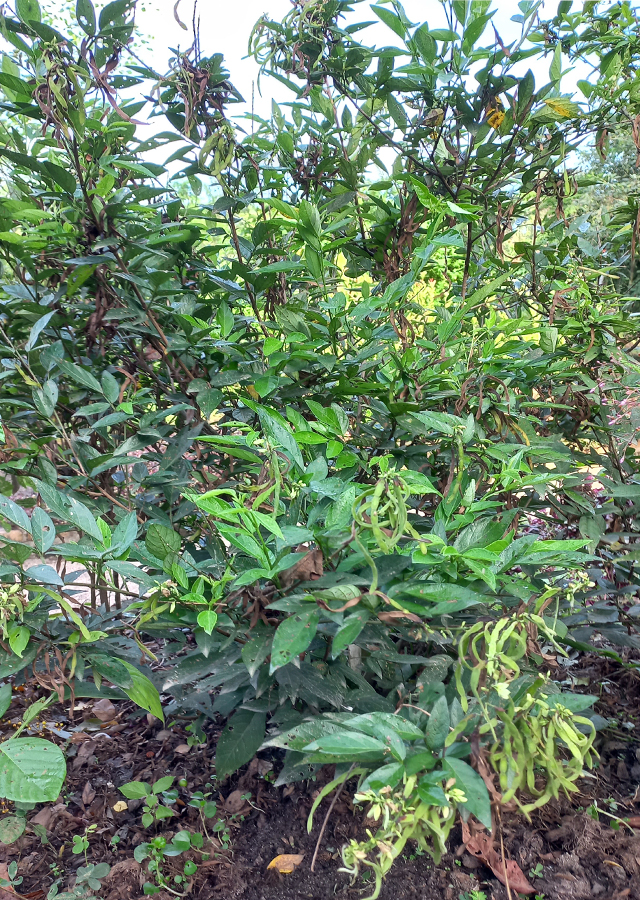
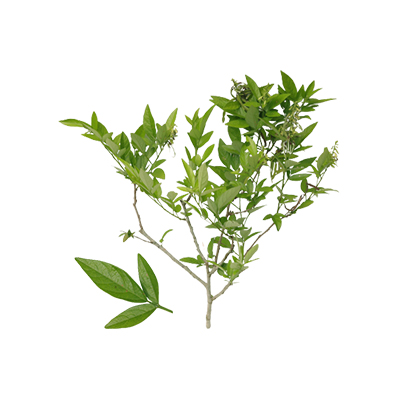
Shrubs. A much-branched, erect, perennial plant with more or less woody stems that persist, grows from 100 - 200 cm tall
Part Used
 Leaves
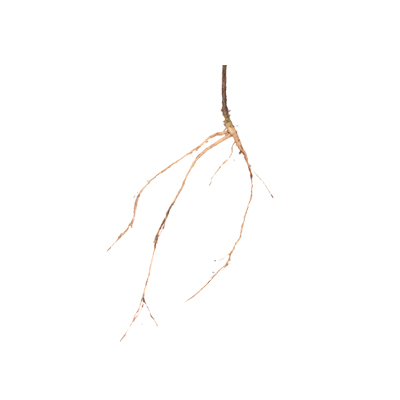
 Roots
Roots Twigs
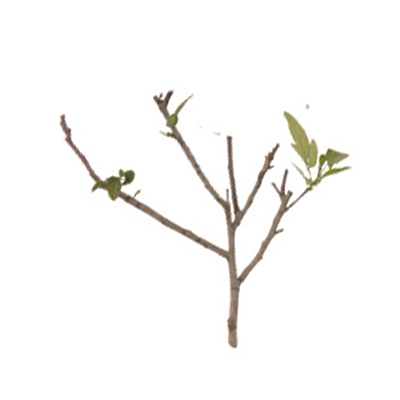
Twigs Stem
Stem
Growing Requirements
 Full Sunshine
Habitat
 Forest
 Mountains
 Roadside
 Grassland
 Terrestrial
Overview
Ohwia caudata is harvested from the wild for local use as a medicine and a pesticide. Its native range is Himalaya to S. Central & S. Japan and W. Malesia. The plant is distributed through E. Asia - China, Japan, Korea, India, Sri Lanka, Bhutan, Myanmar, Laos, Vietnam, Malaysia, Indonesia.
Vernacular Names
Beggar's ticks, Tick's trefoil (English).
Agroecology
Grows well in moist well-drained soil. Requires full sun (6-8 hours) with moderate water requirements. In China, O. caudata can be found growing on mountain slopes, roadsides, meadows, river banks, and forest edges, at an altitude of 100-1.000 m above sea level. This plant forms a symbiotic relationship with nitrogen-fixing bacteria and allows it to grow in infertile soils.
Morphology
- Stems - erect, 1-2 m tall, much branched.
- Leaves - 3-foliolate; petiole 1.5-4 cm, often very narrowly winged; terminal leaflet blade lanceolate or oblong, 5-9 × 1.5-2.5 cm, lateral ones smaller, abaxially apparently glaucous and more densely hairy on raised veins, adaxially lucid and glabrescent, base cuneate, apex acuminate or acute.
- Flowers - terminal or axillary, 5-30 cm; rachis densely pubescent intermixed with minute uncinate and appressed or spreading longer hairs, 2-flowered at each node. Pedicel 3-4 mm. Calyx 3.5-4 mm, upper 2 lobes united for 3/4 length or more. Corolla green-white or yellow-white; standard elliptic, shortly clawed; wings narrowly oblong, clawed; keel oblong, clawed. Ovary densely appressed pilose on both sutures.
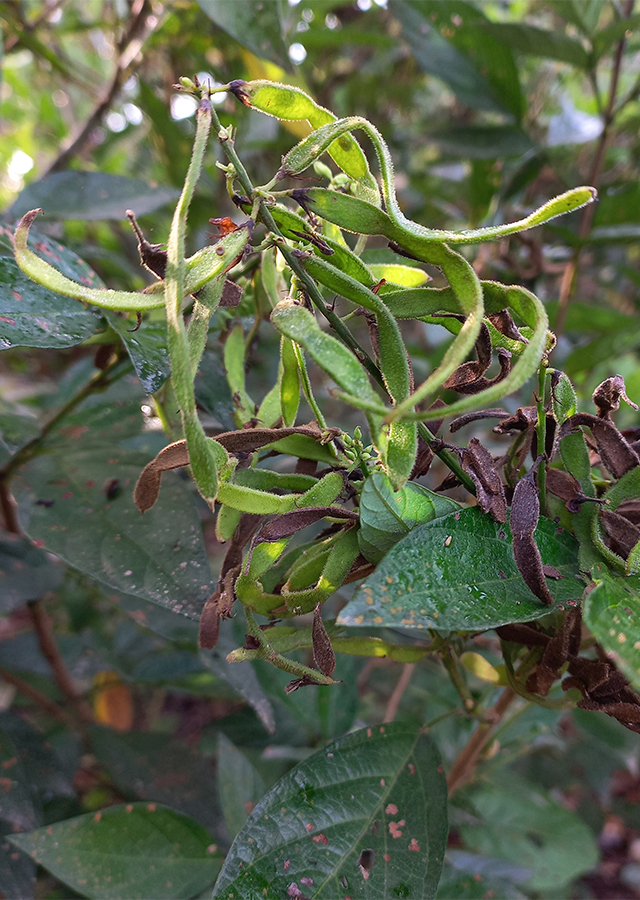
- Fruits - legume linear, flat, 5-7 cm, sessile, 4-8-jointed; articles narrowly ellipsoidal, with dense, short, brown, uncinate hairs.
- Seeds - ovoid, flat.
Cultivation
- Propagated by seeds - best sown as soon as it is ripe. Stored seed develops a hard seedcoat and may benefit from scarification before sowing in order to speed up and improve germination. The seed usually germinates within 1 - 4 months at 25°c. Prick out the seedlings into individual pots once they are large enough to handle and grow them on until large enough to plant out.
- By division - larger clumps can be replanted direct into their permanent positions, though it is best to pot up smaller clumps and grow them on until they are rooting well.
- By cuttings of half-ripe wood with a heel and root cuttings.
Chemical Constituents
Caudatan A and caudatan B, flavonoids (2'-hydroxyl yocovanol, 2'-hydroxyl neophellamuretin, yocovanol, swerticin, spinosin, 7-methyl-apigenin-6-C-β-glucopyranosyl 2″-O-β-d-xylopyranoside), triterpenoids, and alkaloids.
Traditional Medicinal Uses
- The plant is analgesic, antipyretic, antiseptic and depurative.
- The root and leaves are diuretic.
- Stems and roots have been used medicinally to treat various diseases like fever, dysentery, icterohepatitis, and abscess.
Part Used
Reference Sources
- Fern, Ken. Useful Tropical Plants. (2014). Ohwia caudata. https://tropical.theferns.info/viewtropical.php?id=Ohwia+caudata. 04-11-21.
- Flora of China. Ohwia caudata. http://www.efloras.org/florataxon.aspx?flora_id=2&taxon_id=242413833. 04-11-21.
- NCBI. Systems Pharmacological Approach to Investigate the Mechanism of Ohwia caudata for Application to Alzheimer’s Disease. Ohwia caudata. (2019). https://www.ncbi.nlm.nih.gov/pmc/articles/PMC6515364/. 04-11-21.