
Giant Granadilla
Passiflora quadrangularis L.
Passifloraceae
Location in our garden
Principal
Synonym
Passiflora grandiflora Salisb.
Passiflora macrocarpa Mast.
Passiflora sulcata Jacq.
Habitus

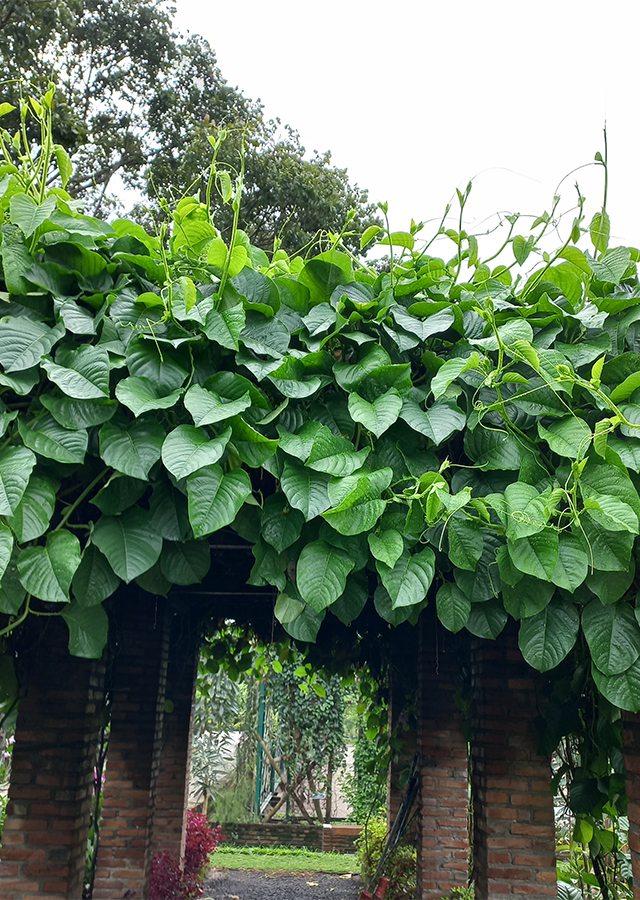
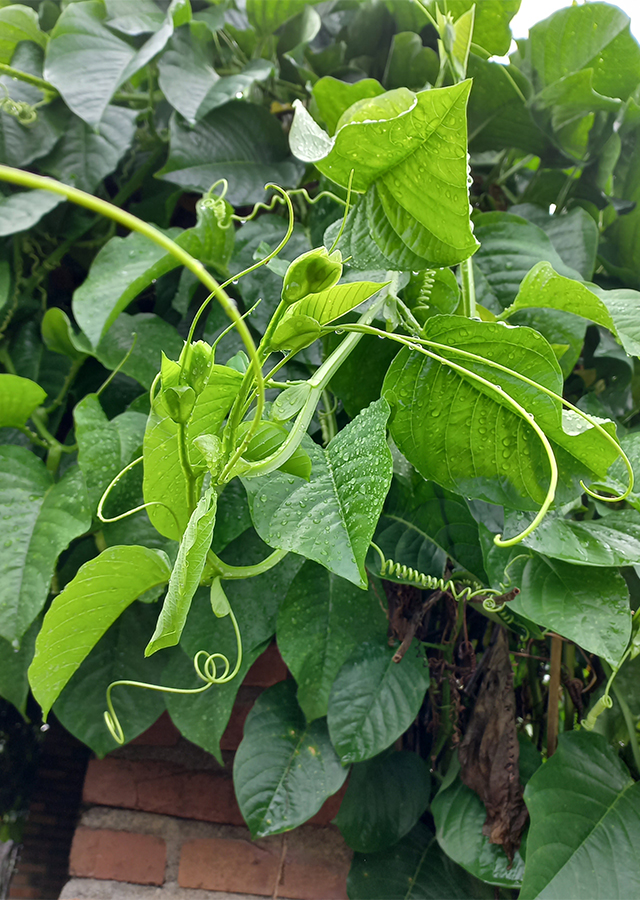
Climbers. An evergreen climbing shrub, attaching itself to other plants by means of coiling tendrils, produce stems up to 15 m long
Part Used
 Leaves
 Flowers
 Fruit
Fruit Roots
Roots The Whole Plant
Growing Requirements
 Need Shade
Habitat
 Forest
 Terrestrial
Overview
The giant granadilla originated in South America and has been distributed throughout the tropical lowlands. It is cultivated on a small scale in South and Central America, Hawaii, South-East Asia and Australia, and has become naturalized in moist habitats in these regions. The edible fruits are greatly appreciated and are often gathered from the wild.
Vernacular Names
Timun belanda (Malay), Kasaflora (Philippines), Sukhontharot (Thai), Chùm bao dúa (Vietnamese), Fleur de la passion (French).
Agroecology
Succeeds in the hot, wet, lowlands to moderate elevations in tropical to subtropical climates. Grows better at elevations between 200 - 500 m. Plants require a temperature no lower than around 16°C when they are flowering in order to ensure fruit set. Requires a humus-rich, moist but well-drained soil and a position in dappled shade where it can grow up towards the sun. Prefers a circumneutral soil, disliking very acid or very alkaline conditions.
Morphology
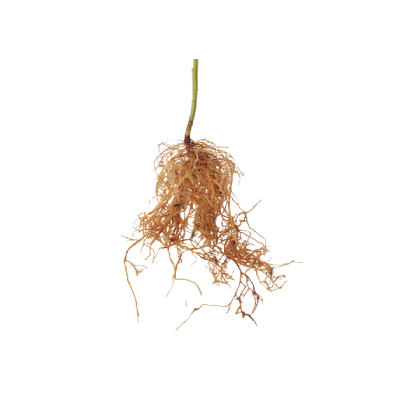
- Roots - fleshy tuberous.
- Stems - quadrangular with 4 broad, acute wings.
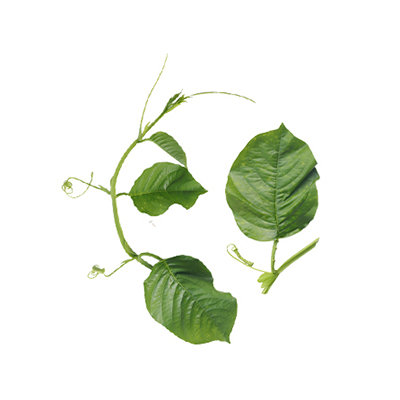
- Leaves - alternate; petiole trigonous, 5-8 cm long, with 3 pairs of glands along the margin; stipules lanceolate, 2-5 cm x 1-2.5 cm, entire or glandulose-serrate; blades ovate to elliptic, 10-25 cm x 8-18 cm, entire, base cordate, apex acuminate, prominently pinnately nerved; tendrils axillary, simple, 20-35 cm long.
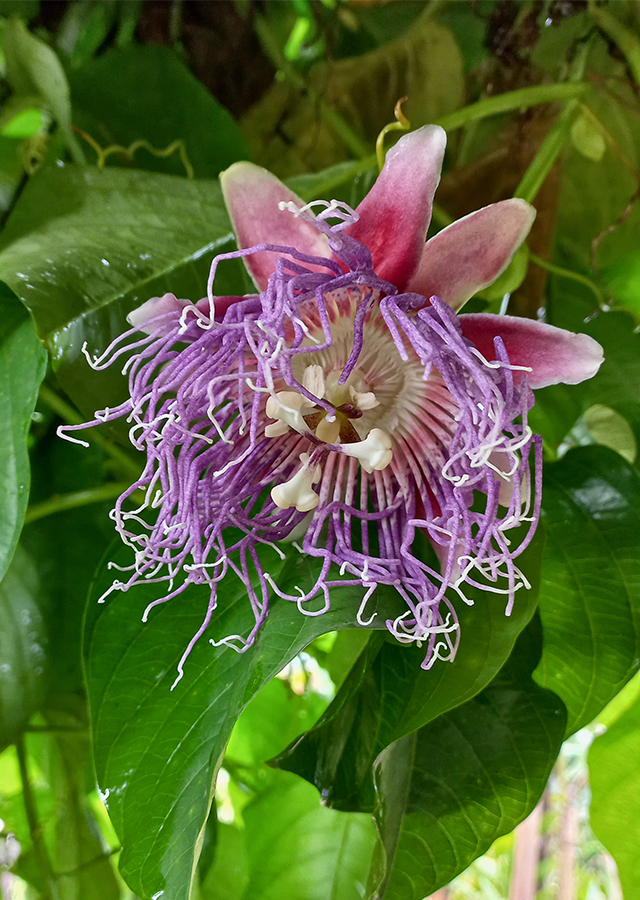
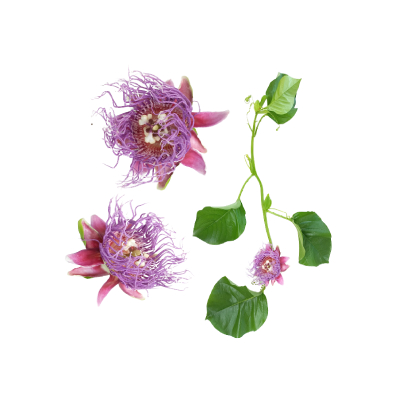
- Flowers - solitary in the leaf axils, pendulous, fragrant, showy, 10-12 cm in diameter; calyx tubular at base, lobes 5, ovate, 3-5 cm x 1.5-2 cm, spreading widely, thick, spongy; petals 5, linear-oblong to elliptic, 4-5 cm x 1.5-2 cm, spongy, with dense pattern of red dots; corona with 2 outer layers of sinuous threads, 5-7 cm long, white reddish-purplish; internally several rows of papillae; stamens 5, with large anthers; ovary on gynophore, 1-locular, many-ovuled; styles 3-5 with large stigmas.
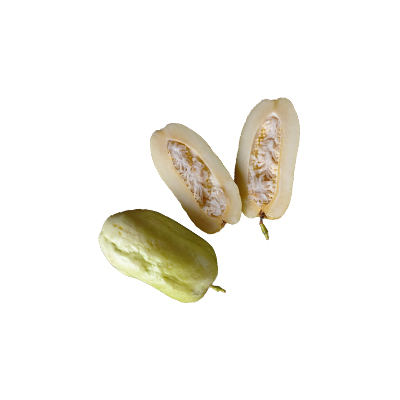
- Fruits - fleshy berry, ovoid-oblongoid, 10-30 cm × 10-18 cm, yellowish-green; pericarp up to 4 cm thick; cavity filled with numerous seeds surrounded by translucent juicy arils; mesocarp and arils are edible.
- Seeds - flat, obovoid, up to 1 cm long, dark brown.
Cultivation
- Propagated by seeds - best sown as soon as it is ripe along with the pulp which will help break down the seed coat and speed up germination. Place the seed tray in a shady position, maintaining a temperature around 19 - 24 °C. Prick the seedlings out into individual containers as soon as they are large enough to handle and plant out when large enough.
- By cuttings of young shoots, taken at the nodes. The cuttings root best in a neutral to slightly acid compost, but 100% sharp sand also produces good results.
- By cuttings of fully mature wood taken at a node. They can take 3 months, but there is usually a high percentage.
- By layering and air layering.
Chemical Constituents
Alkaloids, glycosides, flavonoids, essential oils, gynocardin (cyanogenic glycosides), carbolin alkaloids, benzoflavones, hydrocyanic acid, norepinephrine, 5-hydroxytryptamine, cyclopropane triterpene glycosides.
Traditional Medicinal Uses
- The root is diuretic, emetic, narcotic and vermifuge. When powdered and mixed with oil, the root is used externally as a soothing poultice.
- An infusion of the young leaves is used as an antiscorbutic.
- The leaves are powdered and mixed with oil then used externally as a soothing poultice. They are also used in this form to treat liver complaints.
- The fruit is antiscorbutic and stomachic.
- The rind of the fruit is sedative. It is used in the treatment of headaches, asthma, diarrhoea, dysentery, neurasthenia and insomnia.
Part Used
Reference Sources
- Fern, Ken. Useful Tropical Plants. (2021). Passiflora quadrangularis. http://tropical.theferns.info/viewtropical.php?id=Passiflora+quadrangularis. 02-11-21.
- Plant Resources of South East Asia. Passiflora quadrangularis. https://uses.plantnet-project.org/en/Passiflora_quadrangularis_(PROSEA). 02-11-21.