
Vitex
Vitex pinnata L.
Lamiaceae
Location in our garden
Shading Area
Synonym
Pistaciovitex pinnata (L.) Kuntze
Vitex arborea Roxb.
Vitex articulata Steud.
Habitus

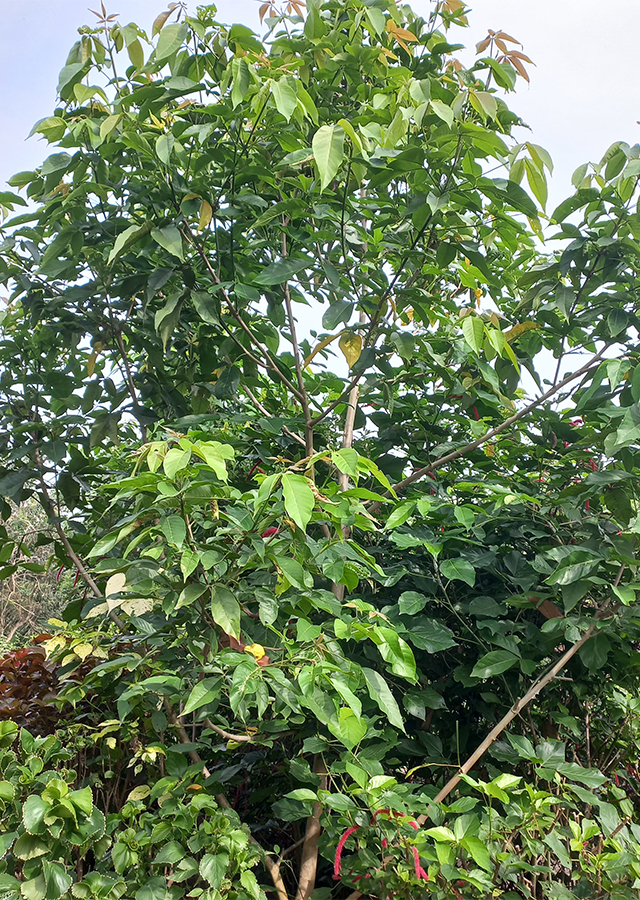
Trees. An evergreen tree with a crown that is often spreading; it can grow up to 25 m tall
Part Used
 Leaves
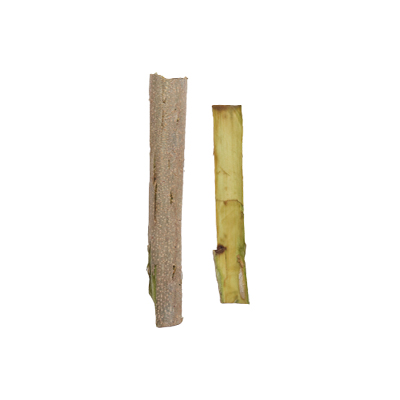
 Bark
Bark
Growing Requirements
 Full Sunshine
Habitat
 Riverbanks
 Forest
 Grassland
 Terrestrial
Overview
Originated from South and East Asia. Widely distributed in several countries, including India, Malay Peninsula, Indonesia, Philippines, and Thailand. The tree is an important local timber and provides a high quality charcoal. It is used as a pioneer tree in planting schemes to reclaim land infested with Imperata grass and it is one of the recommended species to plant along roadsides.
Vernacular Names
Leban (Malay), Molave (Philippines), Samo-tinpet (Thai), Kyetyo-po (Myanmar).
Agroecology
Vitex pinnata is common in comparatively dry regions in lowland forest, where it can be found at elevations up to 1.000 m. It is found in areas where the mean annual rainfall is within the range 590 - 1.500 mm, and the mean annual temperature 20 - 32 °C.
Morphology
- Barks - yellowish grey or light brown, smooth to flaky and sometimes fluted.
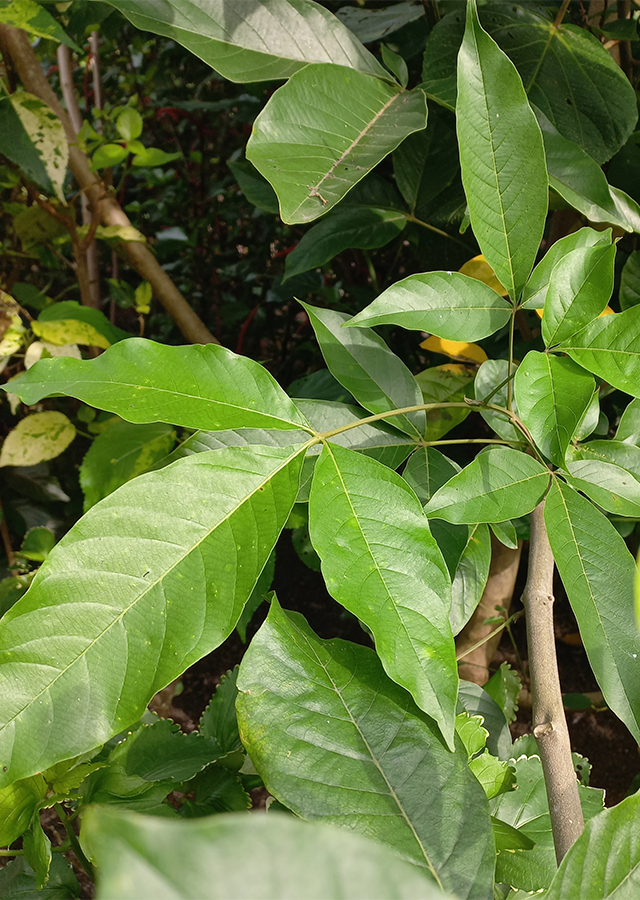
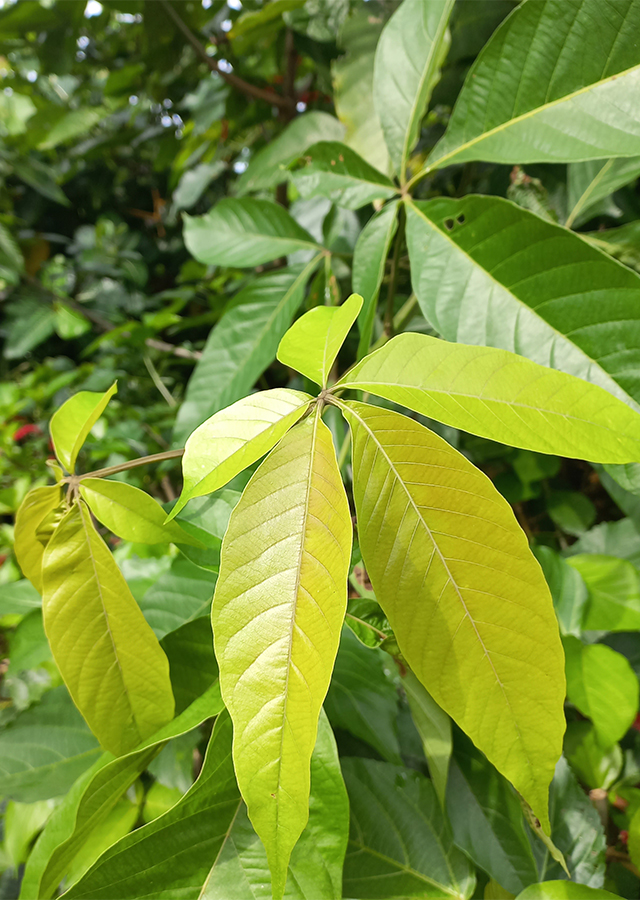
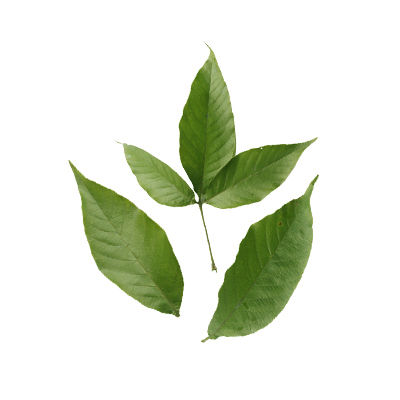
- Leaves - compound, usually with 3 leaflets (sometimes 1 - 5 leaflets). Central leaflet is elliptic (8,2 - 24 cm long and 3 - 9 cm wide) while side leaflets are smaller. Leaves have yellowish green hairs which become more obvious when dried. Glands are present on the underside of leaves.
- Flowers - Inflorescence (8 - 20 cm long) comprise of many small flowers. Each flower (about 8 mm diameter) have 5 white to violet petals which are fragrant. Leaf-like bracteoles (7 - 15 mm long and 6 mm wide) are present. Calyx is yellowish to brownish green, 5- lobed and has flatten hairs.
- Fruits - purplish black (about 5 - 8 cm diameter), round, shiny, and fleshy.
- Seeds - enclosed in stone hard endocarp.
Cultivation
Propagated by seeds - pre-soaking the seeds for 15 seconds in hot water stimulates and increases germination. Seeds start to germinate 10 - 40 days after sowing with a germination rate of 60 - 80%. Seed can be stored for 1 year after depulping. Under dense forest canopy germination is completely inhibited, but the seeds remain dormant and viable for more than 6 months. Seed under light shade differentiates into 2 fractions: one with seeds germinating within 2 months, the other with seeds remaining dormant and only germinating when exposed to full sunlight.
Chemical Constituents
Saponins, tannins, iridoid glucoside (pinnatoside), three flavonoids (viscioside, apigenin, and luteolin).
Traditional Medicinal Uses
- A decoction of the bark is used to treat stomach-ache.
- A poultice of the leaves is used to treat fevers and wounds.
Part Used
Reference Sources
- Fern, Ken. Useful Tropical Plants. (2021). Vitex pinnata. http://tropical.theferns.info/viewtropical.php?id=Vitex+pinnata. 09-12-21.
- Flora & Fauna Web. Vitex pinnata. https://www.nparks.gov.sg/florafaunaweb/flora/5/6/5628. 09-12-21.
- CAB International. https://www.cabi.org/isc/datasheet/56550. 09-12-21.