
Septic Fig
Ficus septica Burm.f.
Moraceae
Location in our garden
Principal


Synonym
Covellia leucopleura (Blume) Miq.
Covellia rapiformis (Roxb.) Miq.
Ficus brunnea Merr.
Habitus

Trees. A shrub or atree, often with pendulous branches; it can grow from 3 - 25 m tall
Part Used
 Leaves
 Bark
Bark Fruit
Fruit Latex
Latex Roots
Roots
Growing Requirements
 Full Sunshine
 Need Shade
Habitat
 Riverbanks
 Forest
 Terrestrial
Overview
Distributed to The Ryukyu Islands, Taiwan, throughout Malesia except for Peninsular Malaysia, the Solomon Islands to Vanuatu and northern Australia (Queensland). The tree is harvested from the wild for local medicinal uses. It can be used as a pioneer plant when restoring woodland.
Vernacular Names
Hauili (Philippines), Leng guo rong (Chinese), Doomar (Hindi).
Agroecology
Grows on various soil types, at elevations up to 1,800 m. It is favoured by disturbance and is a frequent component of rain forest regrowth.
Morphology
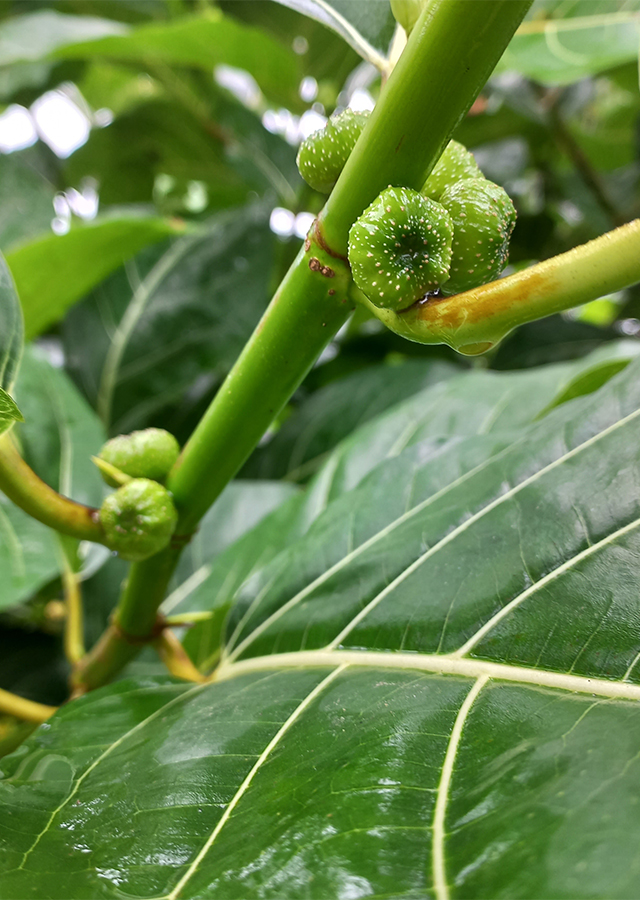
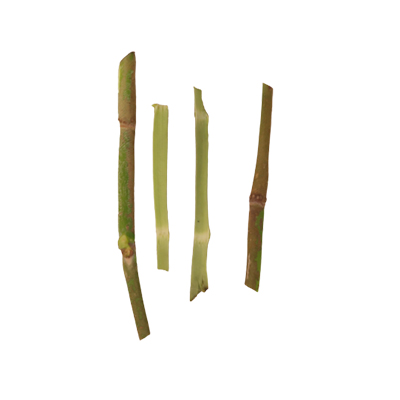
- Barks - pale grey or white, smooth, with more or less hairy young shoots.
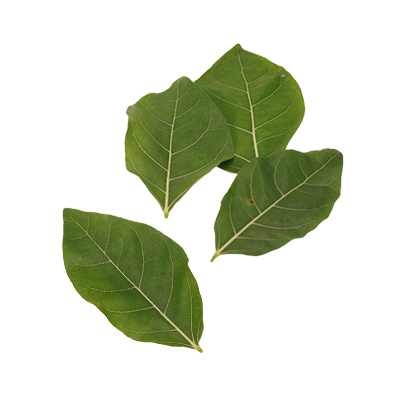
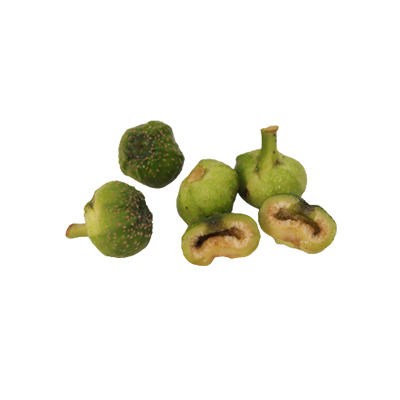
- Leaves - smooth and shining, not all roughened, oblong-ovate to elliptic-ovate, 10 to 20 centimeters long, with tip tapering to a rather sharp point, and the base pointed. Receptacles are axillary, solitary, depressed-globose or turbinate, obscurely ridged or angled, 1.5 to 2 centimeters in diameter, and shortly peduncled, ripening white to yellowish.
- Flowers - male flowers with 1 stamen, female flowers with united tepals.
Cultivation
Propagated by seeds.
Chemical Constituents
Isoflavones, indolizidine alkaloids, tannins, deoxysugars, benzopyrone nucleus and phenanthroindolizidine alkaloids.
Traditional Medicinal Uses
- The leaves are used as a sudorific to treat headache.
- The leaves, applied externally, are said to be antirheumatic. They are applied to cure colds, coughs, fever and fungal and bacterial diseases.
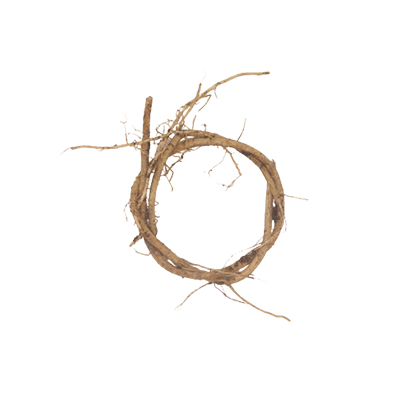
- The roots are antiasthmatic, antidote, antiemetic and diuretic.
- The crushed root, mixed with coconut water, is drunk daily to treat urinary tract infections.
- The roots are used as a poultice on boils.
- Root scrapings, or the leaves, have been mixed with water and drunk to cure dysentery or diarrhoea.
- The fruits are emetic.
- Stem bark material of this species was active against tumor cell cultures.
Part Used

Reference Sources
- Fern, Ken. Useful Tropical Plants. (2014). Ficus septica. http://tropical.theferns.info/viewtropical.php?id=Ficus+septica. 14-09-21.
- Prosea. Plant Resources of South Africa. Ficus septica. https://uses.plantnet-project.org/en/Ficus_septica_(PROSEA). 14-09-21.
- StuartXchange. Philippines Medicinal Plant. (2015). Ficus septica. http://www.stuartxchange.org/Hauili. 14-09-21.