
Bitter Gourd
Momordica charantia L.
Cucurbitaceae
Location in our garden
Vegetable
Synonym
Cucumis argyi H.Lév.
Cucumis intermedius M.Roem.
Momordica anthelmintica Schumach. & Thonn.
Habitus

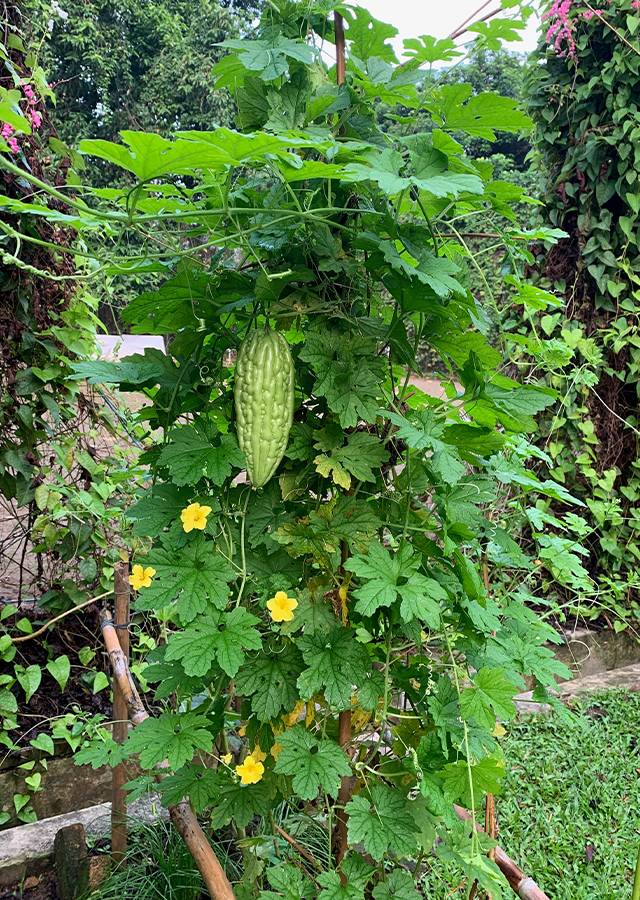
Climbers. Annual climbing vine, sprawling herb, 2-3 m tall
Part Used
 Leaves
 Seeds
Seeds Flowers
 Fruit
Fruit Roots
Roots Stem
Stem
Growing Requirements
 Full Sunshine
Habitat
 Riverbanks
 Forest
 Coastal
 Shrublands
 Grassland
Overview
Bitter gourd is native to tropical and sub-tropical parts of Asia and Africa. Currently it can be found cultivated and naturalized in North, Central and South America, the West Indies and on several islands in the Pacific Ocean. The plant has been widely introduced to be consumed as a vegetable and to be used in traditional medicine.
Vernacular Names
La khoqua (Vietnamese), Ampalaya (Philippine), Peria laut (Malaysia), Margose (French), Niga uri (Japanese), Lai pu tao (Chinese), Kyethinkhathee (Burmese).
Agroecology
The plant is best adapted to hot humid areas of the tropics and subtropics, though it can be grown in a wide range of climates right into the temperate zone so long as there is a sufficient growing season. It can be grown at elevations up to 1,000 m in the tropics. It grows best in areas where annual daytime temperatures are within the range 22-30 °C. It prefers a mean annual rainfall in the range 2,000-2,500 mm. Grows best in a sunny position. Requires a soil rich in organic matter if optimum yields are to be achieved. Prefers a pH in the range 6-6.5.
Morphology
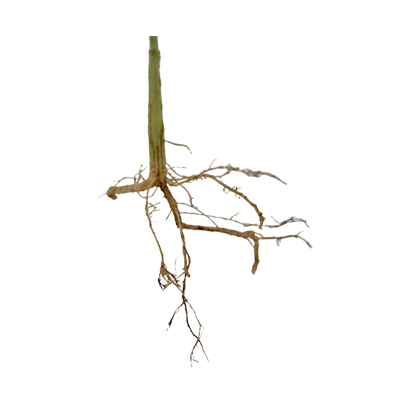
- Roots - taproot.
- Stems - well branched, slender, green stems are usually slightly 5-angled or ridged, and carry unbranched tendrils in the leaf axils.
- Leaves - each leaf is 4-10 cm long, rounded in outline, and deeply 5-9 lobed. The foliage has an unpleasant smell when crushed.
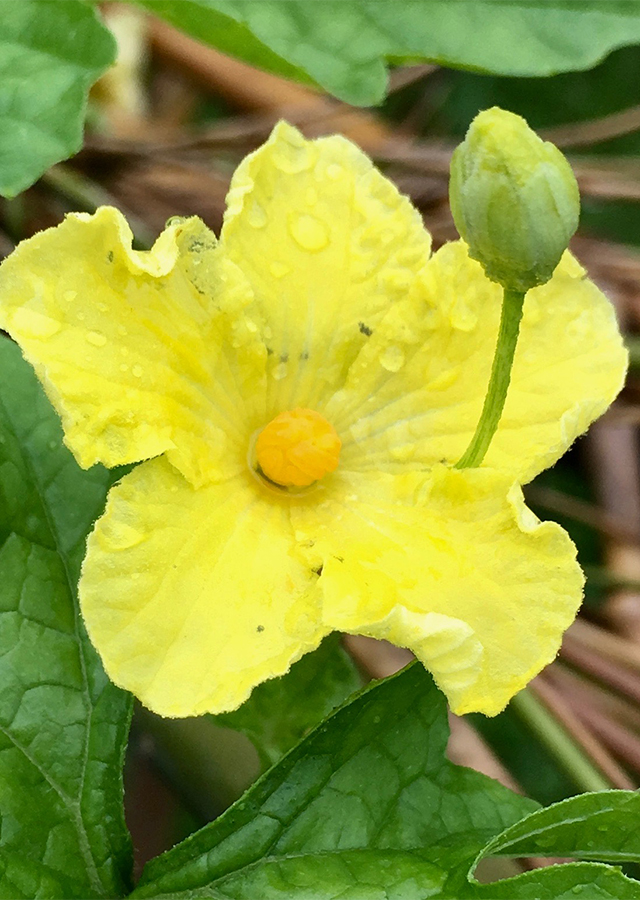
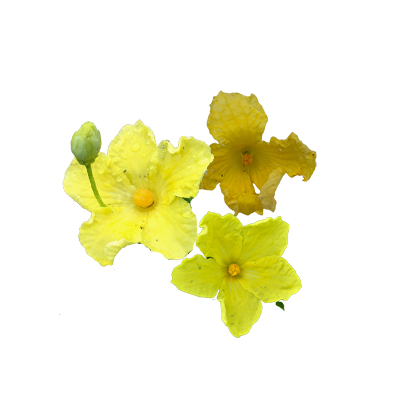
- Flowers - male flowers have a slender basal swelling which is continuous with the base of the sepal tube, which ends in five blunt sepals, 5 oval yellow petals 10-20 cm long, and 5 central stamens. Female flowers are similar to the male flowers but have a distinct warty swelling well below the base of the sepal tube and 3 stigmas.
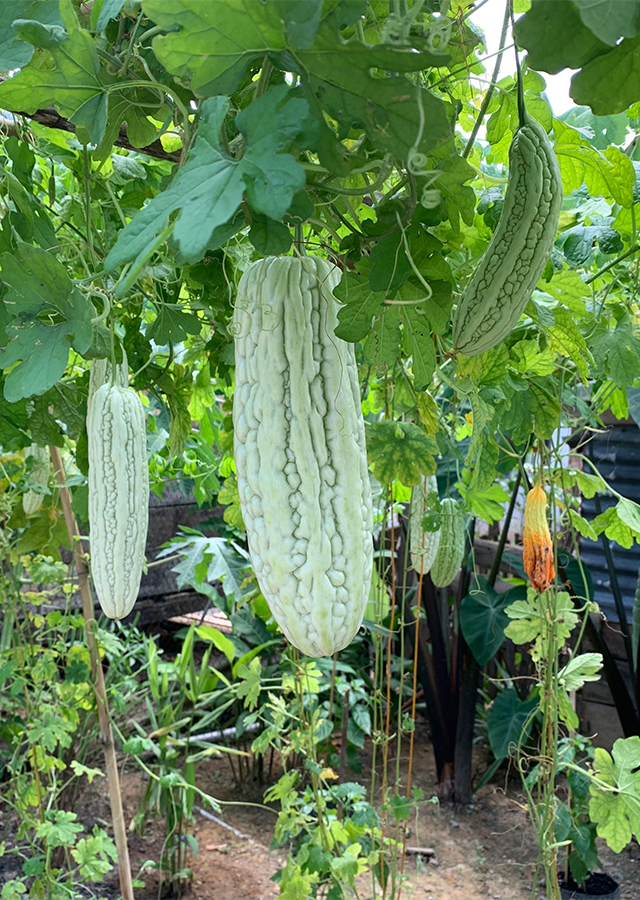
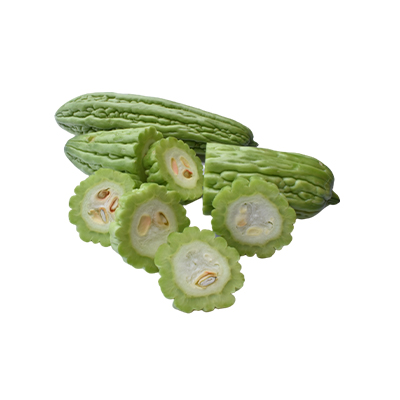
- Fruits - green, fleshy, oblong, cylindric, 15 to 25 cm long, pointed at both ends, ribbed and wrinkled, bursting when mature to release seeds; in wild forms, ovoid, about 2 to 4 cm long.
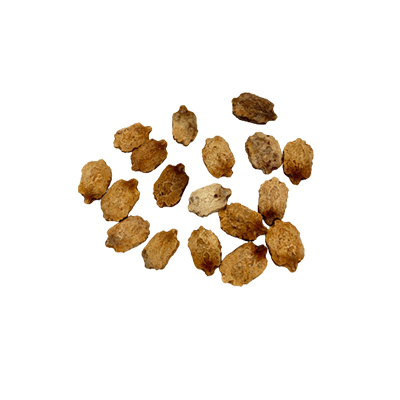
- Seeds - are oblong, compressed 10 to 13 mm long, and corrugated on the margins.
Cultivation
By seed - seedlings emerge 5 - 7 days after sowing.
Chemical Constituents
Alkaloids, glycosides, aglycone, tannin, momordicin, phenol, ethereal oil, carotene, resin, saponin, steroids, and sterols.
Traditional Medicinal Uses
Medicinal Uses
- Considered antidiabetic, abortifacient, antirheumatic, contraceptive, galactagogue, parasiticide, anthelmintic, purgative, emetic, antipyretic, febrifuge, emmenagogue, cooling , tonic.
- Studies have sugested adaptogenic, anti-inflammatory, membrane stabilizing, antioxidant, cholinomimetic, analgesic, antimicrobial, gastroprotective, hepatoprotective, anti-dengue, antifungal properties.
Traditional Uses
- In Jamaica, leaf decoction or infusion is taken for colds, as laxative and blood cleanser. Warm tea infusions also used for toothaches and mouth infections. Also used as a bath/wash for skin eruptions and acne. Used for eczema, malarial, gout, jaundice, abdominal pain, kidney (stone), leprosy, leucorrhea, piles, pneumonia, psoriasis, rheumatism, fever and scabies. Boiled leaves and decoction of plant used to promote lochia.
- In Puerto Rico, used for diabetes.
- In Indo-China, fruit macerated in salted water used for fluxes, catarrh, and children's coughs. Seeds employed in the treatment of dysentery.
- In Brazil, seeds used as anthelmintic.
- In China, used as hypoglycemic and antidiabetic.
- In India, root used as astringent; applied externally to hemorrhoids.
Part Used

Reference Sources
- CABI. (2014). Invasive Species Compendium. Momordica charantia (bitter gourd). https://www.cabi.org/isc/datasheet/34678. 25-02-2021.
- Fern, Ken. (2019). Useful Tropical Plants. Momordica charantia. http://tropical.theferns.info/viewtropical.php?id=Momordica+charantia. 25-02-2021.
- Stuart xchange. (2019). Philippine Medicinal Plants. Ampalaya. http://www.stuartxchange.org/Ampalaya. 25-02-2021.