
Sweetleaf
Stevia rebaudiana (Bertoni) Bertoni
Asteraceae
Location in our garden
Principal
Synonym
Eupatorium rebaudianum Bertoni
Stevia rebaudiana Hemsl.
Habitus

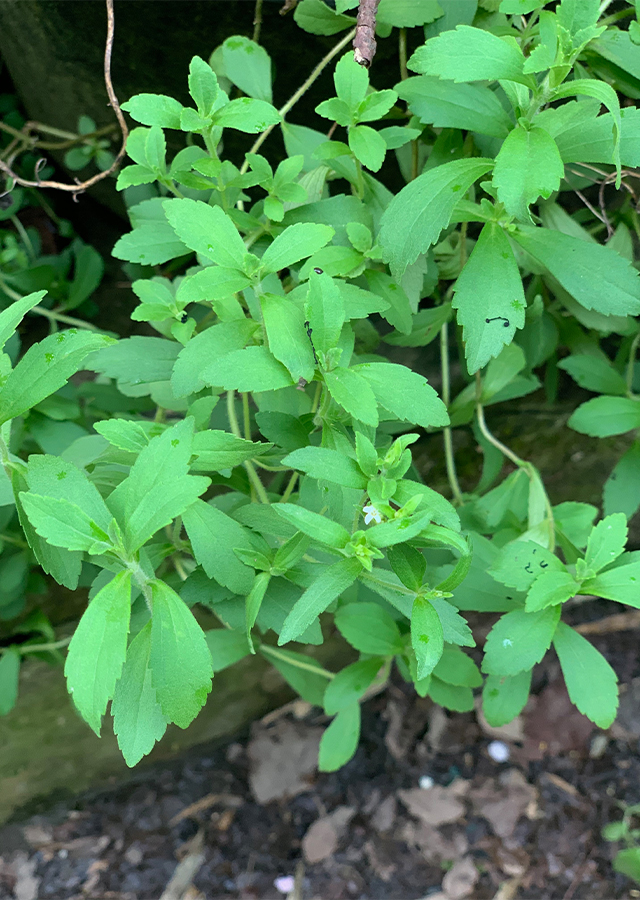
Shrubs. A small perennial plant that can grow up to 65-80 cm tall.
Part Used
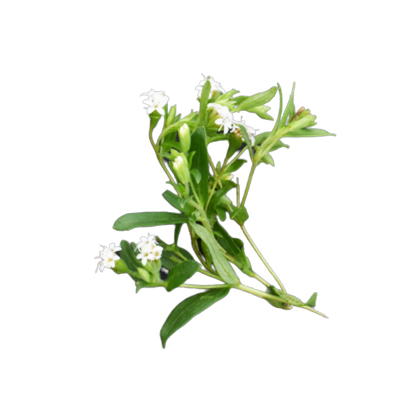
 Leaves
Growing Requirements
 Full Sunshine
Habitat
 Grassland
Overview
The plant is native to South America and is now cultivated widely around the world for its sweetener properties.
Vernacular Names
Sweetleaf, stevia, honey leaf, sweet herb (English)
Agroecology
Sweetleaf is an easily grown semi-humid subtropical plant species. the plant thrives in red and sandy loam soil with 6.5-7.5 pH range.
Morphology
- Roots - taproot.
- Stems - erect, perennial herbaceous.
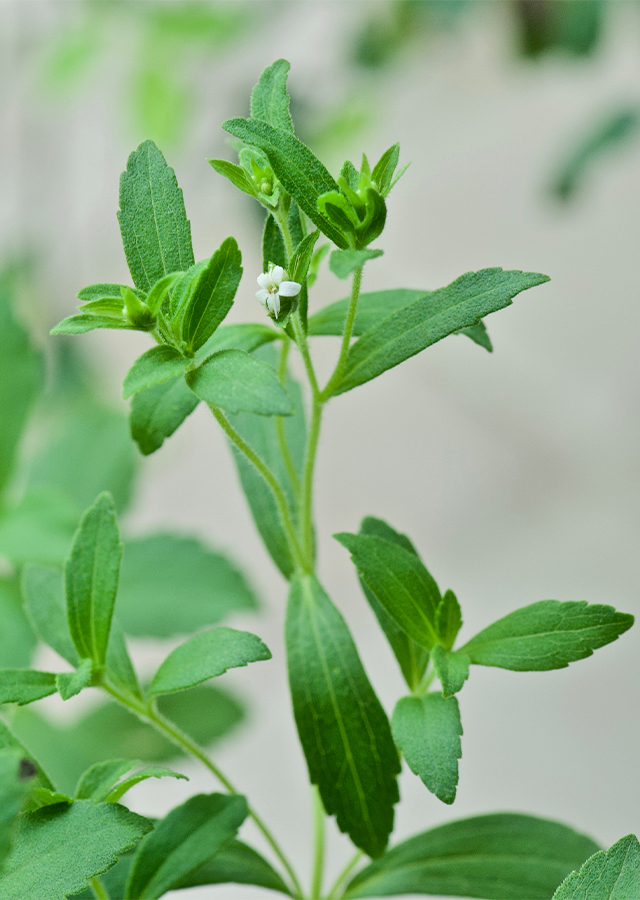
- Leaves - small, simple, opposite, alternate, sessile.
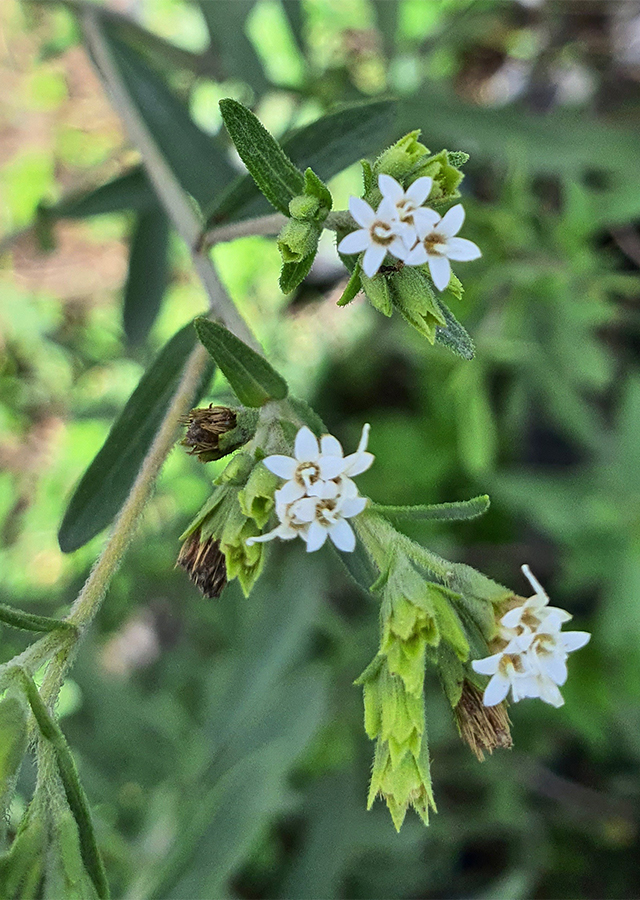
- Flowers - small and white, petals are grouped in terminal or axillary racemes.
Cultivation
Sweetleaf seed propagation is possible but low in germination. Thus cutting may also be used as well as tissue culture.
Chemical Constituents
Steviol glycosides are the compound that made sweetleaf potential as a sugar substitute. The plant species also contain amino acids, fatty acids, diterpenes, flavonoids, phenolic compounds, crude fiber, phytosterols, chlorogenic acids, triterpenes, and hydrocarbons. The plant leaves also contain dulcoside, rebaudiosides A-E, and stevioside.
Traditional Medicinal Uses
- In Japan, the plant species is used as a sweetener in seafood, soft drinks, and candies.
- In Brazil and Paraguay, sweetleaf is used as a natural remedy for diabetes
- Sweetleaf is also has been used to help control weight in obese persons
Part Used

Reference Sources
- Ahmad, J., Khan, I., Blundell, R., Azzopardi, J. and Mahomoodally, M.F., 2020. Stevia rebaudiana Bertoni.: An updated review of its health benefits, industrial applications and safety. Trends in Food Science & Technology, 100, pp.177-189.
- Ferreira, C.M. and Handro, W., 1988. Micropropagation of Stevia rebaudiana through leaf explants from adult plants. Planta medica, 54(02), pp.157-160.
- Goyal, S.K., Samsher and Goyal, R.K., 2010. Stevia (Stevia rebaudiana) a bio-sweetener: a review. International journal of food sciences and nutrition, 61(1), pp.1-10.
- Šic Žlabur, J., Voća, S., Dobričević, N., Ježek, D., Bosiljkov, T. and Brnčić, M., 2013. Stevia rebaudiana Bertoni-A review of nutritional and biochemical properties of natural sweetener. Agriculturae Conspectus Scientificus, 78(1), pp.25-30.
- Silva, T.F., Reis, R.V., Chierrito, T.P., Albiero, A.L., Souza, L.A., Goncalves, J.E., Oliveira, A.J. and Goncalves, R.A., 2016. Morpho-anatomical study of Stevia rebaudiana roots grown in vitro and in vivo.
- Smitha, G.R. and Umesha, K., 2012. Vegetative propagation of Stevia [Stevia rebaudiana (Bertoni) Hemsl.] through stem cuttings. Journal of Tropical Agriculture, 50(1), pp.72-75.