
Coral Jasmine
Nyctanthes arbor-tristis L.
Oleaceae
Location in our garden
Green House

Synonym
Bruschia macrocarpa Bertol.
Nyctanthes dentata Blume
Nyctanthes tristis Salisb.
Habitus

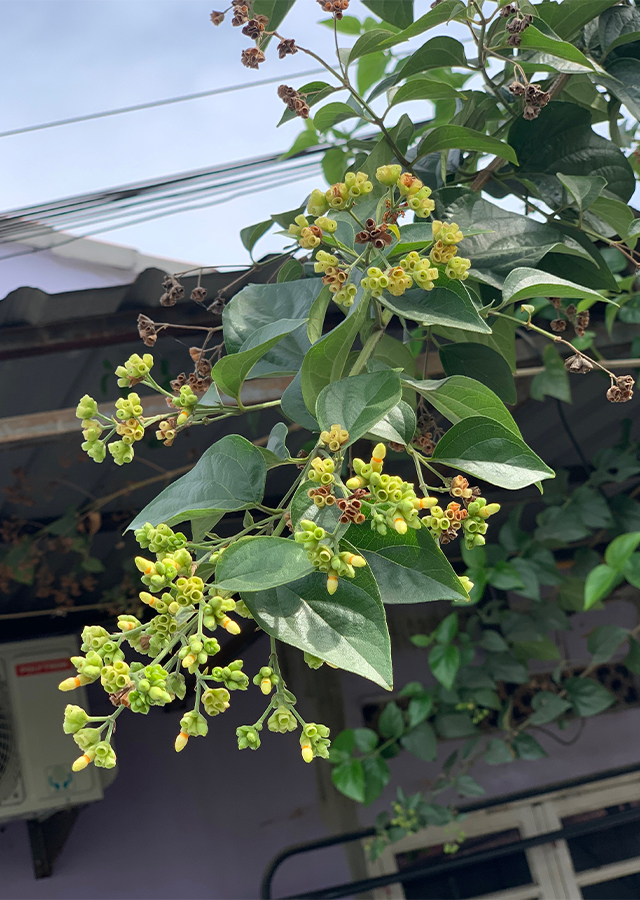
Shrubs. A woody perennial terrestrial plant with grey bark and soft white hairs. The plant can live up to 20 years and grow up to 10 m tall.
Part Used
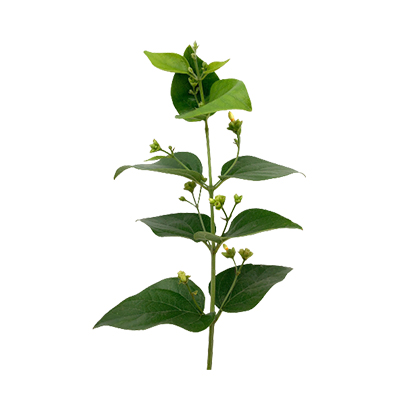
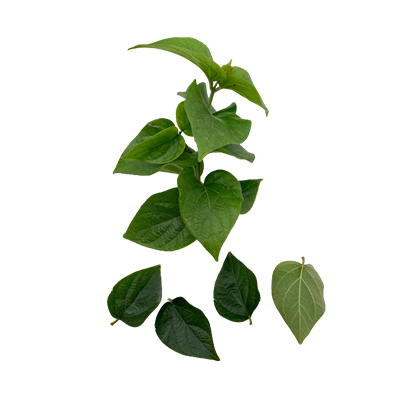
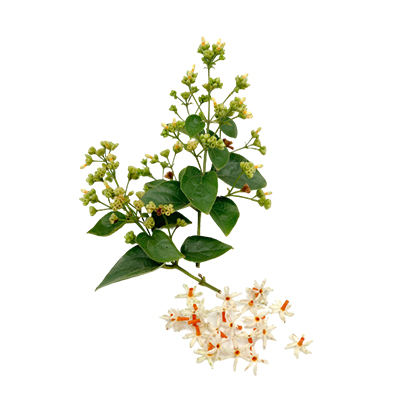
 Leaves
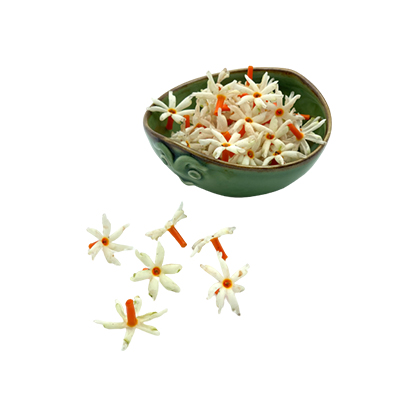
 Flowers
Growing Requirements
 Full Sunshine
 Need Shade
Habitat
 Forest
 Rocky Areas
Overview
Nyctanthes arbor-tristis is a plant that is predominantly native to south Asia such as India, Pakistan, Nepal. The plant is also found in Thailand and Indonesia. The plant is widely used to treat many illnesses in numerous medicinal systems such as in Ayurveda, Siddha-Ayurveda, and Yunani systems of medicines.
Vernacular Names
Srigading (Indonesia), parijat (Sanskrit), night Jasmine
Agroecology
Nyctanthes arbor-tristis thrives on red and black soils with a pH range of 5,6-7,5. Arid and semi-arid climates such as dry hillside and rocky ground suit the plant well. The plant may grow from sea level to 1500 m altitude near the equator, with a broad range of rainfall.
Morphology
- Barks - flaky grey with sharply quadrangular young branches.
- Leaves - simple, opposite, ovate, apex acute or acuminate, rough, and have short stiff hairs.
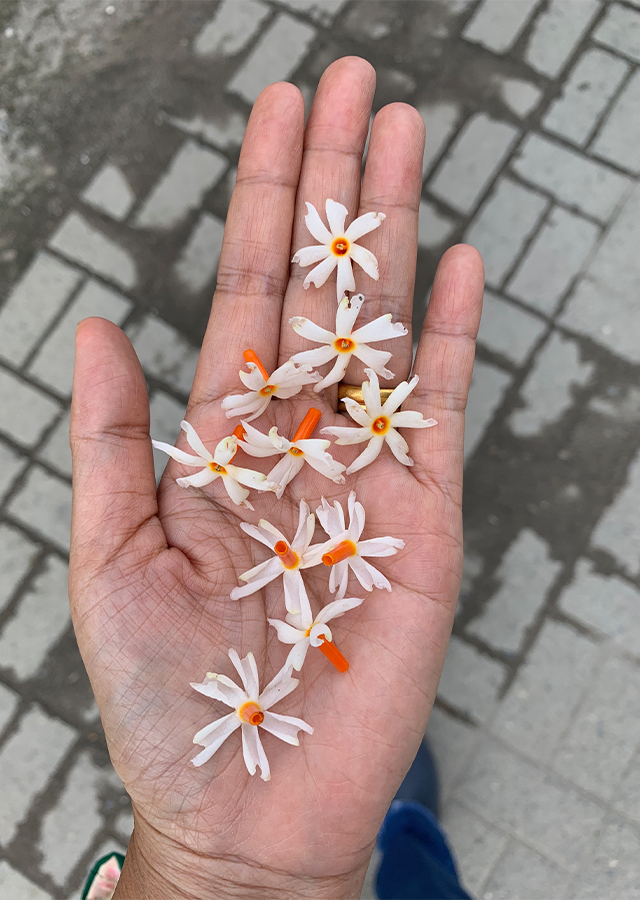
- Flowers - The inflorescence may be solitary axillary or in terminally trichotomous cymes. Flowers are pleasantly fragrant with white corolla and orange-red centre.
- Fruits - compressed, capsule, and orbicular.
- Seeds - orbicular and flattened
Cultivation
Easily propagated by seeds and cuttings.
Chemical Constituents
Calceolarioside A, 4-hydroxy hexahydrobenzofuran-7-one, b-sitosterol, Rengyolone and its acetate, Arbortristoside and numerous other compounds.
Traditional Medicinal Uses
- The flowers are used to induce menstruation.
- Cholagogue, laxative, diaphoretic, and diuretic properties are all provided by the bitter leaves.
- The leaves juice can be used to treat loss of appetite, piles, liver disorders, biliary disorders, chronic fever, malarial fever, sciatica, and rheumatism.
- Different portions of the plant can be used to treat cough, hiccup, diarrhea, snakebite, and ulcers
- The plant inflorescence is used to treat scabies and other skin diseases.
- Other uses include expectorant, sedative, hair tonic, and treatment of bilious fever, diabetes, bronchitis, snakebite, and numerous other illnesses.
Part Used
Reference Sources
- Agrawal, J. and Pal, A., 2013. Nyctanthes arbor-tristis Linn—A critical ethnopharmacological review. Journal of ethnopharmacology, 146(3), pp.645-658.
- Hiremath, V., Hiremath, B.S., Mohapatra, S. and Das, A.K., 2016. Literary review of Parijata (Nyctanthus arbor-tristis Linn.) an herbal medicament with special reference to ayurveda and botanical literatures. Biomedical and Pharmacology Journal, 9(3), pp.1019-1025.
- Parekh, S. and Soni, A., 2020. Nyctanthes arbor-tristis: Comprehensive review on its pharmacological, antioxidant, and anticancer activities. Journal of Applied Biology and Biotechnology, 8(01), pp.95-104.