
Badhara Bush
Gmelina elliptica Sm.
Lamiaceae
Location in our garden
Principal

Synonym
Gmelina asiatica f. inermis Moldenke
Gmelina integrifolia W.Hunter
Gmelina tomentosa H.R.Fletcher
Habitus

Trees. An evergreen shrub or small tree, growing up to 10 m tall
Part Used
 Leaves
 Bark
Bark Fruit
Fruit Roots
Roots
Growing Requirements
 Full Sunshine
 Need Shade
Habitat
 Coastal
 Roadside
 Shrublands
Overview
Badhara bush is mainly distributed in South-East Asia, but it also can be found in India, Papua New Guinea, part of northern and eastern Australia, and some Oceania countries.
Vernacular Names
Bulangan (Malaysia), Talungud (Tagalog-Philippines), Khaang maeo (Thailand), Tu n[us] l[as] b[aaf]u d[uj]c (Vietnamese).
Agroecology
It can be found in open deciduous or wet scrubby forest of subtropical regions, principally on sandy or sandy clay soils, sometimes forming dense thickets. It requires 1500 to 2000 mm annual rainfall at altitudes between sea level and 500 m. It grows both in full sun and partial shade. It often occurs as a weed in dry, intermittently flowing watercourses.
Morphology
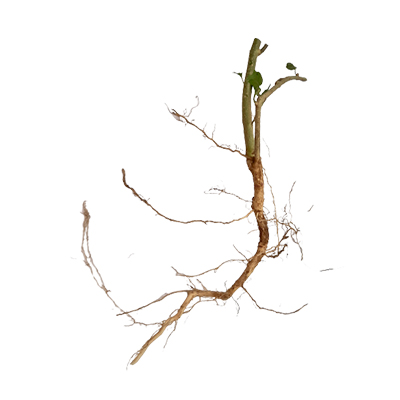
- Roots - aromatic, mucilaginous, woody taproot with many spreading surface laterals, suckering when damaged.
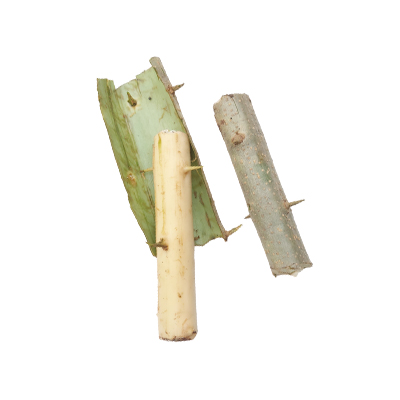
- Stems - usually a group of yellowish or brownish white main stems crowded together when young, frequently branching and covered with yellow lenticels, spiny.
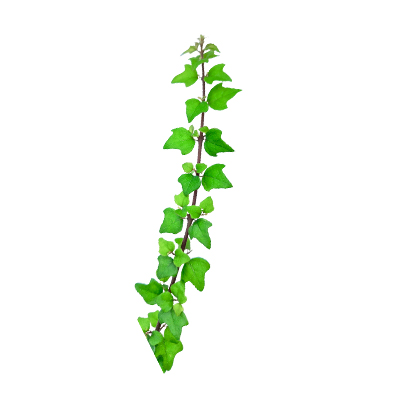
- Leaves - elliptic or ovate, 4 to 9 cm long, 2 to 6 cm wide, blunt or slightly pointed at both ends, wooly-felted or white-hoary on the lower surface, glabrous above, with minute green glands at the base, with entire or coarsely toothed margins.
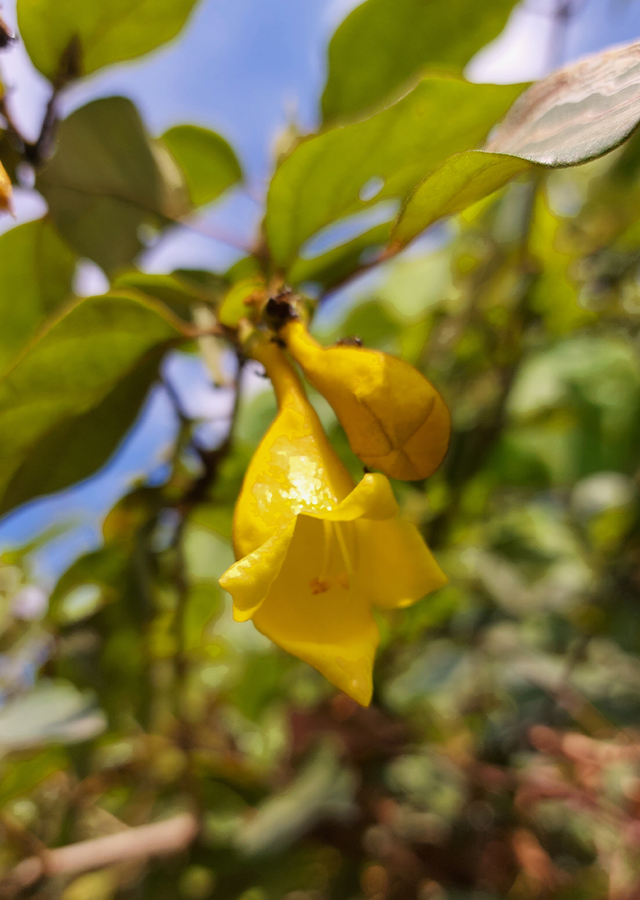
- Flowers - about 3.5 cm long, yellow, borne in terminal racemes up to 7.5 cm long, with rather large bracts. Calyx has 4 flat, green glands on one side, and small, toothed lobes. Corolla yellow, 2-4 cm long, upper lip entire, the middle lobe of the 3-lobed lower lip larger than the other lobes, tomentose.
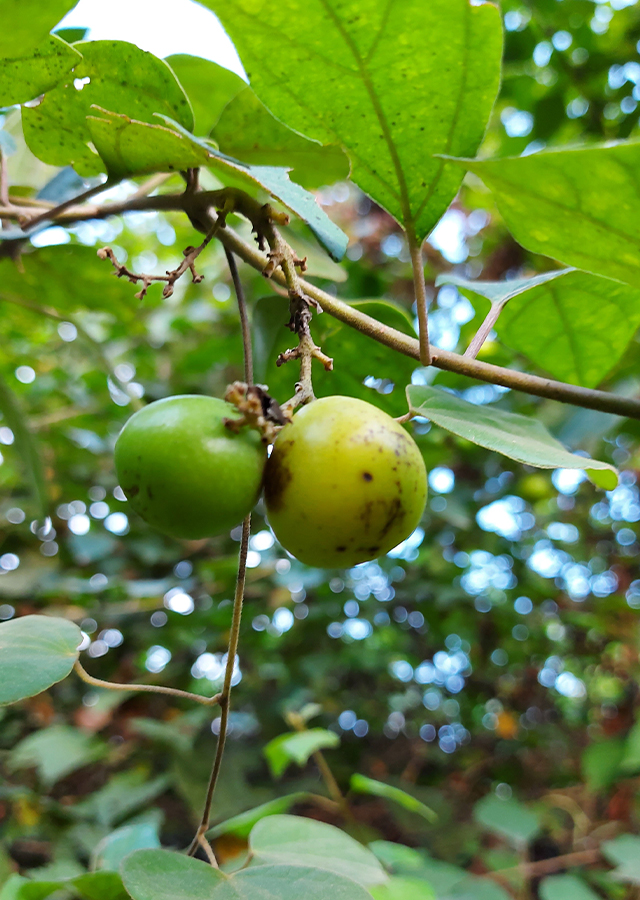
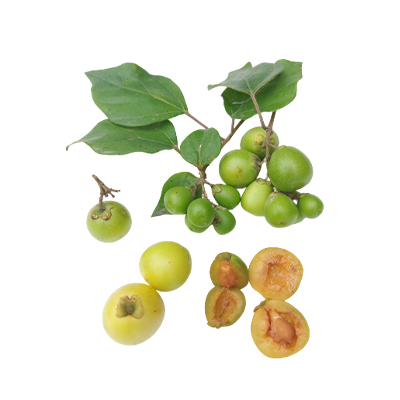
- Fruits - a drupe, nearly round, less than 2 cm in width, and yellow when ripe, with a watery flesh.
- Seeds - yellow-brown, subglobular.
Cultivation
It can be propagated by seed (direct sow after last frost) and stem cuttings.
Chemical Constituents
Lignin, iridoids, glycoside, flavanoid, flavones, tannin, sterol, 1,2-benzenedicarboxylic acid, diisooctyl ester, monolinoleoylglycerol trimethylsilyl ether.
Traditional Medicinal Uses
- Study have shown hypoglycemic/anti-diabetic, anti-inflammatory, antipyretic, antimicrobial, antiproliferative/anti-breast cancer activities.
- The leaves or roots may be applied to wounds. The uses probably reflect its activity as a rubefacient. Its roots might be applied to scalp to prevent hair loss.
- The sap from the leaves or fruits is used as ear drops for earache.
- An infusion of the slightly crushed fruits is applied as an eye lotion.
- The fruit rubbed with lime and garlic is vigorously applied to the body in cases of dropsy.
- In Malaya, plant is mainly used as a poultice for headaches, mixed with lime, it is used as poultice for swellings.
- Leaves are rubbed on gums to treat toothache.
- In Indonesia, its berries are pounded and mixed with Solanum torvum berries to treat beriberi
Part Used
Reference Sources
Tropical Plants Database, Ken Fern. tropical.theferns.info. 2021-12-01.
https://www.gbif.org/species/5607694
http://www.stuartxchange.org/Talungud.html