
Lemongrass
Cymbopogon citratus (DC.) Stapf
Poaceae
Location in our garden
Principal

Synonym
Andropogon cerifer Hack.
Andropogon citratus DC.
Adrogen citriodorus Desf.
Habitus

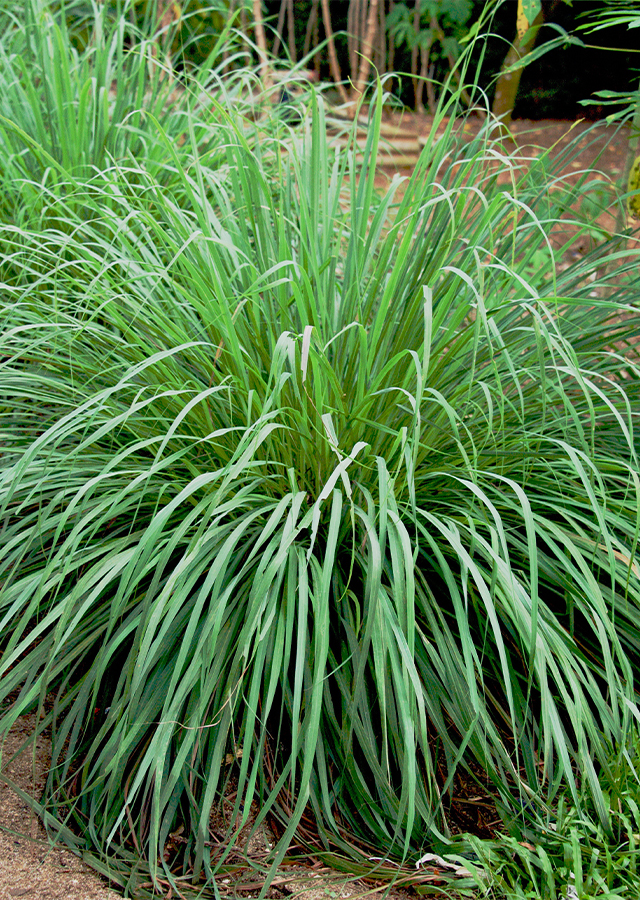
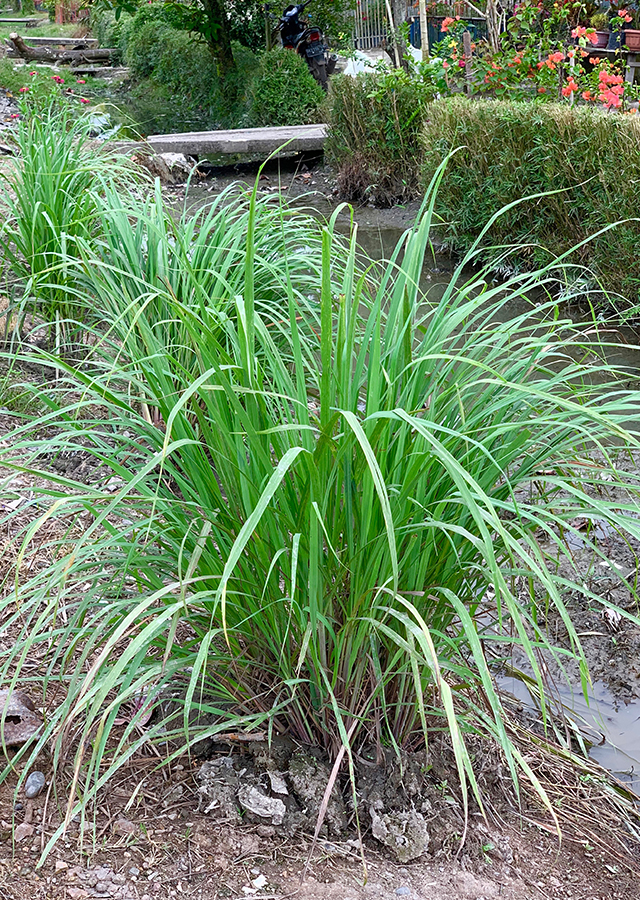
Herbaceous. Aromatic tufted perennial grasses with numerous stiff stems
Part Used
 Leaves
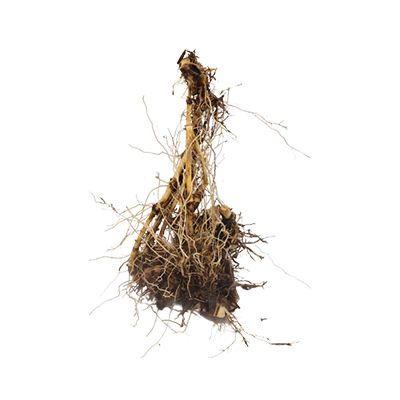
 Roots
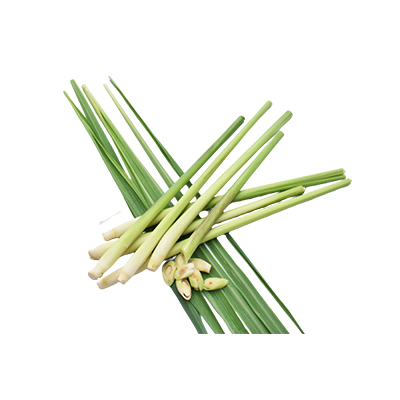
Roots Stem
Stem The Whole Plant
Growing Requirements
 Full Sunshine
 High Rainfall
Habitat
 Shrublands
 Grassland
 Terrestrial
Overview
Lemongrass is native to Southern India and Sri Lanka. However, it is now cultivated in tropical regions around the world. It is cultivated as a culinary and medicinal herb, garden ornamental, and industrial crop to extract essential oils from its leaves.
Vernacular Names
Sereh (Indonesia), Serai (Malaysia), Sera (India), Limonaris (Colombia, Venezuela, Brazil), Remon gurasu (Japanese, Korean), Dta krai gaeng (Thai), Ning meng cao (Chinese), Verveine des indes (French).
Agroecology
Lemongrass grows well in the tropics and subtropics from sea level to an elevation of up to 900 m, a warm, humid climate with high rainfall and full sun is ideal for the growth of lemongrass. It prefers moist, well-drained loamy soils but will tolerate most other soil types with pH in the range of 5 - 5.8.
Morphology
- Roots - fibrous, grass with rhizomes and densely tufted.
- Stem - It has many stiff and bulbous, arising from a short, rhizomatous rootstock.
- Leaves - simple, green-light green leaves with entire margins and are linear in shape, up to 90 cm long, and 25 mm wide, release a citrus aroma when crushed, most emerge from the soil.
- Flowers - The lemongrasses plants do not typically produce flowers. Flowering panicles are rarely formed.
Cultivation
Lemongrass rarely produces seeds. But it can be easily propagated vegetatively by rhizomes and stem cutting.
Chemical Constituents
- Terpenes, alcohols, ketones, aldehyde and esters.
- Essential oils that contain citral α, citral β, nerol geraniol, citronellal, terpinolene, geranyl acetate, myrecene, terpinol, methylheptenone, borneol, linalyl acetate, α pinene, β pinene, limonene, linalool, and β-caryophyllene
- Flavonoids and phenolic compounds, which consist of luteolin, isoorientin 2’-O-rhamnoside, quercetin, kaempferol, apiginin, elimicin, catecol, chlorogenic acid, caffeic acid, and hydroquinone.
Traditional Medicinal Uses
- Studies have shown antioxidant activity, antidiarrheal, hepatoprotective, antimicrobial, anti-inflammatory, antitumoral, repellent, analgesic, gastroprotective, antileishmanial, hypotensive, antimalarial, antimutagenicity, and have analgesic, antinociceptive, neurobehavioral, hypocholesterolemic, hypoglycemic, and hypolipidemic effects.
- The essential oils were found to produce 86.6% suppression in Plasmodium berghei (malarial) growth and were active on some bacteria (Bacillus subtilis, Escherichia coli, Staphylococus aureus, and Salmonella paratyphi).
- In Indonesia and Malaysia, hot water extract of the entire plant is taken orally as an emmenagogue.
- In Argentina, the decoction of the leaf is taken orally with "mate" tea for sore throat, empacho, and as an emetic.
- In Brazil, the tea made from its leaves is popularly used as an antispasmodic, analgesic anti-inflammatory.
- In Thailand, the fresh plant is inhaled as a fragrance and eaten as a condiment. In addition, hot water extract of the dried plant or root is taken orally as a stomachic and for diabetes.
- In India, the entire fresh plant is used to repel snakes. Two to three drops of essential oil in hot water are taken orally for gastric troubles. A few drops of oil with lemon juice are taken orally for cholera. Hot water extract of the dried leaves is used for bathing in severe headache and fever cases. A tea prepared from lemongrass is used as a sedative for the central nervous system.
Part Used
Reference Sources
Manvitha, K and Bidya, B. 2013. Review on pharmacological activity of Cymbopogon citratus. International Journal of Herbal Medicine, 1(6): 5-7.
Negrelle, R.R.B., Gomes, E.C. 2007. Cymbopogon citratus (DC.) Stapf: chemical composition and biological activities. Revista Brasileira de Plantas Medicinais, 9(1): 80-92.
Shah, G., Shri, R., Panchal, V., Sharma, N., Singh, B., and Mann, A.S. 2011. Scientific basis for the therapeutic use of Cymbopogon citratus, Stapf (Lemongrass). Journal of Advanced Pharmaceutical Technology & Research, 9(1): 3-9.