
Sappanwood
Biancaea sappan (L.) Tod.
Fabaceae
Location in our garden
Orchard


Synonym
Caesalpinia sappan L.
Caesalpinia angustifolia Salisb.
Caesalpinia sapang Noronha
Habitus

Shrubs. A small shrubby perennial tree grows up to 4-8 m tall. This is a medicinal plant used in Asia, especially India, China, and Southeast Asia. In Indonesia, Sappanwood (Secang) is traditionally consumed as an herbal drink
Part Used
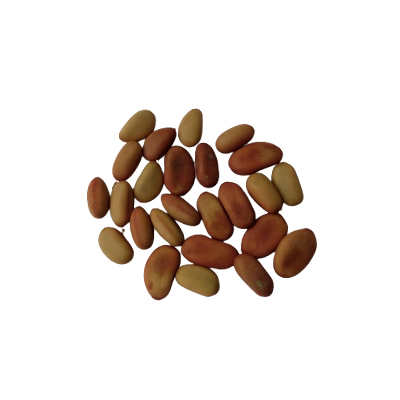
 Seeds
Seeds Bark
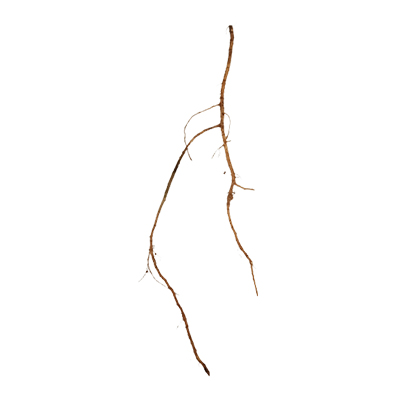
Bark Roots
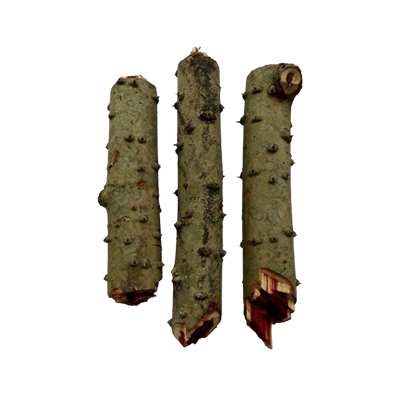
Roots Stem
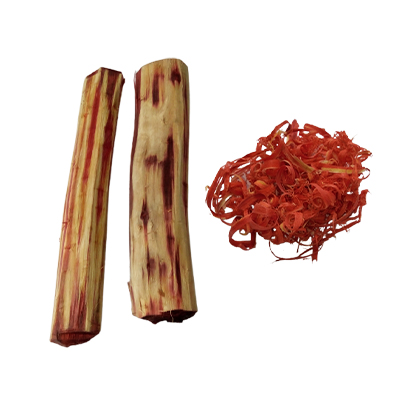
Stem
Growing Requirements
 Full Sunshine
 Need Shade
Habitat
 Forest
 Roadside
 Rocky Areas
Overview
This species is native to Assam, Bangladesh, Cambodia, East Himalaya, Laos, Myanmar, Nepal, Sri Lanka, Thailand, Vietnam. The wood of sappanwood was a major source of red dye up to the end of the 19th Century. It is still used, but only on a small scale, for dyeing.
Vernacular Names
Bakam, Bois Sappan, Brazilwood, Gango, Patang, Pattangi, Sappan, Sappan Wood Tree, Sappanwood
Agroecology
Under natural conditions, at low to medium altitudes, Sappanwood primarily grows in hilly areas with clay soil and calcareous rocks. It does not tolerate wet conditions on the field. Annual precipitation of 700-4,300 mm, an annual mean temperature of 24-27.5 °C and a soil pH of 5-7.5 are reported to be tolerated by Sappanwood.
Morphology
- Roots - fibrous and wiry, lacking nodules, dark-colored.
- Trunks - up to 14 cm in diameter, bark with distinct ridges and many recurved prickles, greyish-brown.
- Leaves - stipulate, bipinnate, subsessile leaflets, very oblique at base, rounded to emarginate at apex.
- Flowers - yellow, on terminal panicles, 2 to 2.5 cm in diameter with densely woolly filaments.
- Fruits - hard, indehiscent, shiny pod, with a hard recurved beak at the upper angle.
- Seeds - ellipsoid, flattened, 18-20 mm × 10-12 mm, brown.
Cultivation
Sappanwood can be propagated by seeds and renewed by coppicing. Germination occurs readily, but to improve the germination rate by about 90% is by dipping the seeds wrapped in cotton cloth into boiling water for 5 seconds.
Chemical Constituents
Phytochemical components in sappanwood include flavonoid, alkaloid, phenols. Meanwhile, its active compounds are brazilin, brazilein, 3-deoxysappanchalcone, sappanchalcone, Caesalsappanins A, G, H, and I, as well as PrA, sappanol, and benzilchroman.
Traditional Medicinal Uses
- The plant is considered emmenagogue, sedative, astringent, stomachic, tonic, vulnerary.
- Anti-anaphylactic, antibacterial, anticoagulant, anticomplementary, antifungal, anti-inflammatory, antitumor, antiviral, cytotoxic, immuno-stimulant properties have been suggested in research.
- Wood and bark decoctions are used for tuberculosis, atonic diarrhea, dysentery, postpartum tonics, skin infections, wounds, ulcers, and anemia.
- Seeds are used for nervous disorders and stomach aches.
- Women use a wood decoction as a tonic after confinement; it is often used as an emmenagogue and blood vomiting.
- Against inflammation, dried heartwood is used.
- Roots, stems, and seeds are used as sedatives and vulnerary.
- Seeds are used as a stomachic in Indo-China. A wood decoction is used as an emmenagogue.
- It is used for arthritis, cancer, and inflammatory complaints in Thailand.
- It is useful in Ayurveda under vitiated Pitta conditions, burning sensations, wounds, ulcers, leprosy, skin diseases, diarrhea, diabetes, and dysentery.
- Herbal plants with fertility and spermatogenesis enhancing effects through antioxidant properties.
- Great antioxidant, gastroprotective, antimicrobial, anti-inflammation, anti-diabetic, and anti-cancer properties.
- Protect cardiovascular system, miliaria therapy, and potent astringent agent.
Part Used
Reference Sources
- Kurniawan, D.A. and Tukiran. (2021). Aktivitas antihiperkolesterolemia dari secang (Caesalpinia sappan L.). UNESA J. of Chem. 10(2): 158-167.
- Nadiyah, Rezano, A., and Sudigdoadi, S. (2017). Effect of sappan wood ethanol extracts (Caesalpinia sappan L.) to the sperm motility, viability, and concentration of male Wistar rats. Althea Medical J. 4(2): 228-233.
- Nirmal, N.P., Rajput, M.S., Prasad, R.G.S.V, and Ahmad, M. (2015). Brazilin from Caesalpinia sappan heartwood and its pharmacological activities: a review. Asian Pacific J. of Trop. Med. 8(6): 421–430.
- Sari, R. and Suhartati. (2016). Secang (Caesalpinia sappan L.): tumbuhan herbal kaya antioksidan. Info Teknis EBONI 13(1): 57-67.
- Vardhani, A.K. (2019). Caesalpinia sappan L.: review article. Proc. of Intl. Conf. on App. Sci. and Health 4: 300-305.