Lunasia amara
Lunasia amara Blanco
Rutaceae
Location in our garden
Principal

Synonym
Androcephalium quercifolium Warb.
Lunasia babuyanica Merr.
Mytilococcus costulatus Miq.
Habitus

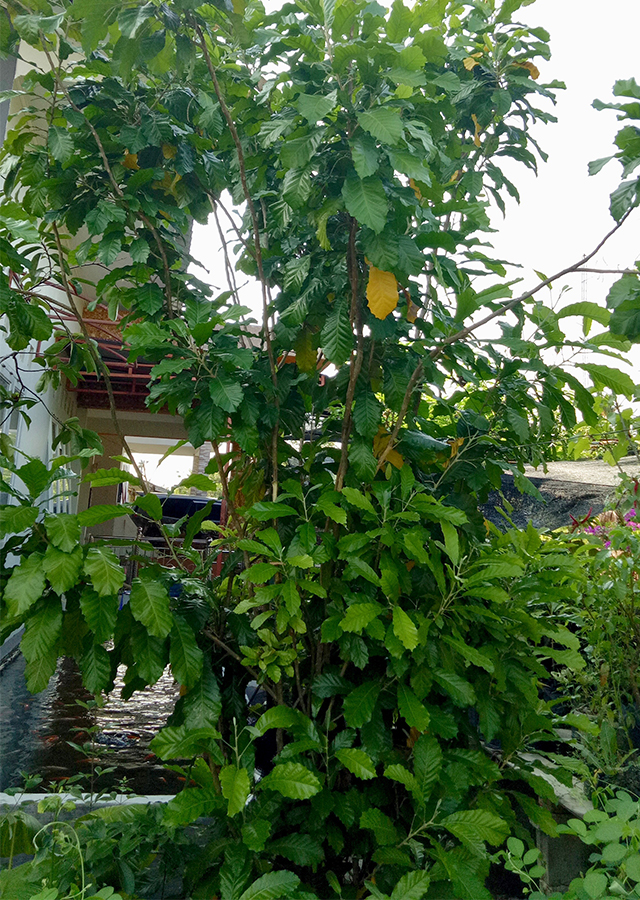
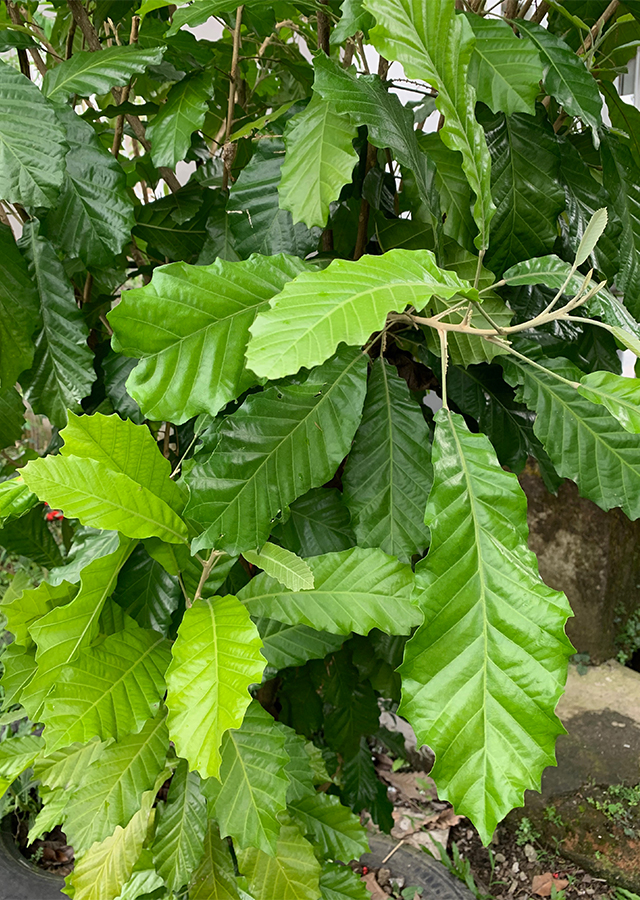
Trees. An evergreen, sparsely-branched shrub or small tree that can grow up to 12 m tall
Part Used
 Leaves
 Seeds
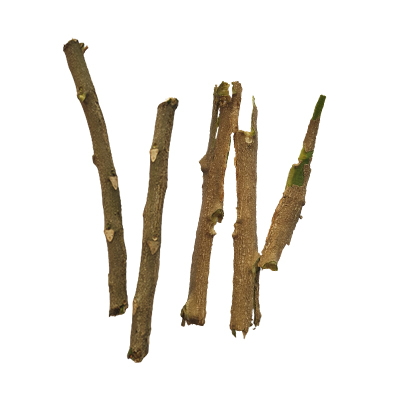
Seeds Bark
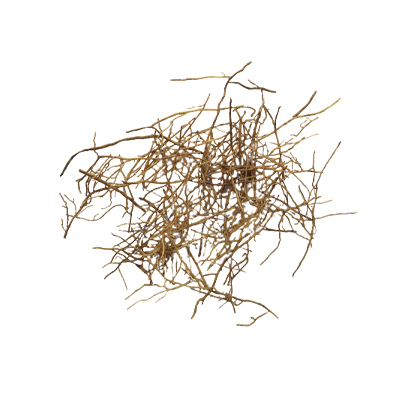
Bark Latex
Latex Roots
Roots Stem
Stem
Growing Requirements
 Full Sunshine
Habitat
 Forest
 Shrublands
Overview
The plant is found throughout the Philippines, Borneo and Eastern Java Eastward to South-Eastern New Guinea and Cape York in Australia. It is well known native medicine of the Philippines and Indonesia, and is commonly harvested from the wild and is sold in local markets. It is occasionally planted for medicinal use but sometimes mention is made of the use of the plant in making arrow poison.
Vernacular Names
Lunas (Tagalog-Philippines), Kemaitan, Pingsang, Bungkus kusu (Indonesia).
Agroecology
Lunasia amara is found on soils ranging from ultramafic to limestone in well-drained rain forest, moist to rather dry thickets, gallery forest and secondary growth, from sea-level up to 900 m altitude.
Morphology
- Stems - smooth, the young tips olivaceous lepidote. Bark is smooth and spotted with white or green in the outer part and yellowish in the inner part.
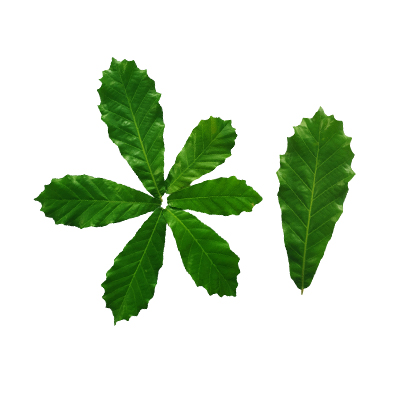
- Leaves - alternately crowded, obovate-oblong, 20 to 40 cm in length, 7 to 12 cm wide, often pointed at both ends.
- Flowers - inflorescences which are shorter than the petioles. Male are female flowers are covered with lepidote scales, small and yellow, occurring in considerable numbers in axillary.
- Fruit - consists of three yellowish capsules, each about 1 cm long, marked with ribs, and opens along the veins and upper sutures.
- Seed - obovoid, dark brown to reddish-brown, with fleshy oily cotyledons, endosperm absent.
Cultivation
It can propagated by seeds.
Chemical Constituents
Saponins, alkaloids (lunasin and lunacrin), tannins, terpenoids, quinoline alkaloids - 4-methoxy-2-phenylquinoline, kokusagine, graveoline.
Traditional Medicinal Uses
- Bark, leaves, and seeds are used for gastralgia and adynamic conditions of the bowels.
- It showed antifungal/antimicrobial, antibacterial and aphrodisiac, fertility enhancement, inhibitory activity against Mycobacterium tuberculosis.
- Study evaluated the cytotoxic activity of lunacridine on leukemia cells.
- Stem bark material of this species has shown activity against tumour cell cultures.
- In the Philippines and Thailand, the bark is mentioned as a remedy for snakebites and stomach problems.
- In Indonesia, a decoction of the bark and leaves is rubbed on swollen limbs and is also used as a treatment for skin diseases. Sap from the bark is used as eyedrops to treat inflamed or irritated eyes.
- In Papua New Guinea, it is used to treat tropical ulcers.