
Philippine Mussaenda
Mussaenda philippica A. Rich.
Rubiaceae
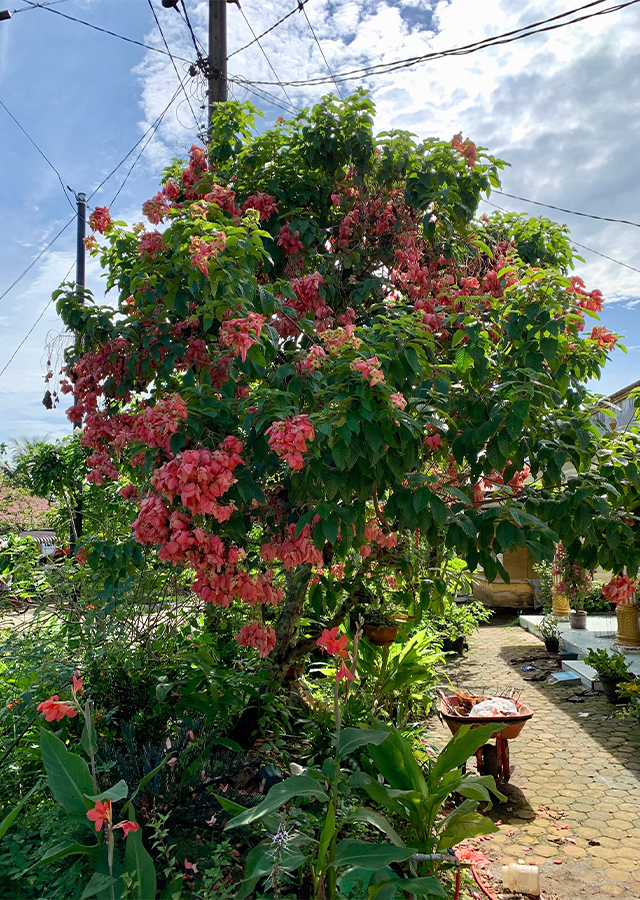
Location in our garden
Principal
Synonym
Mussaenda grandiflora Rolfe
Habitus

Shrubs. An evergreen shrub may reach 3 m in height.
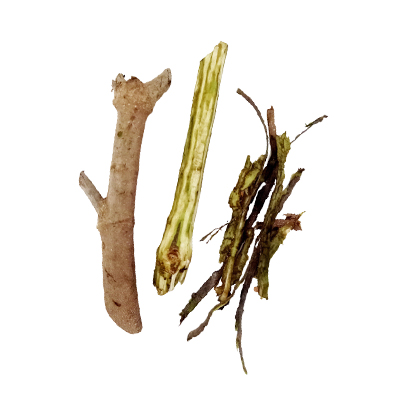
Part Used
 Leaves
 Bark
Bark Flowers
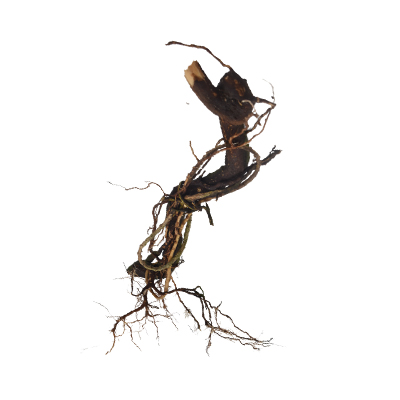
 Roots
Roots
Growing Requirements
 Full Sunshine
Habitat
 Terrestrial
Overview
Mussaenda philippica is native to the Philippines and has been introduced mainly to tropical regions of the America, Asia, Australia and Malesia, cultivated as an ornamental plant.
Vernacular Names
Kahoi-dalaga (Tagalog, Philippines), Bebina (Hindi), Magballi (Bengali), Cherecheroi (Palau), Nusa Indah Putih (Indonesia).
Agroecology
Mussaenda philippica can be found growing almost everywhere including open or partial-shaded areas such as in secondary and primary forests, savannahs, forest edges, coastal scrubs and thickets, disturbed areas, roadsides, ravines and riparian sites at elevations up to 700 m above sea level. It prefers full sun light but can tolerate partial shade and expects fertile and well-drained soil with pH in the range 5.0-6.0. It requires regular watering.
Morphology
- Stems - glabrous to minutely puberulent.
- Leaves - ovate, oblong-ovate to oblong-lanceolate, 3.5-23.5 cm × 1.5-12 cm, almost glabrous but pubescent on the veins below.
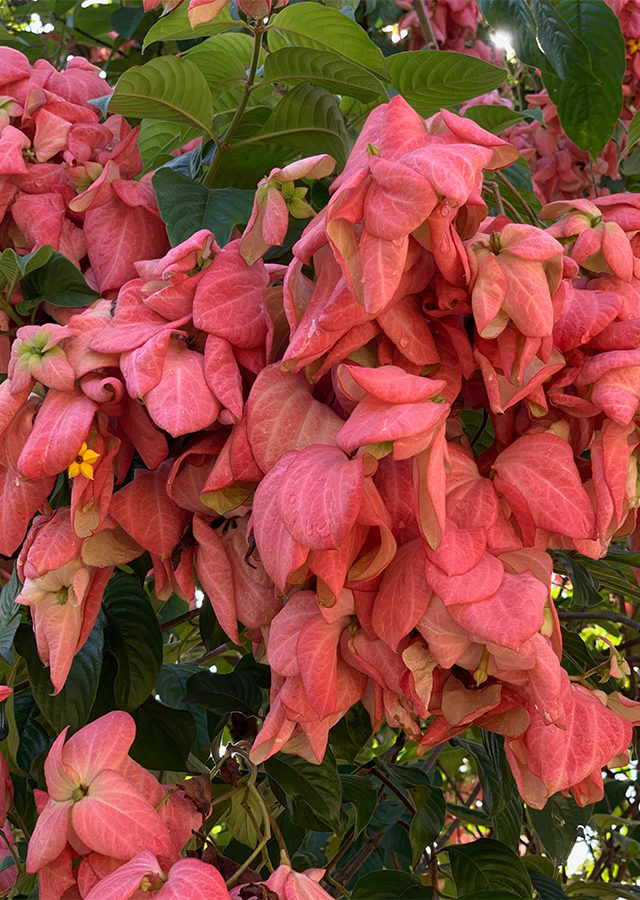
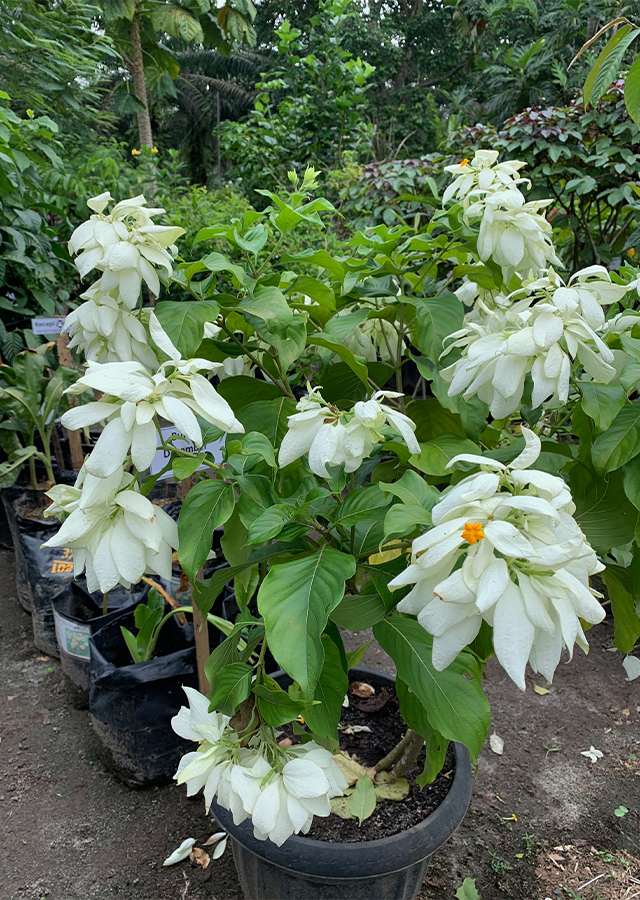
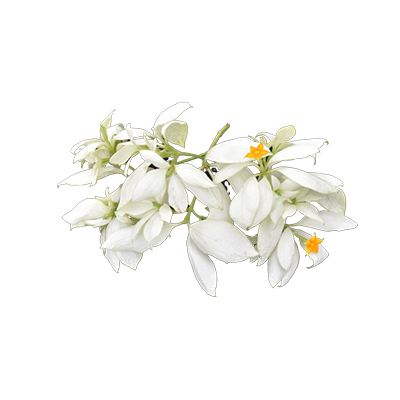
- Flowers - flowers with ovate or orbicular-ovate, white enlarged calyx lobe up to 13 cm long, corolla up to 4 cm long, with pale green tube and orange lobes, pubescent.
- Fruits - globular, 1-1.5 cm long.
Cultivation
It is mostly propagated using stem cuttings, softwood cuttings in particular. Plant growth regulator such as IBA can be used to promote rooting. Some new leaves and bunds will grow after 6 months along with the roots.
Chemical Constituents
ϒ-benzopyrene, saponins, steroid, tannins.
Traditional Medicinal Uses
In Philippines, the decoction of its roots and leaves is used to treat chest and lung affections, roots and calyx are used to treat jaundice, a leaf decoction as an emollient, and bark juice as a cure for headache. Any part of the plant is used against snakebites and dysentery. In Fiji, it is considered a cure for stomach-ache.
Part Used

Reference Sources
- Alejandro, G. J. D., Meve, U., Liede-Schumann, S. 2016. A taxonomic revision of Philippine Mussaenda (Rubiaceae, Mussaendae). Annals of the Missouri Botanical Garden. 101(3):457-524.
- Camangian, R. H. M. J. & Rivera, D. V. 2020. Phytochemical screening and biochemical analysis of selected herbal plants. Journal of Critical Review. 7(11):102-107.
- Lemmens, R. H. M. J. & Bunyapraphatsara, N. (Editors), 2003. Plant Resources of South-East Asia No. 12(3). Medicinal and poisonous plants 3. Prosea Foundation, Bogor, Indonesia. 664 pp.
- Flora Fauna Web. 2021. Mussaenda philippica 'Aurorae'. https://www.nparks.gov.sg/florafaunaweb/flora/2/2/2254.
- CAB International. 2020. Mussaenda philippica (Queen of Philippines).
https://www.cabi.org/isc/datasheet/35195#f3dd3e0d-e6be-4244-9d94-aa10798cec9f.