
Wild Sweetsop
Annona reticulata L.
Annonaceae
Location in our garden
Orchard
Synonym
Annona excelsa Kunth
Annona humboldtiana Kunth
Annona humboldtii Dunal
Habitus

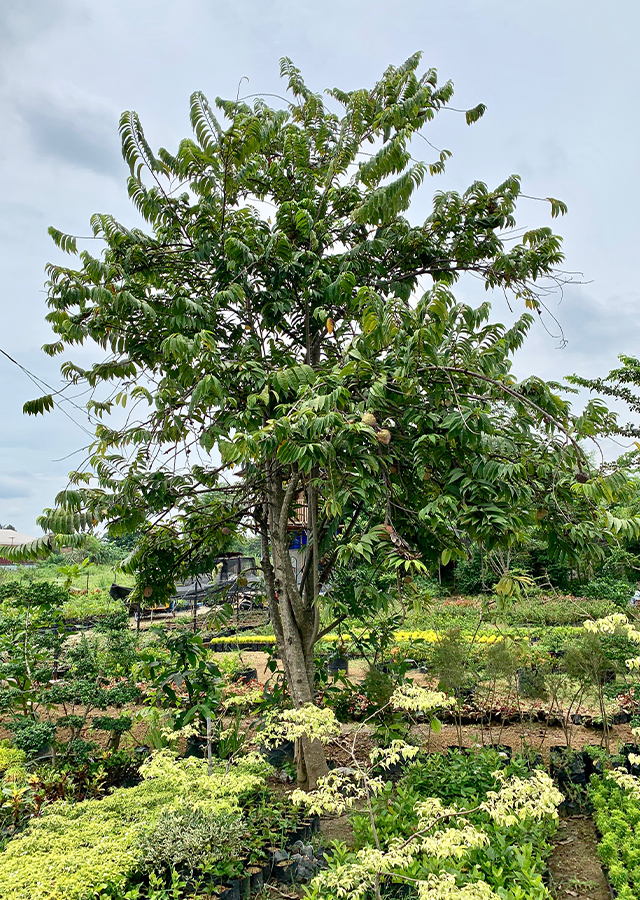
Trees. Erect tree, up to 10 m tall
Part Used
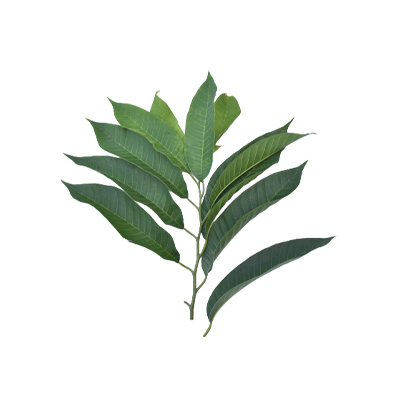
 Leaves
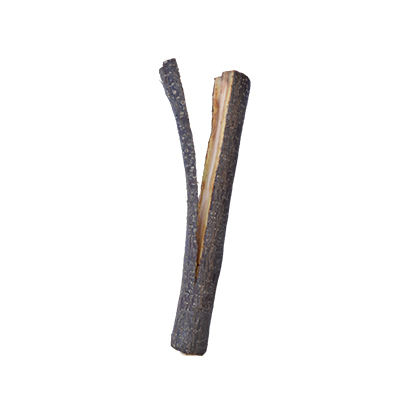
 Bark
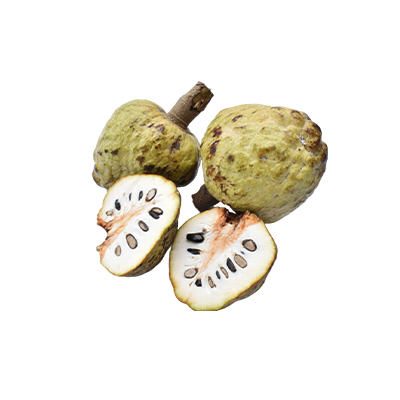
Bark Fruit
Fruit Roots
Roots
Growing Requirements
 High Rainfall
Habitat
 Terrestrial
Overview
Native to the West Indies, but emerged early, naturalized, and developed regularly, in most tropical districts, let alone Southeast Asia.
Vernacular Names
Mean bat, Mo bat (Cambodia), Bullock's heart, Custard apple (English), Lonang, Nona, Nona kapri (Malaysia), Binh bat, Mâng câu dai, Qua na (Vietnam), Coeur de boeuf (France).
Agroecology
This species requires a tropical climate, altitude up to 1200 m, despite the fact that it can survive night frosts down to -2(-3) °C.
Morphology
- Seeds - many, dark brown or blackish, slightly flattened, arillate.
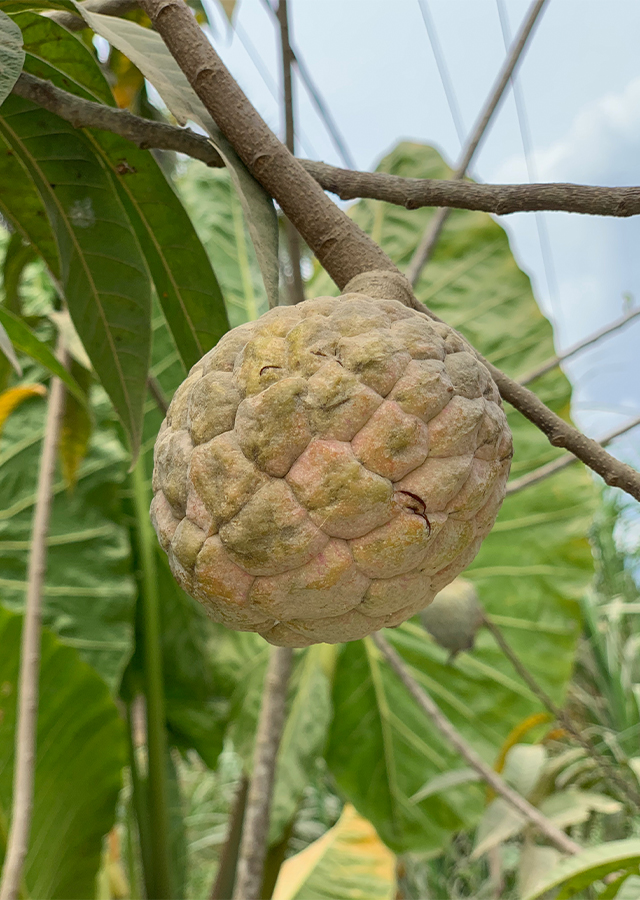
- Fruit - a pseudocarp, or maybe variable, globose to heart-shaped, 8-16 cm in distance across, yellow-brown, ordinarily reticulated.
- Flowers - bisexual, terminal or leaf opposed, solitary or in fascicles; sepals 3, valvate, Petals 3 or 6, valvate, much larger than the sepals, outer whorl fleshy and triquetrous above with a thinner concave base, inner whorl if present very small, strap shaped; stamens numerous, anthers narrow, ovoid, dorsal at the top of connectives; carpels many, subconnate, ovule 1 basal, erect, style oblong, carpels partly free in flower, later confluent into large syncarpous fleshy fruit, 1 ovuled.
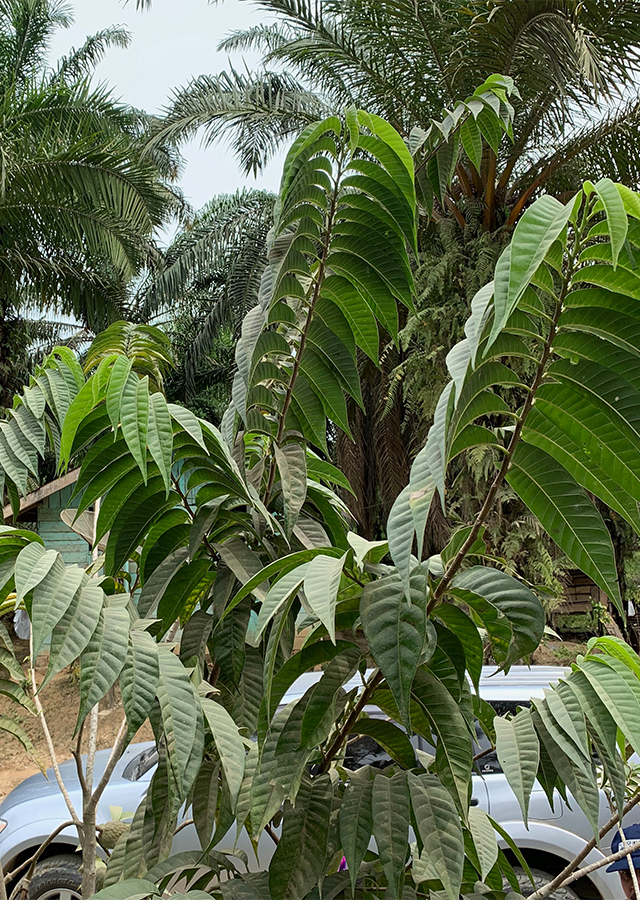
- Leaves - simple, alternate, lanceolate-elliptic to oblong-lanceolate, 10-20 x 3-6 cm across, base acute or obtuse, margin entire, apex acute or shallow acuminate, subcoriaceous, dark green, subglabrous above, paler glaucous beneath, lateral veins 7-15 on either side of the midrib, almost parallel, impressed above, prominent on the veins and more prominent on the midrib beneath, reticulate veinlets fine and close, petiole pale green, wider near the base, about 1-1.5 cm long.
- Trunk - 35 cm in diameter; bark dark brown, fissured and fibrous, branchlets glabrous.
Cultivation
Propagated by seeds and semi-ripe cutting, first fruits after 4–5 years. Seeds are sown in individual pots, not deeper than 2 cm, at 21 C. The germination rate ranges from low to medium.
Chemical Constituents
Bark: a crystalline alkaloid C17H17NO3. The bark and seeds are high in tannic acid. Leaf: steroids, terpenoids, tannin, saponin, phenols, alkaloids, and flavonoids. Fruit: arbohydrates, terpenoids, steroids, tannins, and phenols, with absence of alkaloids, flavonoids, saponins, and starch. Seeds: alkaloids, carbohydrates, terpenoids, proteins, steroids, and phenols, with absence of flavonoids, saponins, tannins, and starch.
Traditional Medicinal Uses
- It can against worms and abscesses.
- Unripe fruits and the bark are utilized against the diarrhoea and dysentery.
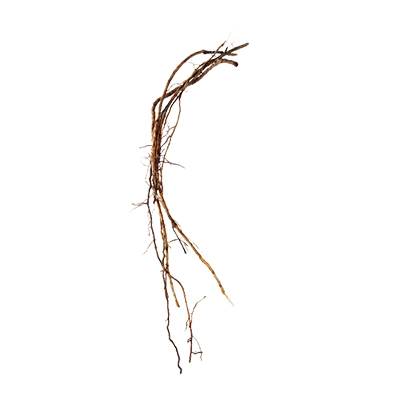
- Fragments of the root bark are put around the gums to relieve toothache.
Part Used
Reference Sources
- India Biodiversity Portal. 2021. Annona reticulata L. https://indiabiodiversity.org/species/show/228760. 12 November 2021.
- Tropical Plants Database, Ken Fern. tropical.theferns.info. 2021-11-11.
- Verheij, E.W.M. and Coronel, R.E. (Editors), 1992. Plant Resources of South-East Asia No 2. Edible fruits and nuts. Prosea Foundation, Bogor, Indonesia. 431 pp.