
Pride of India
Melia azedarach L.
Meliaceae
Location in our garden
Principal

Synonym
Azedara speciosa Raf.
Azedarach commelinii Medik.
Azedarach deleteria Medik.
Habitus

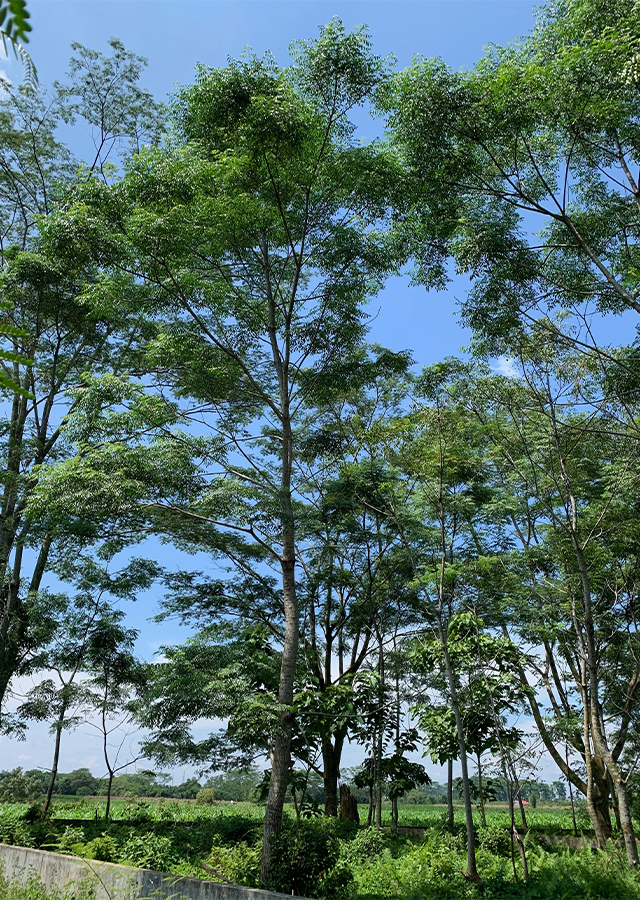
Herbaceous. Deciduous tree up to 45 m high; fluted stems below in ancient times, to a distance of 60(-120) cm.
Part Used
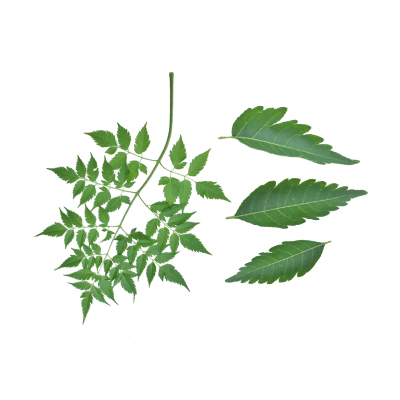
 Leaves
 Bark
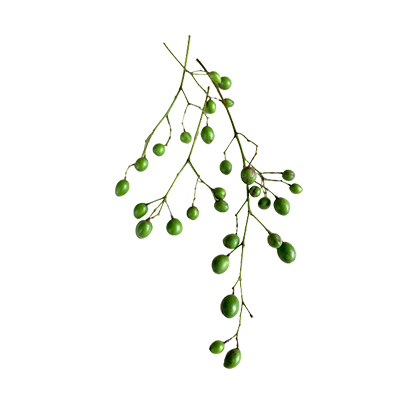
Bark Fruit
Fruit Roots
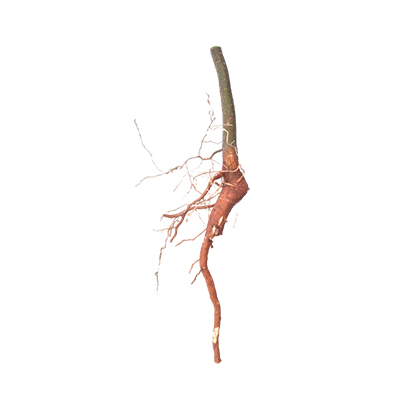
Roots
Growing Requirements
 Drought Resistant
 High Rainfall
Habitat
 Riverbanks
 Forest
 Grassland
Overview
M. azedarach is most likely native to South Asia, growing widely in tropical, subtropical and warm climates. Found at an altitude of 700-1000 m in the Himalayan foothills in India and Pakistan, widely distributed in China, through Malesia to the Solomon Islands and northern and eastern Australia. It is naturalized in eastern and southern Africa, in the Americas from Argentina to the south joining the United States and Hawaii, and throughout the Middle East and Mediterranean as far north as Croatia and southern France.
Vernacular Names
Dâk' hiën, Sdau khmaôch (Cambodia), Chinaberry, Persian lilac, Pride of India (English), Gringging (Indonesia), Mindi (Java), Marambung (Sumatra), H'ienx, Kadau s'a:ngz (Laos), Mindi kecil (Malaysia), Bagaluñga (Bisaya), Balagañgo, Paraiso (Tagalog)( Philippines), Mindi kechil (Singapore), Khian, (Northern), Lian, Lian-baiyai (Central) (Thailand), Cây xoan, Sầu dông, Xoan dâu (Vietnam).
Agroecology
The habitat of M. azedarach is common forest, including bamboo bush, Tamarindus forest, and Eucalyptus savanna. The harshest temperature in the hottest month can reach 39 °C, the least violent in the coldest month -5 °C. It is mostly found at an altitude of 0-1200 m, in the Himalayas up to 1800(-2200) m. Annual rainfall ranges from 600-2000 mm. Ideal development is achieved in very deep, well-drained sandy soils.
Morphology
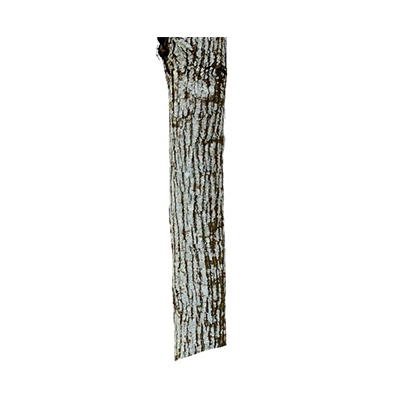
- Barks - grey-brown, smooth, lenticellate, getting to be delicately fissured or textured with age; inward bark yellowish; sapwood whitish, heartwood corroded brown.
- Leaves - bipinnate, sometimes entirely or somewhat tripinnate, more or less inverse, (15-)23-80 cm long, glabrescent; petiole 8-30 cm long, terete, lenticellate, swollen at base; pinnae in 3-7 sets, up to 25 cm long; petiolule 3-7 mm long; pamphlets in 3-7 sets, inverse or about so, praise or oblong-lanceolate to curved, 2-10 cm × 0.6-3.8 cm, base marginally unequilateral, intense to adjusted, summit acuminate, edge whole to differently serrate.
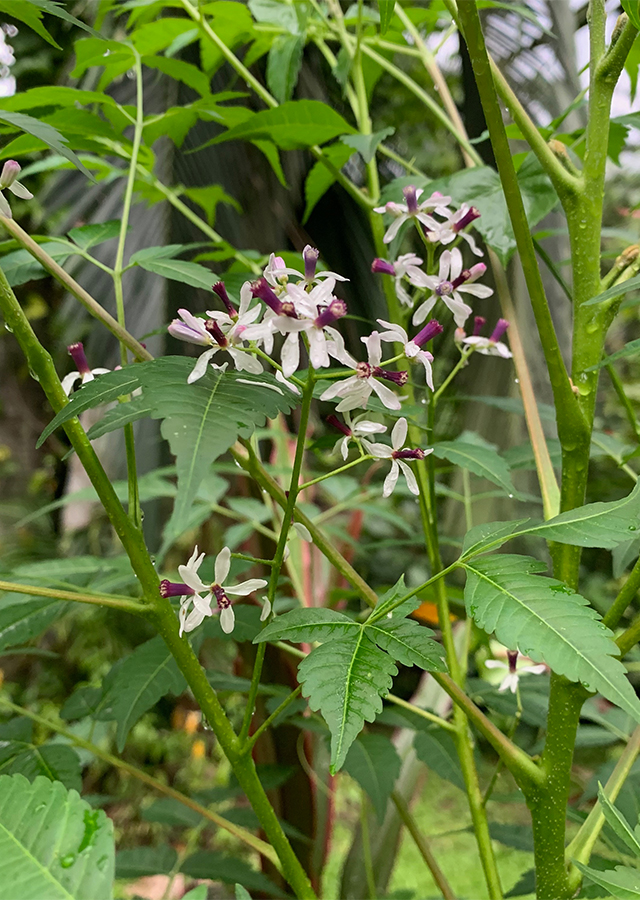
- Inflorescence - a thyrse, axillary or in axil of simple takes off on brief shoots, 10-22 cm long, essential branches 5-7.5 cm long, auxiliary branches up to 2 cm long, bearing fascicles of blooms; bracts 3-10 mm long, filiform, caducous, bracteoles comparative but littler; pedicel 2-3 mm long.
- Flowers - purplish, fragrant, promiscuous or male, 5-merous; calyx tubular, approximately 2 mm in breadth, projections approximately 2 mm long, outside stellate and with basic hairs; petals free, barely oval, 6-10 mm × 2 mm, white to lilac or pale blue, exterior minutely pubescent; staminal tube around 7 mm long, lilac turning profound purple, outside glabrous, insides with thick basic hairs; anthers 10, sessile; pistil glabrous, disgrace clavate, 5-lobed.
- Fruit - a drupe, ellipsoid-globose, 2-4 cm × 1-2 cm, yellow-brown when ready, glabrous, up to 5-seeded.
- Seeds - brown, oblongoid, 3.5 mm × 1.6 mm, smooth.
Cultivation
This plant is cultivated through stem cuttings, root suckers, and stem coating. The fruit should be macerated until the seeds can be gently removed. The seeds are soaked in water for 1-2 days, peeled and dried in the shade. They can be stored in a cool, well-ventilated place, in cloth or jute sacks. Plastic and other sealed containers should not be used to store seeds. Seeds should be planted within two weeks of being collected. Most sowing is carried out in 15 cm × 2.5 cm nurseries in a sunny place. Seedlings can be reduced to 15 cm × 15 cm when they are 2 months old, and transplanted when they are 7-10 cm tall.
Chemical Constituents
Melianotriol, desacetylochinolide B, nimbolin, sendanin, vilasinine, meliacin, meliacarpin, azadirachtin, ecdysones, toosendanin, glycopeptide.
Traditional Medicinal Uses
M. azedarach is efficacious in treating anthelmintic, antimalarial, cathartic, emetic, emmenagogic, and skin diseases.
Part Used
Reference Sources
- Faridah Hanum, I. & van der Maesen, L.J.G. (Editors), 1997. Plant Resources of South-East Asia No 11. Auxiliary plants. Backhuys Publishers, Leiden, the Netherlands. 389 pp.
- PROSEA. 2016. Melia azedarach. https://uses.plantnet-project.org/en/Melia_azedarach_(PROSEA)