Tea Tree
Melaleuca linariifolia Sm.
Myrtaceae
Location in our garden
Principal

Synonym
Melaleuca linariifolia var. typica Domin
Melaleuca stricta Dum.Cours.
Myrtoleucodendron linariifolium (Sm.) Kuntze
Habitus

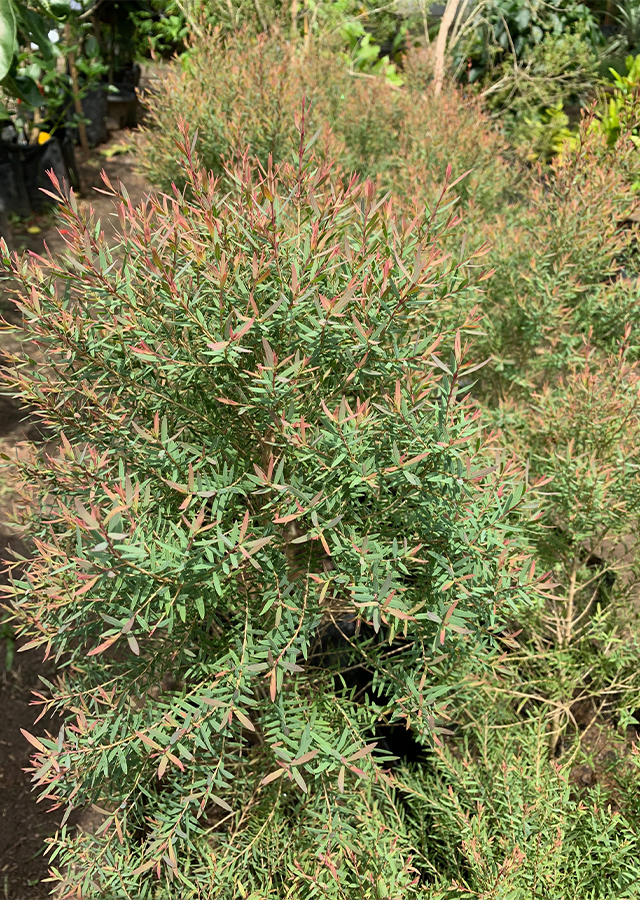
Shrubs. An evergreen shrub growing to about 10 m tall
Part Used
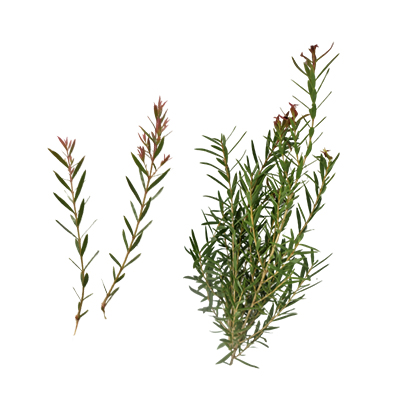
 Leaves
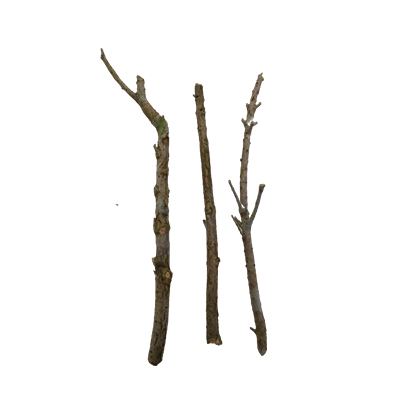
 Twigs
Twigs
Growing Requirements
 Full Sunshine
Habitat
 Wetland
 Coastal
Overview
Tea tree is endemic to Eastern Australia. Native distribution in Vietnam, Thailand, Indonesia, Malaysia, Singapore, South-Western Papua New Guinea, and Northern Australia. The plant is harvested from the wild for local use as a medicine and source of essential oil. The essential oil is strongly germicidal and also used in dentistry, deodorants, soaps, mouthwashes. It is also sometimes grown as a hedge.
Vernacular Names
Vernacular names: Gelam wangi (Malaysia), Nuvem-branca, Floco-de-neve (Portuguese), Budjur (Gadigal, Australia).
Agroecology
Melaleuca linariifolia is found from the warm temperature zone to the tropics, growing in both semi-acid and moist climates. Plants are said to tolerate occasional lows about -5 °C. Requires a fertile, well-drained moisture retentive lime-free soil in full sun. Prefers well-drained soil. Suitable pH: acid and neutral soils. It cannot grow in the shade. It prefers moist soil.
Morphology
- Stems - spongy to the touch. Bark is white, flaky and striking cream exfoliating.
- Leaves - opposite to narrow-elliptic-lanceolate, 20-45 mm long, 2-3,5 mm wide. Bluish green or silver or gray green, no change evergreen.
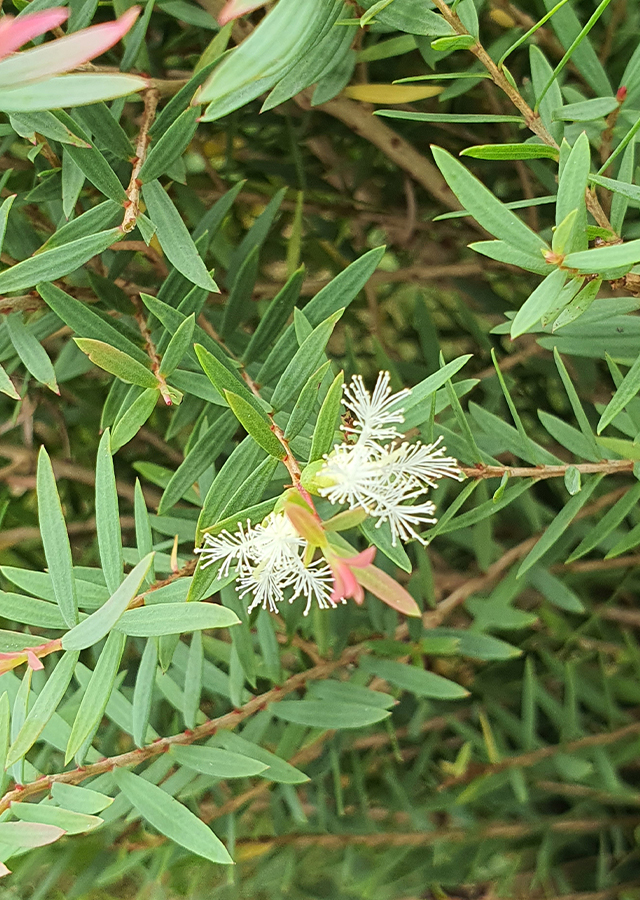
- Flowers - solitary within each bract, white. Petals obovate to broad-elliptic, 3 mm long, stamens 30-60 per bundle, claw 8-15 mm long. Showy, fragrant white. Inflorescences: many flowered spikes up to 4 cm long; rachis glabrous or sparsely pubescent.
- Fruits - brown or grey, small , fruiting in fall. cilindrical to subglobose, 3-4 mm diameter, orifice 2 mm diameter, valves level with the orifice, sepals tardily caducous.
- Seeds - contain many tiny seeds..
Cultivation
- By seeds - surface sow in spring or autum onto a pot of permanently moist soil in a warm greenhouse. Emmerse in 5 cm of water and do not water from overhead. Grow until the seedling are 0,5 cm tall, then remove from the water and pot up a week later.
- By cutting - pruning is best done after the plants have flowered with the intention of maintaining a compact habit. cutting of half-ripe lateral shoots with a heel.
Chemical Constituents
Terpinen-4-ol, methyleugenol, 1,8-cineole, E-methylisoeugenol, and α-terpineol
Traditional Medicinal Uses
- The essential oil obtained from the fresh leaves and twigs is strongly antiseptic, diaphoretic and expectorant. It is used for treating stings, burns, wounds and skin infection of all kinds.
- It stimulates the immune system and is effective against a broad range of bacterial and fungal infections.
- Internally, it is used in the treatment of chronic and some acute infections, notably cystitis, glandular fever and chronic fatigue syndrome.
- The essential oil is used in aromatherapy.
- It is used externally in the treatment of thrush, vaginal infections, acne, athlete's foot, verrucae, warts, insect bites, cold sores and nits.
- In Philippines, the leaves are used to treat asthma.