
Java indigo
Marsdenia tinctoria R.Br.
Apocynaceae
Location in our garden
Principal

Synonym
Asclepias tinctoria (R.Br.) Roxb.
Cynanchum tingens Buch.-Ham. ex Hook.f.
Marsdenia akkar Blanco
Marsdenia globifera Tsiang
Marsdenia monostachya Wall. ex Hook.f.
Marsdenia tagudinia Blanco
Marsdenia tinctoria var. tomentosa Masam. ex Tsiang & P.T.Li
Pergularia parviflora Blume
Pergularia tinctoria (R.Br.) Spreng.
Habitus

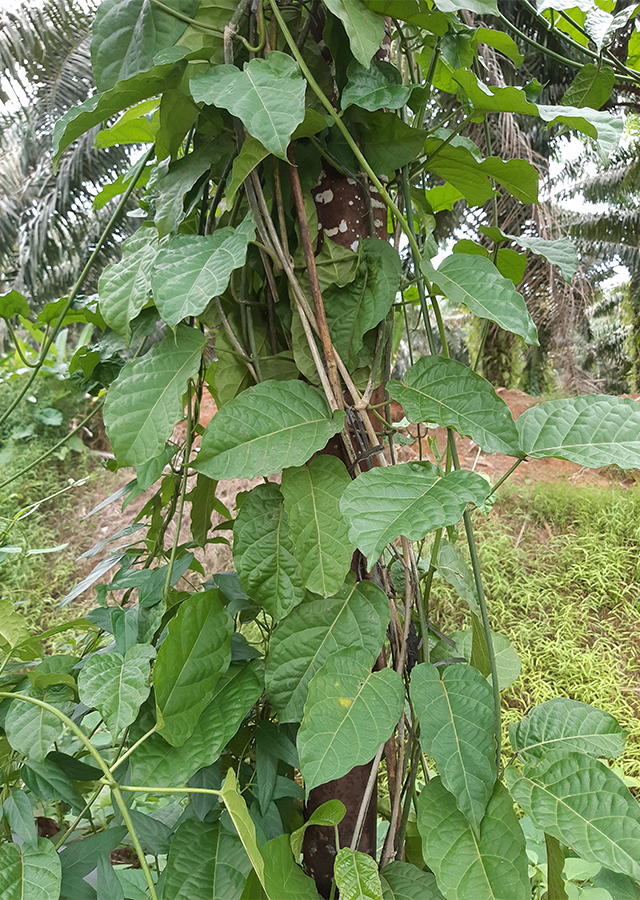
Climbers. A climbing half-woody plant, growing up to 5 m talll
Part Used
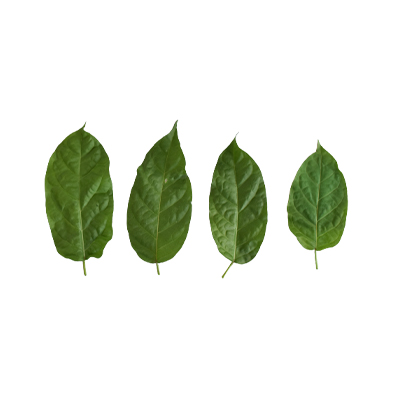
 Leaves
Growing Requirements
 Need Shade
Habitat
 Forest
 Shrublands
 Grassland
Overview
Java indigo is widely distributed from the subtropical Himalayas of Nepal and India, through Thailand and Peninsular Malaysia, South to Indonesia (Sumatra; once found on Java) and Philippines, East and North to Southern China, Taiwan and Ryukyu islands. The bark, leaves and flowers are used in making a blue dye.
Vernacular Names
Vernacular names: Akar tarum (Indonesia), Lan ye teng (Chinese), Dok bonenk (Cambodian), Buak (Laos), Akar tarum (Malaysia), Dan tha kwa (Burmese), Khraam thao (Thailand).
Agroecology
Marsdenia tinctoria occurs naturally in primary and secondary forest at low and medium altitudes, climbing on trees or something over rocks, and in humid mixed woods at elevations of 400-1,000 m. It is also found in thickets and on open ground, possibly as renants of former cultivation. It was formerly especially grown in places where heavy rainfall prevented indigo from being grown succecfully.
Morphology
- Stems - slender while the older stems are about 1.5 cm thick, nearly smooth and with longitudinal corky ridges.
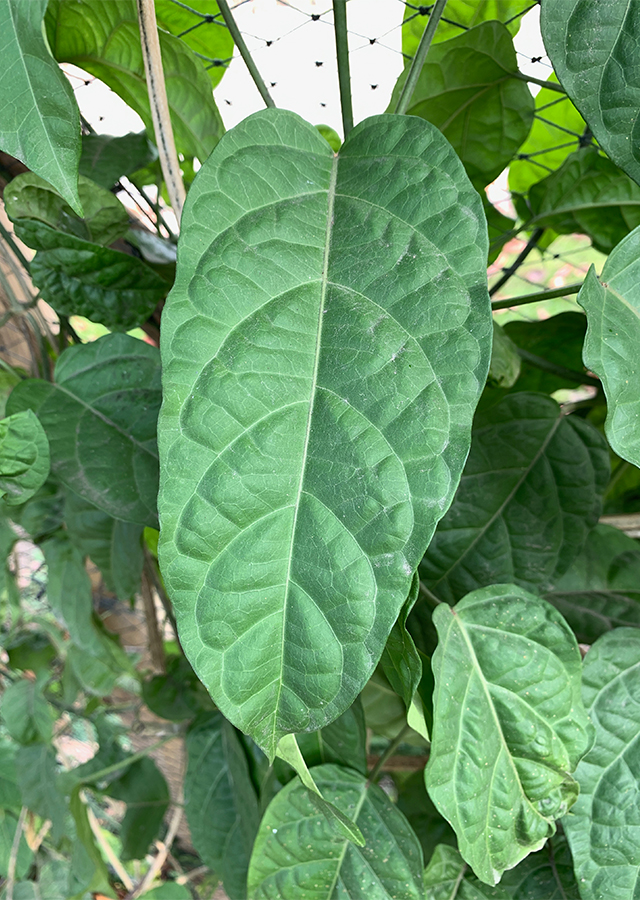
- Leaves - arranged opposite, simple, (broadly) ovate to lance-shaped, measuring 5-13 cm x 2-6(-7.5) cm, rounded to subcordate at the base and acute or shortly acuminate at the apex. The petiole is 1-4 cm long and minutely hairy.
- Flowers - small, fragrant, yellowish green, borne in alternating clusters at the axils of the leaves and 4 to 7 cm long.
- Fruits - composes of 1 or 2 lance-shaped follicles, measuring 4-6(-8) cm long and pubescent containing numerous comose seeds.
- Seeds - compressed and provide with profuse, silky-white hairs.
Cultivation
Propagated by seeds, cutting, layers and grafts. Weeding and fertilizing are necessary.
Chemical Constituents
Glycosides, alkaloids, flavonoids, terpenoid, steroid, polyphenol, lupenyl palmitate, lupenyl acetate, lupenone, lupeol, B-sitosterol 5,7-dihydroxy-2, 6,8-trimethyl chromone, 2,6-dimethoxybenquinone, 3,2-dihydroxyflavone, 1-methylcyclobutene and dimethyl isotaote.
Traditional Medicinal Uses
- It is considered stomachic.
- Studies have shown anti-implantation, abortifacient, antibacterial, oxytocic properties.
- It has antifertility activity.
- In Bangladesh, it is used to induce abortion.
- In Indonesia, it is used for contusion and fever.
- Leaves are used internally for stomach aches and diagnosed intestinal afflictions.
- Rubbed on the scalp to stimulate hair growth.
- The Sikkim healers of the Himalayas prescribed the leaf juice three times daily for stomach aches.
Part Used
Reference Sources
- Royal Botanic Gardens. Plants Of the World Online: Marsdenia tinctoria R.Br.. https://powo.science.kew.org/taxon/urn:lsid:ipni.org:names:99325-1.
- Chowdhury A.K.A., M.F.Hashim, B.C. Sen, O.F. Khan, and M. Ahmed. 1994. Antifertility principles from Marsdenia tinctoria Pharmacological and phytochemical studies. Pure & Appl. Chem 66(10): 2343-2346.