
Jasmine
Jasminum sambac (L.) Aiton
Oleaceae
Location in our garden
Principal

Synonym
Jasminum bicorollatum Noronha
Jasminum blancoi Hassk.
Jasminum fragrans Salisb.
Habitus

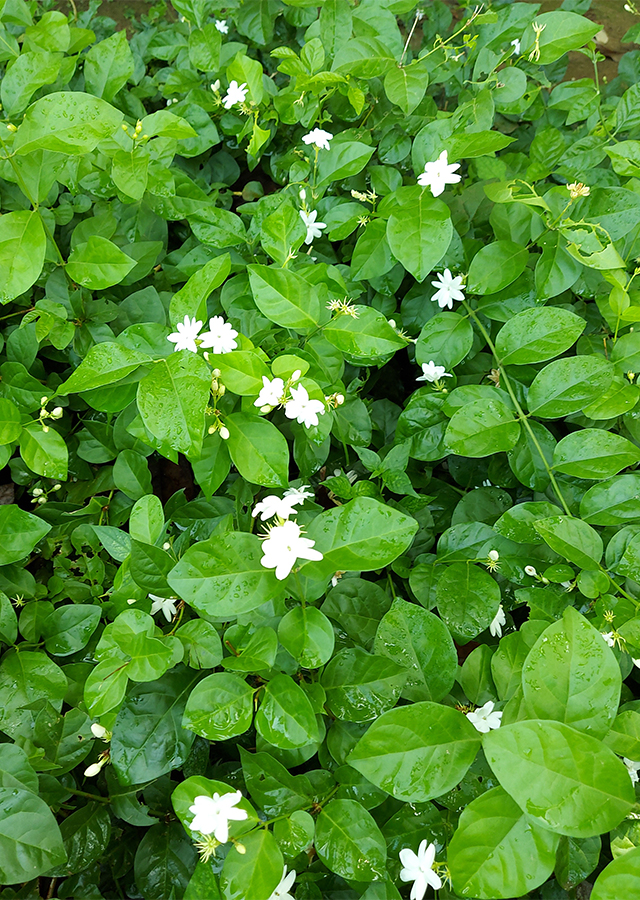
Shrubs. An evergreen perennial, erect or scandent shrub, up to 3 m in height, cultivated for its fragrant and flower.
Part Used
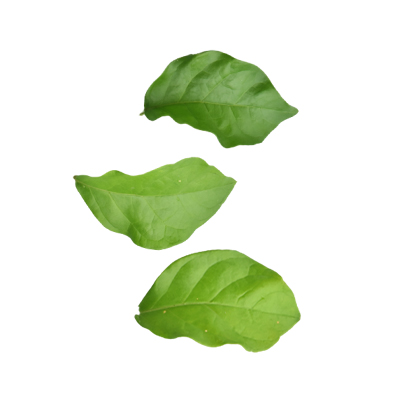
 Leaves
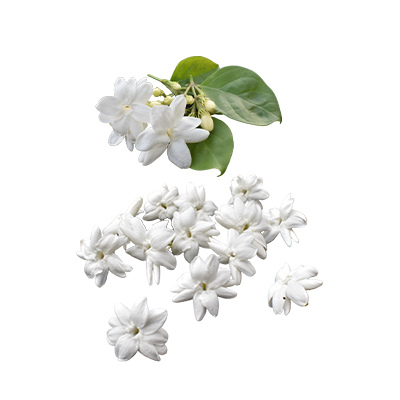
 Flowers
 Roots
Roots
Growing Requirements
 Full Sunshine
Habitat
 Forest
Overview
Jasmine is a small shrub native to East Himalaya and India, now widely cultivated in Central America, Africa, and Southeast Asia. Currently, this species is listed as invasive in Cuba and Hawaii and Florida in the USA.
Vernacular Names
Diamela (Spanish), Jasmin d'Arabie (French), Mo li huanama (Chinese), Melor (Malaysia), Manul (Philippines), Tiamuun (Thailand), Pikake (Hawaii), Melati (Indonesia), Molih (Cambodia) Lài (Vietnam).
Agroecology
J. sambac grows from sea level to 800 meters above sea level on rich loam, clay loam, or sandy soils with a pH of 6.0 to 7.5. Waterlogging kills practically all Jasminum species, thus good drainage is important. It thrives in both full sun and light shade. It needs moist but well-drained soil to thrive. Prefers light, high-in-organic-matter soil.
Morphology
- Root - at the nodes.
- Stems - either erect or climbing, branchlets terete or slightly compressed, sometimes hollow, sparsely pubescent.
- Leaves - opposite, simple; petiole 2-6 mm, articulate, pubescent; leaf blade orbicular to elliptic or obovate, 4-12.5 x 2-7.5 cm, papery.
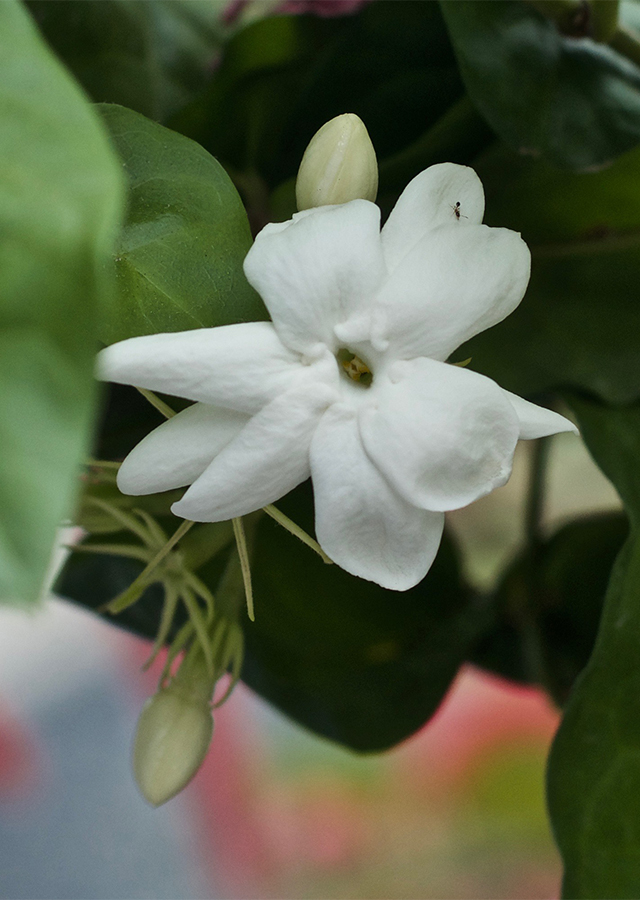
- Flowers - Colored white and very fragrant. Pedicel 0.3-2 cm. Calyx is glabrous or sparsely pubescent; lobes 8-9, linear, 5-7 mm; tube 0.7-1.5 cm, lobes oblong to suborbicular, 5-9 mm broad.
- Fruits - berry; colored purple-black, globose, 1 cm in diameter.
Cultivation
- In the wild, J. sambac spreads by seed.
- Propagation for commercial purposes is principally by cuttings. This species also spreads by layering and suckering from the roots.
- Cuttings 12-20 cm long should be taken from terminal shoots, treatment with a root stimulator increases the strike rate.
- Semi-ripe cuttings, 8 cm long, places in a sandy medium, usually root within 4 weeks.
- Cuttings taken from shoot tips have given better results than semi-ripe cuttings.
Chemical Constituents
- Flowers yield an essential oil rich in linalool, benzylacetate cis-jasmone, sesquiterpenes. Indole, pyridine and nicotin derivatives.
- Tetrameric iridoid glycosides, sambacosides A, E and F are present in the leaves.
- The glycosides, β-primeveroside and β-rutinoside, have been isolated from the flower buds.
Traditional Medicinal Uses
Medicinal Uses
- The plant is used in the treatment of fever, gastric tumor, hook worm infestation, urinary infection, abscess, breast tumor, insanity, emmenagogoue, menstrual disorder, ulcers and weakness of sight.
- The roots have strong sedative and anaesthetic properties.
Traditional Uses
- Leaves: Internally, a decoction is used to treat fever. Skin issues and wounds are treated with a poultice made from the leaves. As a lactifuge, bruised leaves or flowers are applied as a poultice to the breasts of lactating women. Used as astringent and antiamoebic
- Flowers: The flowers' aroma and cooling effect are often used, either directly or as perfumes. Jasmine flowers are used to flavor tea and extract essential oils. As a decongestant, an infusion of the blossoms is applied to the eyelids.
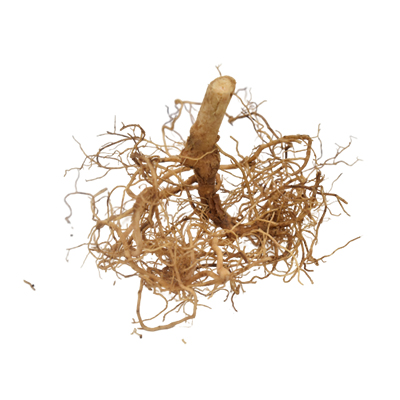
- Roots: Fresh root was used to treat veneral infections and fevers. The root's tincture is reported to have powerful sedative, anesthetic, and vulnerary qualities. Sprains and fractures are treated with root poultices. In pulmonary catarrh, bronchitis, and asthma, a decoction of the roots or an infusion of the flowers is used.
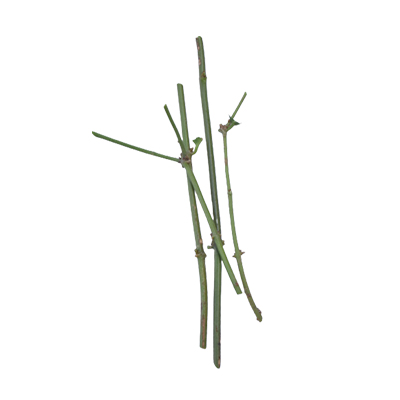
- Stems: The stems are used in the treatment of abscesses and as an antipyretic.
Part Used
Reference Sources
- Plant of The World. 2021. Jasminum sambac. https://powo.science.kew.org/taxon/urn:lsid:ipni.org:names:609755-1
- Rahajoe, J.S., Kiew, R. & van Valkenburg, J.L.C.H., 1999. Jasminum L.. In: de Padua, L.S., Bunyapraphatsara, N. and Lemmens, R.H.M.J. (Editors): Plant Resources of South-East Asia No 12(1): Medicinal and poisonous plants 1. PROSEA Foundation, Bogor, Indonesia.
- Invasive Species Compendium. 2016. Jasminum sambac. https://www.cabi.org/isc/datasheet/28388
- Flora and Fauna Web. 2019. Jasminum sambac "Arabian Nights". https://www.nparks.gov.sg/florafaunaweb/flora/5/2/5208
- Tropical Plants Database, Ken Fern. tropical.theferns.info. Jasminum sambac. 2021-11-30.