
White snakeroot
Ayapana triplinervis (Vahl) R.M.King & H.Rob.
Asteraceae
Location in our garden
Principal
Synonym
Ayapana officinalis Spach
Eupatorium ayapana Vent.
Eupatorium luzoniense Llanos
Habitus

Herbaceous. A perennial plant, growing up to 1.5 m tall
Part Used
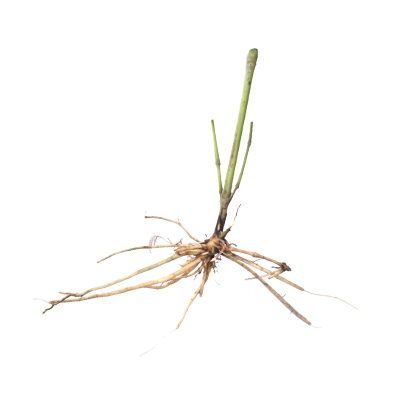
 The Whole Plant
Growing Requirements
 Need Shade
Habitat
 Forest
 Shrublands
Overview
The plant is originated from the area of Northern Brazil to Suriname, and was introduced, cultivated and naturalized long ago in some Caribbean islands, Africa, India, Indo-China, the Philippines, and Java, from where it was introduced into other parts of Indonesia.
Vernacular Names
Acerang (Malay), Apana (Tagalog-Philippines), Cây bả dột (Vietnamese), Pang' kacha (Cambodian), Ayapana (French).
Agroecology
It grows at elevations up to 1,600 m. It endures heavy shade, and has excellent ground-covering and soil retaining properties. It prefers in a sunny position, well-drained soil. It prefers a mean annual temperature within the range 24–37 °C.
Morphology
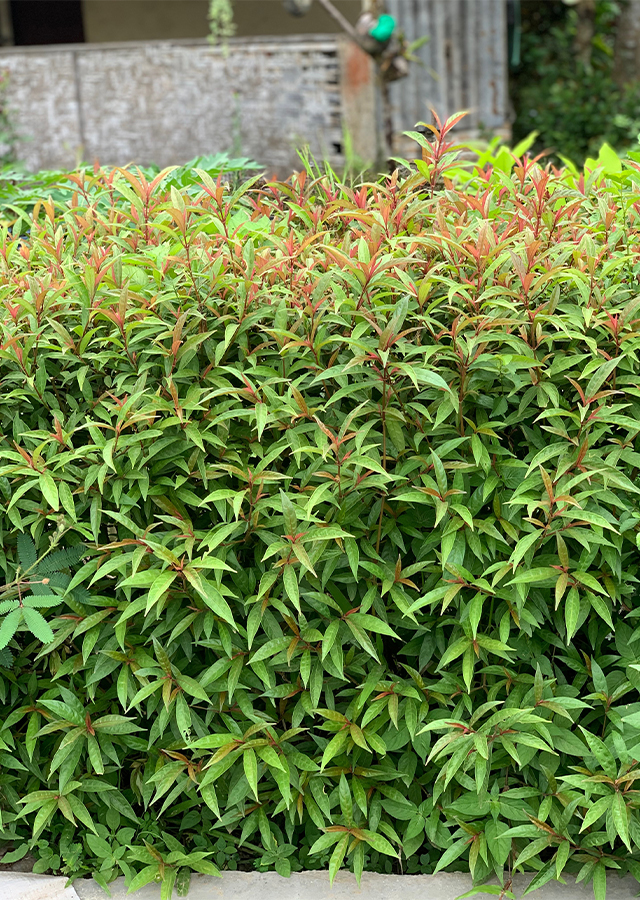
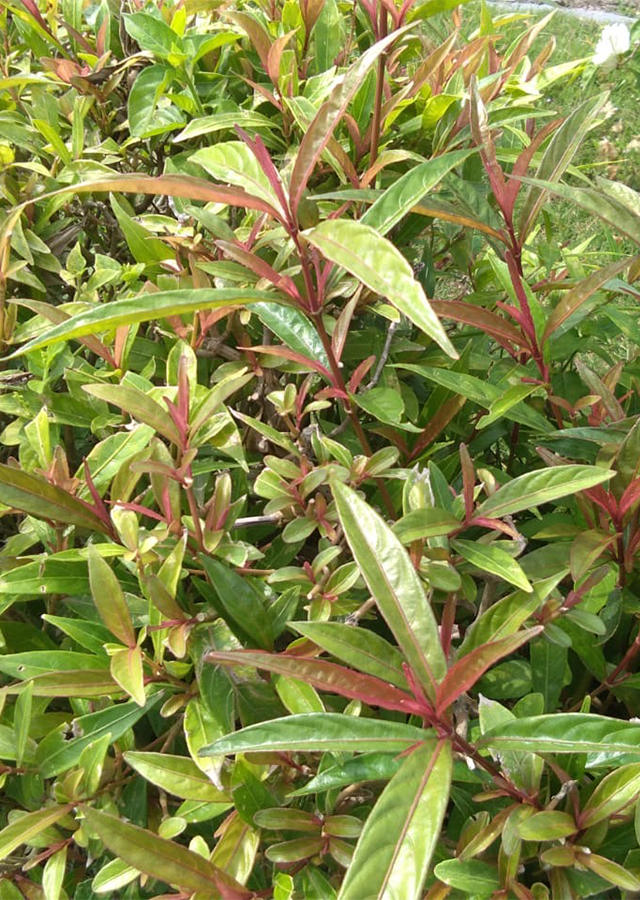
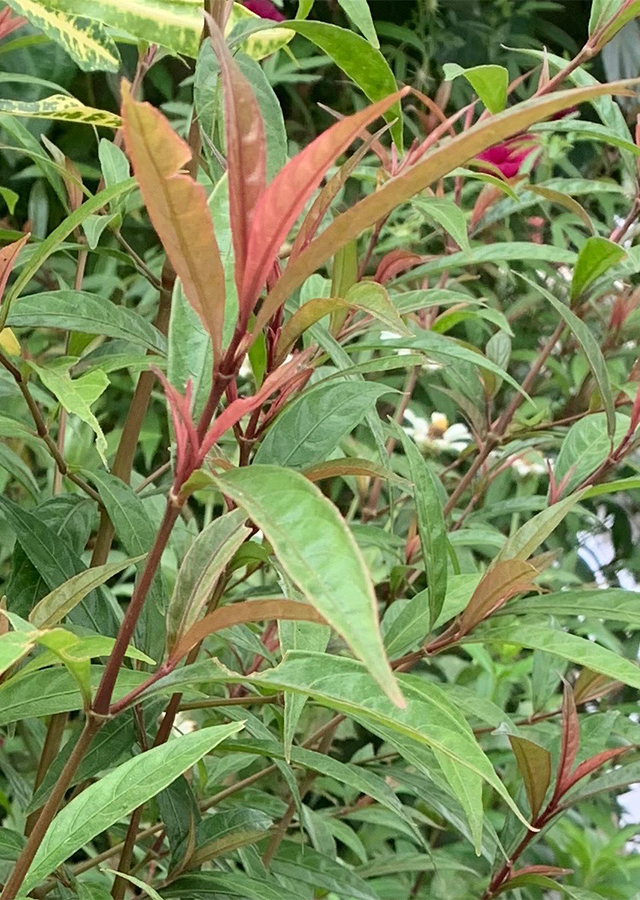
- Stems - reddish, often partly decumbent, rooting at the lower nodes; young shoots often whitish, because of resinous exudate.
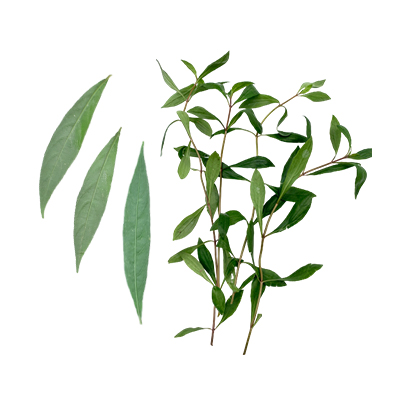
- Leaves - opposite, on flowering stems partially alternate, simple, lanceolate to narrowly oblong, base gradually tapering, apex obtuse, margins entire, recurved, or with a few minute teeth, blade rather thick, lowermost opposite pair of lateral veins arising above the leaf-base, dark green or tinged purple to a varying extent.
- Flowers - tubular, corolla scarcely exerted from the involucre, narrowly funnel-shaped, glabrous on inner surface, with glands on outer surface of lobes, reddish-violet, with a greenish-white base.
- Fruits - narrowly oblong achene, 2 mm long, 5-angled and sparsely hairy on the angles; pappus 3 mm long, white.
Cultivation
- Propagated generatively by seeds
- Propagated vegetatively by cuttings and suckers, which is the easiest method.
Chemical Constituents
Ayapanine (7-methoxycoumarin), ayapine (6,7-methylenedioxycoumarin), terpenes phellandrene, borneol,β-selinene, quinones thymoquinone and thymoquinone-dimethylether.
Traditional Medicinal Uses
- Its reported pharmacological activities include antitussive, astringent, anticoagulant, depurative, cicatrizant, antitumoral and antiseptic.
- Leaves are sudorific, febrifuge, alterative, stomachic, and antiscorbutic.
- The plant has stimulant effect and tonic in small doses, laxative in quantities.
- A water extract of the dried leaves and shoots is used as a cardiac stimulant, increasing the force of the heartbeat but diminishing its frequency.
- Externally, the leaves are used to treat badly infected wounds.
- In Brazil and the Caribbean, a gargle prepared from the leaves is used to relieve thrush, scurvy and angina.
- In Trinidad, a decoction is taken internally or used for bathing as a remedy for influenza, chest colds, pneumonia and constipation.
- The leaves are widely used as tea, as a treatment against chronic diarrhoea, lung diseases, influenza and also as an antidote for snake bites. It is also used to regulate menstruation problems.
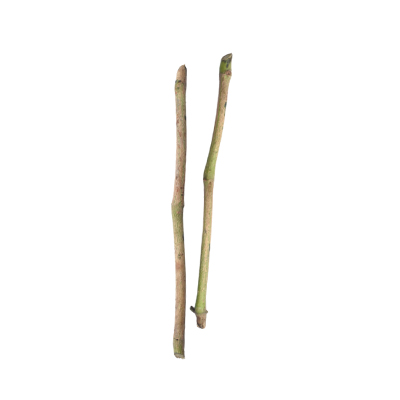
Part Used
Reference Sources
- Hanum, I.F., van der Maesen, L.J.G., eds. (1997). Plant Resources of South-East Asia, No. 11 - Auxiliary plants. Backhuys Publishers, Leiden.
- Taylor, L. (2005). The Healing Power of Rainforest Herbs: A Guide to Understanding and Using Herbal Medicinals. Square One Publishers, Inc., New York.
- Van Valkenburg, J.L.C.H., Bunyapraphatsara, N.., eds. (2002). Plant Resources of South-East Asia, No. 12(2) - Medicinal and poisonous plants 2. Prosea Foundation, Bogor.