
Pilea
Pilea melastomoides (Poir.) Wedd.
Urticaceae
Location in our garden
Green House
Synonym
Adicea melastomodes (Poir.) Kuntze
Boehmeria cavaleriei H.Lév.
Dubrueilia melastomoides (Poir.) Gaudich.
Habitus

Herbaceous. Perennial, hairless subshrubs that grows upright with a height of 2 m
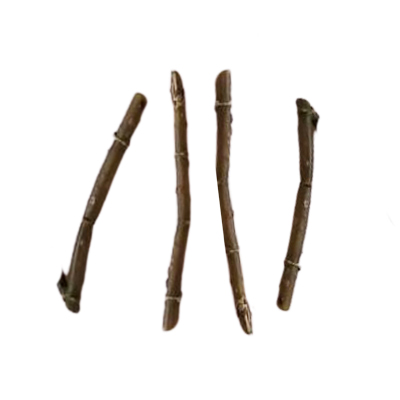
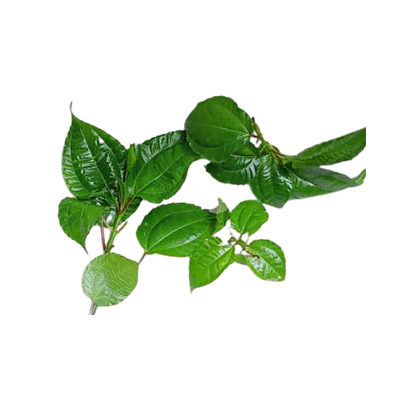
Part Used
 Leaves
 Roots
Roots Stem
Stem
Growing Requirements
 Need Shade
Habitat
 Forest
Overview
This plant is native to South-East Asia and has been growing wild since ancient times. Today the herbaceous plants have remained localized to tropical and subtropical climates and are grown on a small scale through small farms and in home gardens. The leaves can be found at local markets in select regions of India, Thailand, Vietnam, Cambodia, Malaysia, Indonesia, Sri Lanka, the Philippines, Taiwan, and Japan. The leaves are favoured to be eaten raw as fruit salads (lalapan) due to their soft texture and distinctive aroma
Vernacular Names
Narali (Malayalam), Shatkharhan (Tangkhul-India), Dongorbhori (Telugu-India), Thuy ma la mua (Vietnamese), Chang xu leng shui hua (Chinese).
Agroecology
Pilea generally grows in the mountains at high altitudes 500-2,500 m above sea level. It can also grow in moist areas, both containing little or much humus. The growth of this plant is also highly dependent on the clean water availability in its surroundings.
Morphology
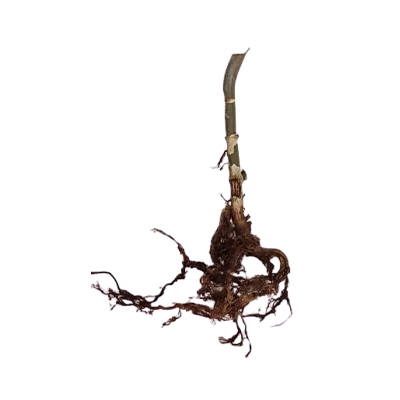
- Roots - has main root with a lot of lateral roots.
- Stem - an erect, small stem
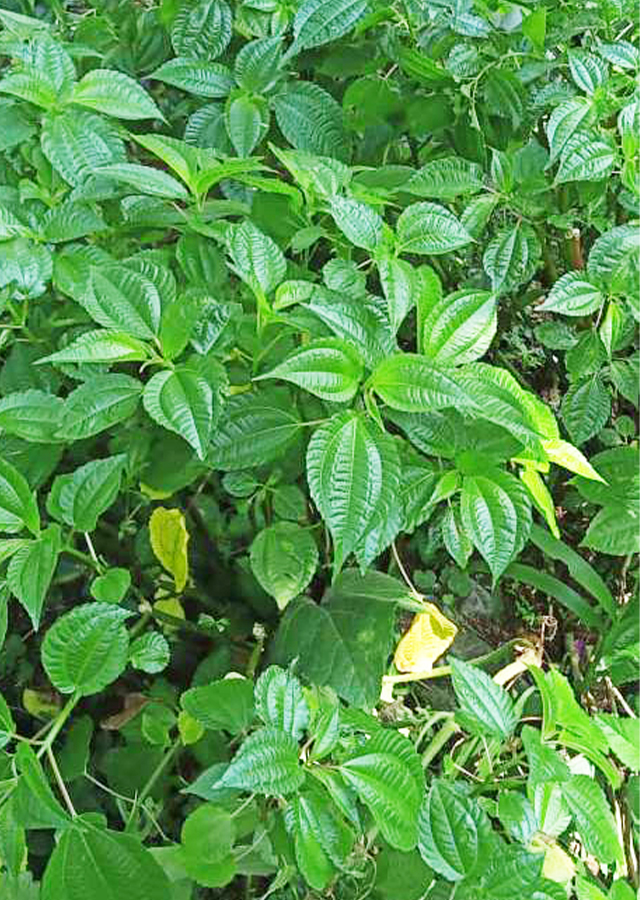
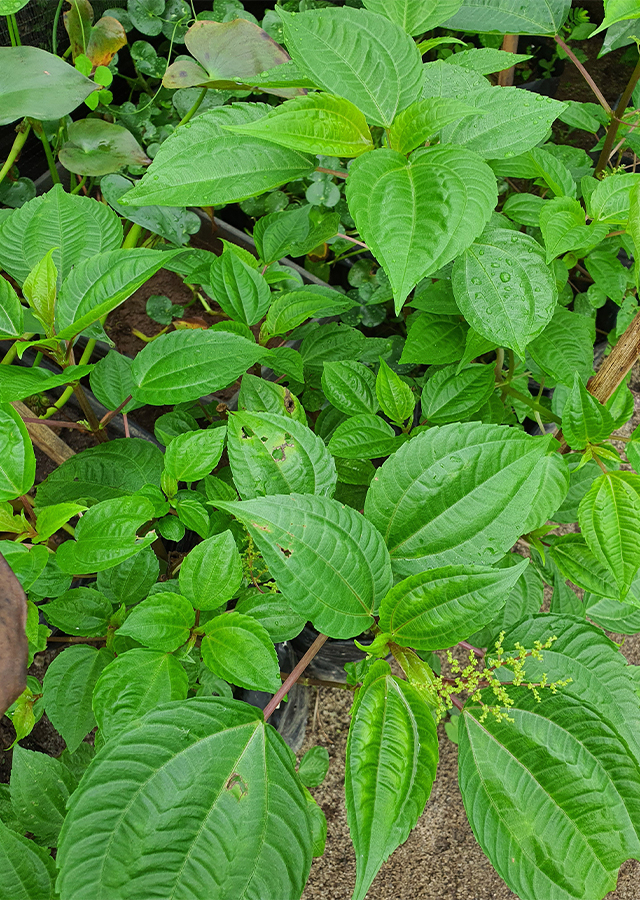
- Leaves - 19 x 9 cm, ovate, acuminate, rounded at base, serrate, 3-ribbed, nervules parallel, pubescent along nervules below, lineoles crowded, petiole unequal in opposite pairs, to 10 cm long. The surface of the leaf is dark green, slightly crinkled with folds and creases, and bears 1-3 prominent veins. The edges of the leaves are also serrated, and the leaves emit a light, pleasant aroma.
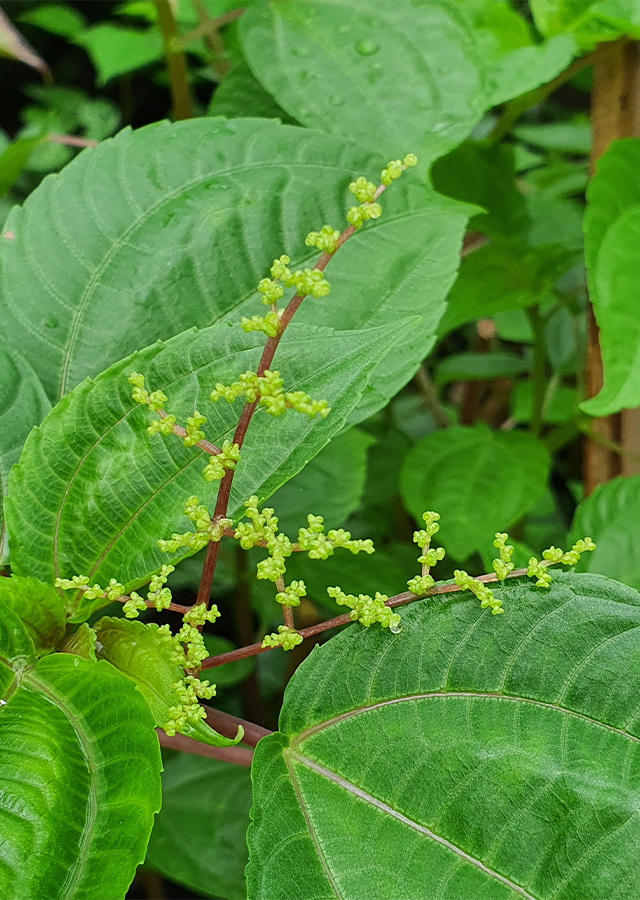
- Flowers - borne in panicles in leaf axils. Male panicle are 10 cm across, flowers stalkless, 4 mm across, tepals 4, ovate, pointed, stamens 4. Female panicle are 2 cm across, shortly stalked. Flowers are smaller than male flowers, tepals are 1 mm long, stigmas 3-fid.
- Fruits - achenes 1 mm across, biconvex.
Cultivation
- Propagated vegetatively by stem cuttings or lateral branches rooting.
- Propagated generatively by seeds. Due to its small seeds, sowing seeds in seed boxes is necessary before transplanting them 3-4 weeks later.
Chemical Constituents
Flavonoid, alkaloid, steroid, monoterpenoid, and sesquiterpenoid compounds, ascorbic acid, phenol, α-tocopherol, ß-carotene.
Traditional Medicinal Uses
Its reported pharmacological activities include antioxidant, antimicrobial, anticarcinogenic, anti-cholesterol, antibacterial, and anticarcinogenic
- In Indonesia, the leaves are used to increase digestion and calm an upset stomach.
- The leaves can also help boost the immune system and protect the body against free radicals.
Part Used
Reference Sources
- Chen, J., Monro, A.K. (2003). Pilea. In: Chen, J., Qi, L., Friis, I., Wilmot-Dear, M., Monro, A.K., eds. Urticaceae - Flora of China 5: 107.
- Susiarti, S., Arifa, N., Napisatunnaqiah, E., (2021). Medicinal Plant Diversity in the Market of Cibinong and Ciluar, Bogor. Journal of Tropical Ethnobiology 4(1): 33-48.