
Two flower mille graines
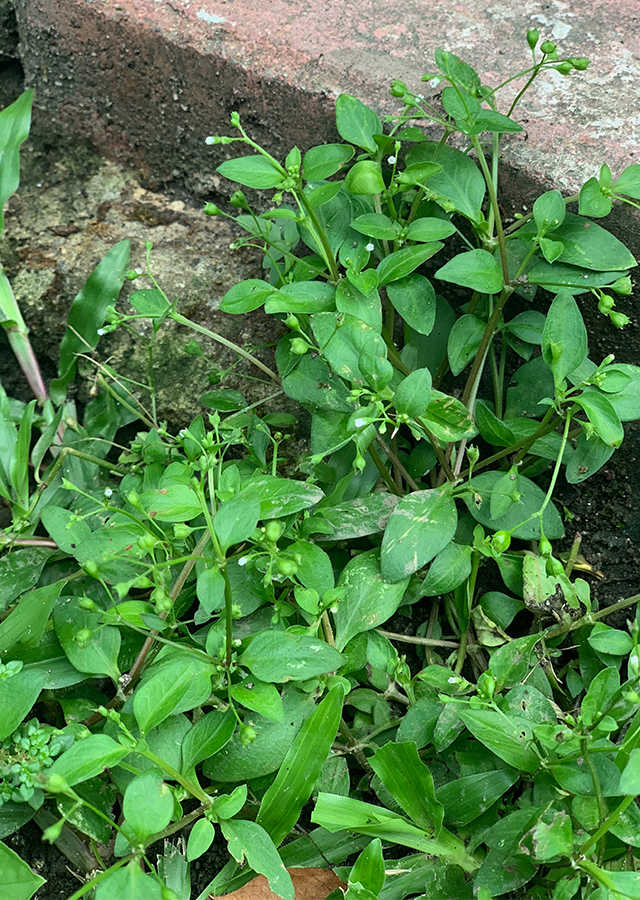
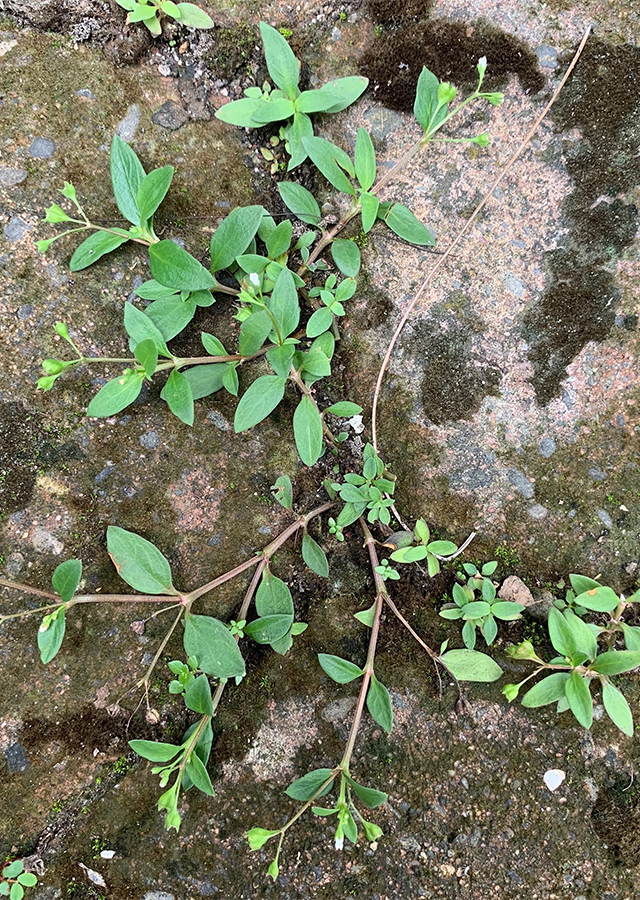
Leptopetalum biflorum (L.) Neupane & N.Wikstr.
Rubiaceae
Location in our garden
Beneficial Weed
Synonym
Gonotheca biflora (L.) Masam.
Hedyotis alsinifolia Zipp. ex Span.
Hedyotis biflora (L.) Lam.
Habitus

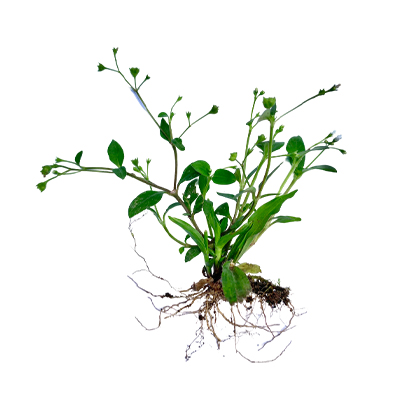
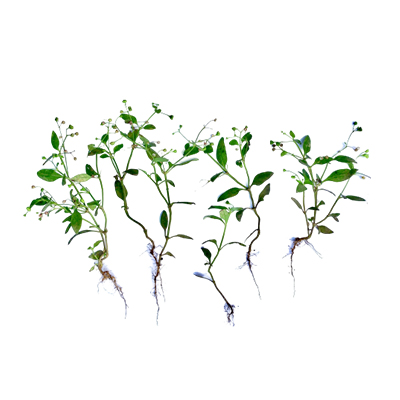
Herbaceous. An annual, smooth herb, branches up to 30 cm in length
Part Used
 The Whole Plant
Growing Requirements
 Full Sunshine
Habitat
 Riverbanks
 Coastal
 Grassland
Overview
This herb is a diffuse, glabrous prostrate found in almost all districts of South India. It is common in the plains of the East-Coast and less on West Coast. This plant also from Sri Lanka, India and Indo-China to Samoa and throughout Malesia.
Vernacular Names
Shuang hua er cao (Chinese), Damanpapra (India), Sonare mugura. (Japanese), Motukuwa (Japanese), Pokea teatea (Cook Island).
Agroecology
This plant is a common weed of coastal areas, fields, wastelands, roadsides and gardens. In coastal areas, the species reaches up to the height of 5-20 cm.
Morphology
- Stems - erect, angled to subterete, glabrous.
- Leaves - lamina elliptic-oblong, elliptic-ovate,vobovate or elliptic, 1−4 × 0.3 cm, apex obtuse or acute, base attenuate to obtuse, papery, glabrous, secondary veins obscure; subsessile or with petioles 2−10 mm long.
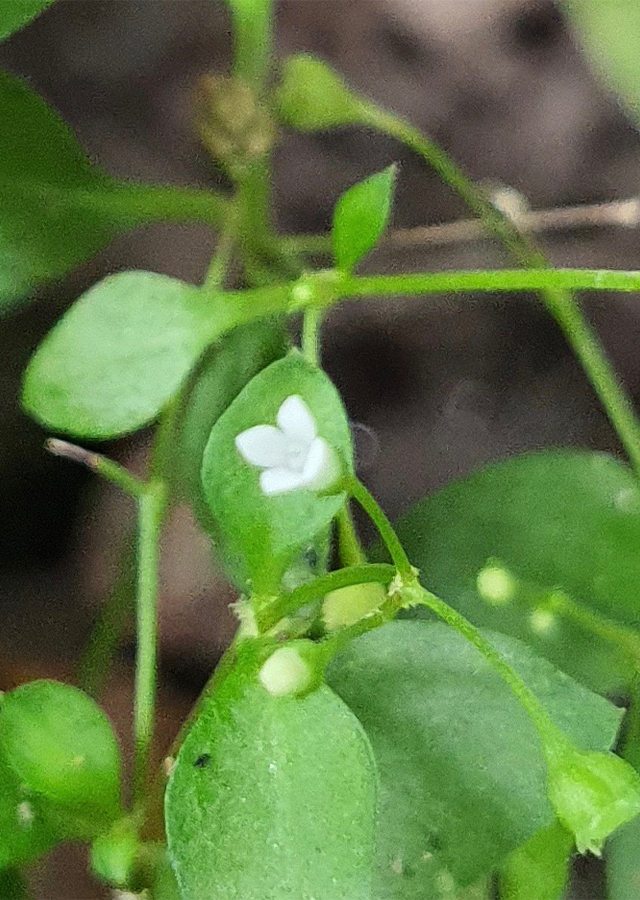
- Inflorescences - terminal or in axils of uppermost leaves, cymose to compound-cymose, 2−many flowered, glabrous, pedunculate; bracts triangular to lanceolate, 0.5−3 mm.
- Flowers - homostylous, subsessile or pedicels 0.5−1 mm long and slender; hypanthium ovoid or turbinate, 0.5−1 mm long, calyx lobes ovate-lanceolate or triangular, 0.5−1 mm long; corolla white.
- Seeds - many, globose or subglobose, 0.3−0.5 mm, exotesta foveolate.
Cultivation
In nature, it is propagated through seeds and the plants appear during rainy season only in the fields nearby water bodies.
Chemical Constituents
Alkaloids, tannins, flavonoids, and 11 types of cyclotides (HB1-HB11), hedyotiscones A, B and C and cytotoxic cyclotides.
Traditional Medicinal Uses
- Studies have shown cytotoxic, antiproliferative, antibacterial properties.
- Considered a bitter tonic, febrifuge, anthelmintic, alterative, anti-dysenteric, anti-ulcer.
- Used for fever and gastric ulcers.
- In the Philippines, plant is pounded and applied to wounds.
- Decoction is given internally for diarrhea and dysentery.
- In India, leaves used for remittent fevers, gastric irritation and nervous depression.
- In Hindi medicine, used in prescriptions for fever, diarrhea, skin diseases.
- Decoction of plant used in bilious fever, stomach irritability, and delirium.
- In Vietnam, it is applied to treat snake bites.
Part Used
Reference Sources
- Stuart Jr., G.U. (2018). Pisek: Oldenlandia biflora Linn. http://www.stuartxchange.org/Pisek.html.
- Eflora of India. (2007). Leptopetalum biflorum. https://sites.google.com/site/efloraofindia/species/m---z/r/rubiaceae/leptopetalum/oldenlandia-biflora