
Arsenic Bush
Senna septemtrionalis (Viv.) H.S. Irwin & Barneby
Fabaceae
Location in our garden
Principal

Synonym
Adipera laevigata (Willd.) Britton&Rose
Cassia aurata (Roxb.) Vogel
Cassia corymbosa Ortega
Habitus

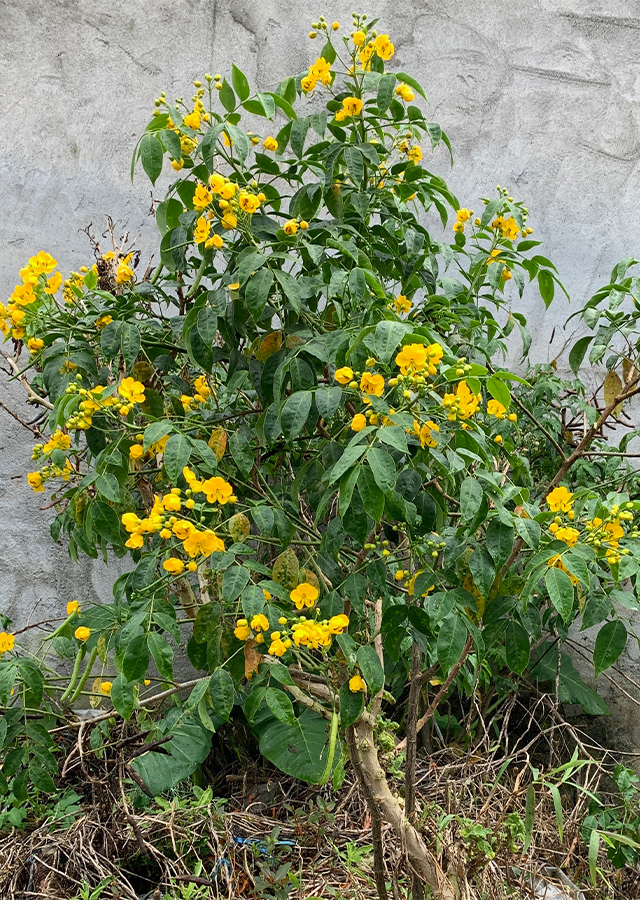
Shrubs. A leafy shrub that may grow up to 4 m
Part Used
 Leaves
 Seeds
Seeds Flowers
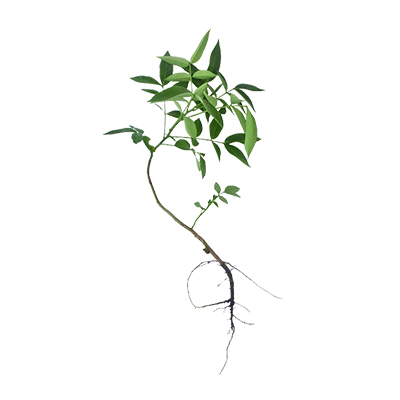
 Roots
Roots Stem
Stem The Whole Plant
Growing Requirements
 Full Sunshine
Habitat
 Riverbanks
 Forest
 Roadside
 Grassland
Overview
Arsenic bush is native to Mexico and Central America, It has been introduced and naturalized in the West Indies, parts of South America, tropical Africa, India, South East Asia and the Pacific. The plant is harvested from the wild for its use locally in traditional medicine and as a coffee substitute. It is grown as a hedge and ornamental plant.
Vernacular Names
Séné septentrional (French), Hedionda macho (Puerto Rican), leno Hediondo (Spanish), Akan-twi (Ghana), Guang ye jue ming (Chinese).
Agroecology
Arsenic bush is a shrub or treelet of sunny microhabitats in cool or moist oak, oak-pine and mixed pine-liquidambar forest, with secondary habitats as a prolific shrubby weed of disturbed or ruderal places. Plants of the species can establish themselves primarily at low elevations but up to 2,500 m in a variety of habitats, including dry, disturbed areas, along roadsides, in dry and wet forest margins, along stream banks, in alluvial sand or silt, in neglected gardens, abandoned orchards or in fallow lands, and occasionally in open woodlands or as undergrowth plants, particularly of eucalyptus or wattles.
Morphology
- Stems - cylindrical, solid and woody at the base.
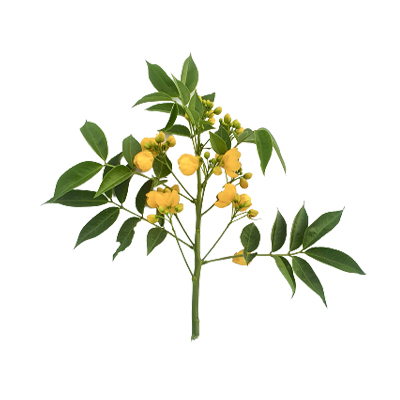
- Leaves - compound and alternate, 3-4 pairs of pinnae with glands between each of the pairs. Leaf margin is entire, base is attenuate and apex is acute. Blade is glabrous. Central nerve.
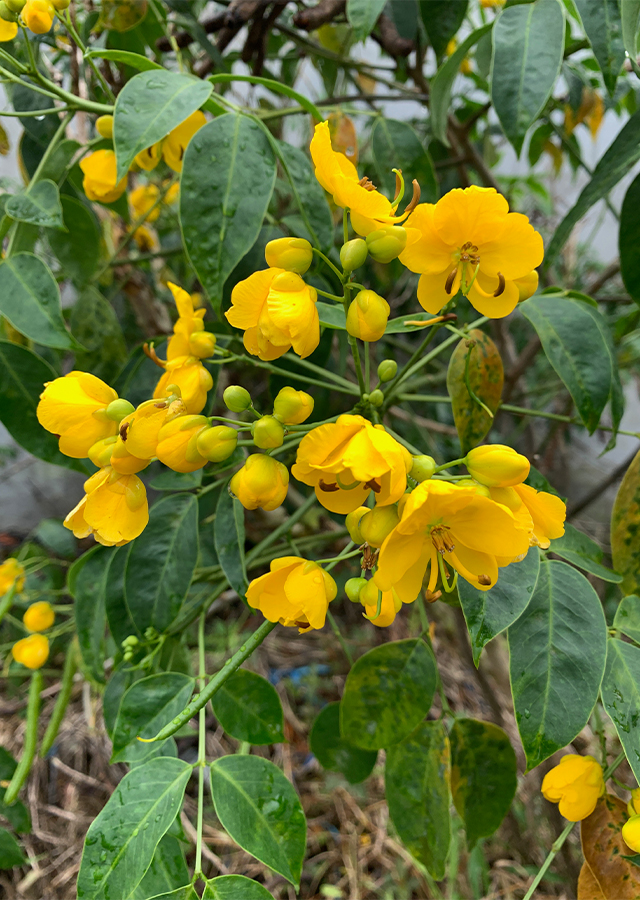
- Flowers - yellow, 2 to 3 cm in diameter when opened. The calyx has five sepals free. The corolla is slightly asymmetrical and has five yellow petals obovate.
- Fruits - a cylindrical pod, oblong, with 50-70 seeds, matures brown.
- Seeds - almost cylindrical, slightly flattened laterally, 5-6 mm x 2 mm. The top and base are beveled. Testa shiny brown or olive-colored, decorated with a clearer brand S-shaped stretch on each side wall.
Cultivation
Propagated by seeds, pre-soaking for 12 hours in warm water, or abrading the seed with sand can improve germination rates and reduce germination time.
Chemical Constituents
Physcion, floribundone-1, 5,7'-physcion-fallacinol, novel 5,7'-physcion-physcion-10'-C-alpha-arabibopyranoside, flavanoids, emodin, chrysophanol.
Traditional Medicinal Uses
- Studies have suggested anti-inflammatory and antinociceptive properties.
- Root and fruit are used as laxatives.
- In Mexico, it is used as an emmenagogue.
- In Madagascar, the seeds are crushed and added to coffee as a Malagasy beverage, and in Guatemala they are used as a coffee substitute.
- The unripe seeds, young shoots, and the leaves are eaten cooked in Sumatra and parts of India.
Part Used


Reference Sources
- Arana-Argáez VE, Domínguez F, Moreno DA, Isiordia-Espinoza MA, Lara-Riegos JC, Ceballos-Góngora E, Zapata-Morales JR, Franco-de la Torre L, Sánchez-Enríquez S, Alonso-Castro AJ. 2020. Anti-inflammatory and antinociceptive effects of an ethanol extract from Senna septemtrionalis. Inflammopharmacology. 28(2):541-549. doi: 10.1007/s10787-019-00657-7
- CABI. (2019). Invasive Species Compendium: Senna septemtrionalis (smooth senna). https://www.cabi.org/isc/datasheet/49597 (Accessed 23-02-2021).
- Fern, Ken. (2019). Useful Tropical Plants. Senna septemtrionalis. http://tropical.theferns.info/viewtropical.php?id=Senna+septemtrionalis.(Accessed 23-02-2021).
- JSTOR Global Plant. Senna septemtrionalis. https://plants.jstor.org/compilation/Senna.septemtrionalis. (Accessed 23-02-2021).