
Menteng
Baccaurea racemosa (Reinw.) Müll.Arg.
Phyllanthaceae
Location in our garden
Hardwood

Synonym
Baccaurea bhaswatii Chakrab. & M.Gangop.
Baccaurea wallichii Hook.f.
Pierardia racemosa (Reinw.) Blume
Habitus

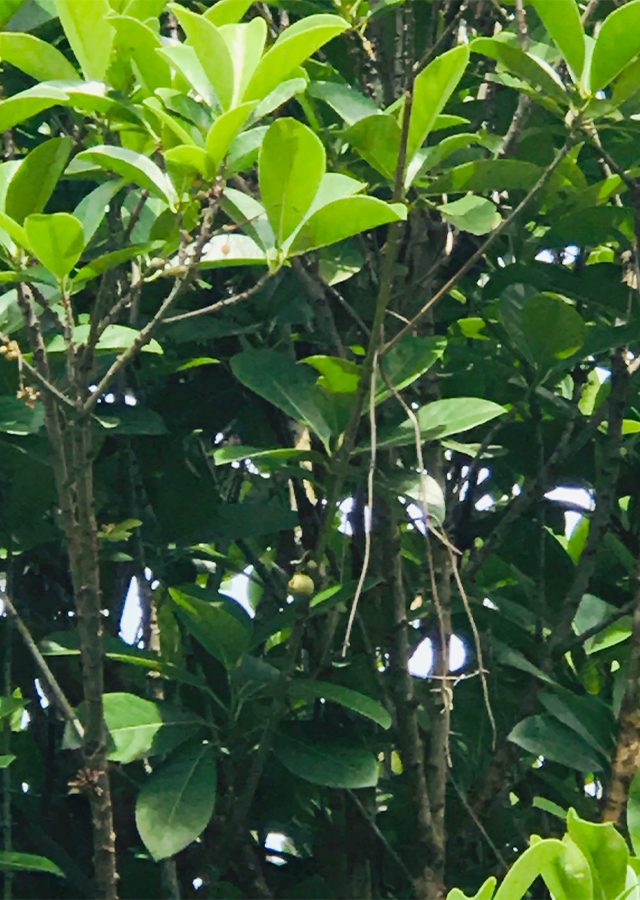
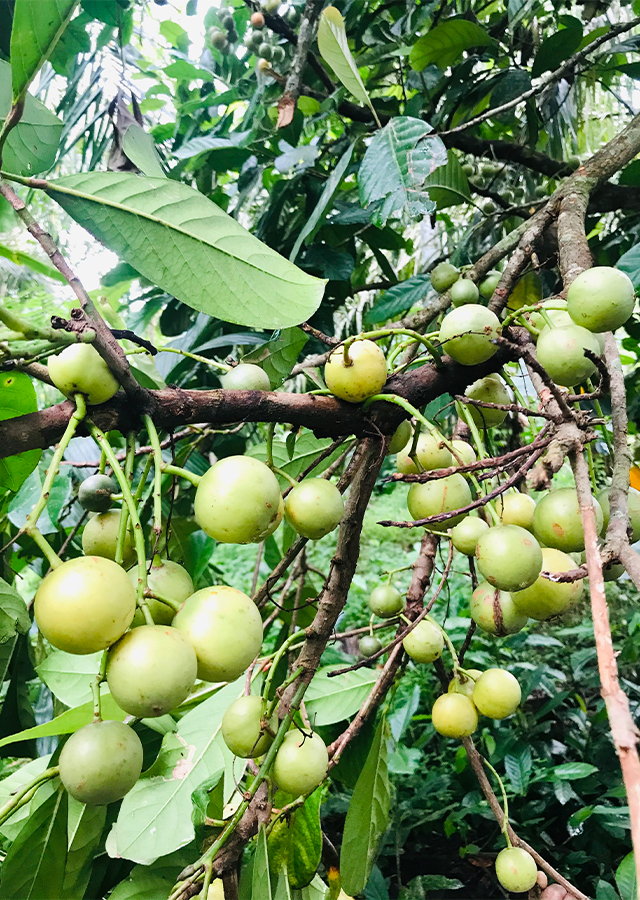
Trees. Menteng is a plant that can vary from a shrub about 3 meters tall to a medium-sized tree with a dense, irregular canopy; it can be up to 25 meters tall. The barrel can be from 25 to 70 cm in diameter. This tree is commonly grown, mainly in Indonesia, for its edible fruit and is also grown as an ornamental and shade tree.
Part Used
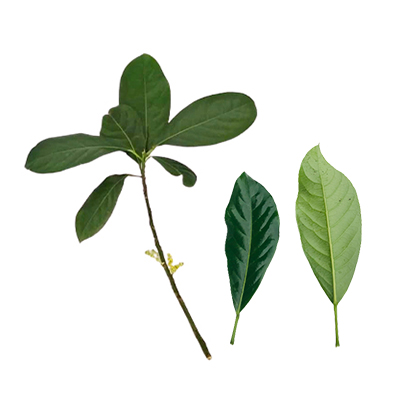
 Leaves
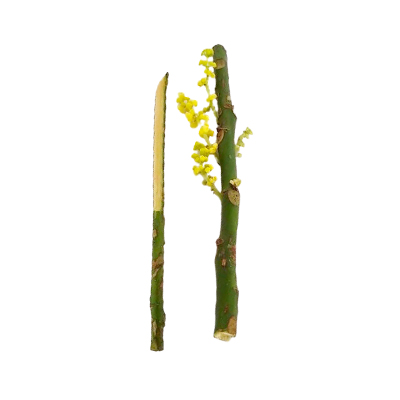
 Bark
Bark Fruit
Fruit
Growing Requirements
 Full Sunshine
 Need Shade
Habitat
 Wetland
 Forest
Overview
The species is indigenous to Thailand, Peninsular Malaysia and Indonesia. The plant is often cultivated, mainly in Indonesia, for its edible fruit and is also grown as an ornamental and shade tree. The species are considered to be good source of vitamins, minerals, fibres as well as have many pharmacological activities. Menteng is one of the most popular regional names in the city of Jakarta which was inspired by the other name of Baccaurea racemosa.
Vernacular Names
Menteng (Dutch), Rambeh (French), Asam tambun, Kapunddung (Peninsular Malaysia), Kokonau, Engkumi (Borneo – Brunei, Sarawak, Sabah), (Tangkilang, Kapundung (Bali), Haoundung, Ninggih (Batak, Sumatra), Kisip (Bengkoelen, Sumatra), Roesip, Kisip (Sumatra), Menteng, Kapundung, Jerek, Jirek (Java), Menteng, Rambai, Tampui (Lampung, Sumatra), Modung (Madurese), Kapundueng (Minang-kabau), Bowo (Nias), Bencoi (Red Variety, Sundanese), Menteng (White Variety Sundanese), Kapundung, Kepundung (Singkep) (Indonesia)).
Agroecology
This plant is common on alluvial and dry sites. It grows on a wide range of soils, from sandy to clayey soil (granite to yellow or red sandy clay) to peat swamps. Kepundung is a tropical species and occurs wild in undisturbed mixed dipterocarp primary and secondary rain forest, riverine forest, or fresh water swamp forest to sub-montane forests up to 1,500 m altitude. It prefers a mean annual rainfall of around 2,500 mm, but tolerates 1,500-4,500 mm. Prefers a sunny position, succeeding in light shade.
Morphology
- Trunk - pale to grey-brown bark, straight trunk, 25–70 cm bole, candelabriform branching pattern with strong, sub-glabrous branchlets and dense, irregular crown.
- Leaves - alternate, on 12–77 mm long petiole with elliptic to triangular stipules, 3–7.5 by 1–1.5 mm, glabrous to sparsely hairy. Lamina is simple, ovate to oblong to obovate.
- Flowers - apetalous, male flowers are 1–3 mm in diameter, creamy yellow to white; pistillate inflorescences are cauliflorous to axillary,single, up to 28 cm long. Female flowers are 3–9.2 mm in diameter, greenish yellow, or pinkish.
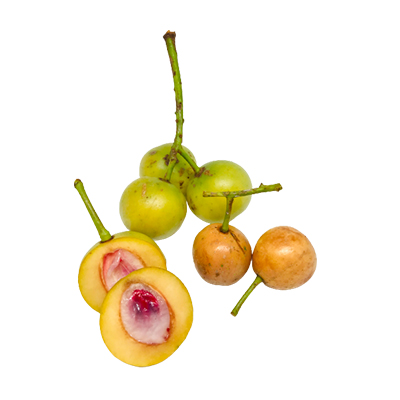
- Fruits - sub-globose to globose berries, 14–30 by 16–25 mm, green turning to yellowish-white or reddish when ripe, glabrous and indehiscent.
- Seeds - obovoid to ellipsoid, laterally flattened, 9– 11.5 by 6.5– 9.2 mm. Arillode is blue to purple to violet.
Cultivation
By seeds - when sown fresh it usually germinates in a few days and by grafting.
Chemical Constituents
Flavonoid, phenolic, saponin, tannin, alkaloids, terpenoid.
Traditional Medicinal Uses
- The fruit has function as anti-aging and antioxidants for skin.
- The fruit can be used to treat diarrhea, one of the most common digestive problems
- Calcium in the fruit is essential to maintain healthy bones and teeth, especially for children in growth stage, and prevent Osteoporosis.
- Phosphorus in the fruit works with calcium, filters waste in the kidneys, repairs body tissue and cells.
- Iron in the fruit can also be used to treat anemia by producing red blood cells.
- The leaves used for diarrhea, and smooth menstruation.
- The bark of the fruit can be used for the treatment of eye inflammation and puffy eyes or swollen eyelids.
Part Used
Reference Sources
- Aprilianti P, Lestari R, and Utami PW (2009). Potensi Baccaurea spp. : Studi Kasus di Kebun Raya Bogor. Prosiding Konservasi Flora Indonesia dalam Mengatasi Dampak Pemanasan Global. LIPI Press-Bali.
- DrHealthBenefit.com. (No date). 10 Insane Health Benefits of Baccaurea Racemosa. https://drhealthbenefits.com/food-bevarages/fruits/health-benefits-of-baccaurea-racemosa. 23-02-2021.
- Fern, Ken. (2019). Useful Tropical Plants: Baccaurea racemosa. http://tropical.theferns.info/viewtropical.php?id=Baccaurea+racemosa. 23-02-2021.
- Lim, T.K. (2012). Edible Medicinal and Non-Medicinal Plants. Volume 4 Fruits. pp 243-247. Springer Dordrecht Heidelberg London New York.
- Widodo H, Sismindari S, Asmara W, Rohman A. (2019). Antioxidant activities of methanolic extract and its fractions of Baccaurea racemosa and Macaranga subpeltata leaves. Food Research 4(1): 127-134. https://www.researchgate.net/publication/335405543_Antioxidant_activities_of_methanolic_extract_and_its_fractions_of_Baccaurea_racemosa_and_Macaranga_subpeltata_leaves. 23-02-2021.
- Soejarto DD. 1965. Baccaurea and Its Uses. Botanical Museum Leaflets, Harvard University. 21 (3) pp. 65-104.