
Kacip Fatimah
Labisia pumila (Blume) Fern.-Vill
Primulaceae
Location in our garden
Green House

Synonym
Angiopetalum punctatum Reinw.
Ardisia malouiana (L.Linden & Rodigas) Markgr.
Ardisia pumila Blume
Habitus

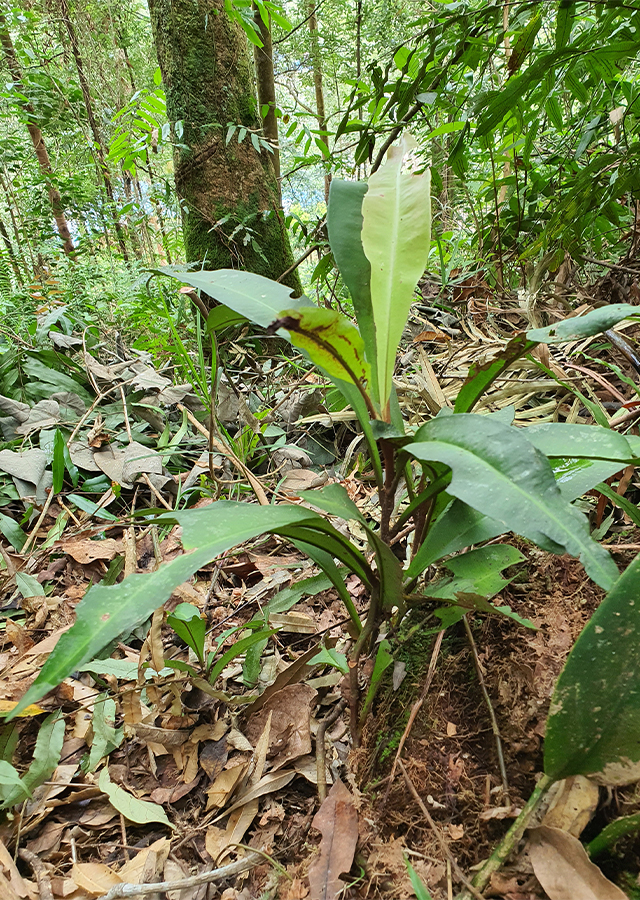
Herbaceous. Herbaceous, it growing erect 10-40 cm high or prostrate up to 60 cm long or longer
Part Used
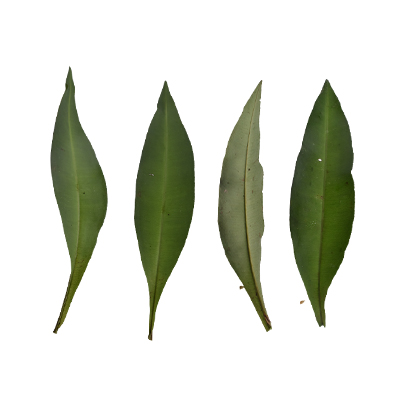
 Leaves
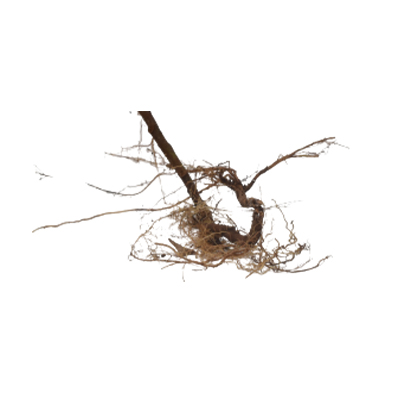
 Roots
Roots The Whole Plant
Growing Requirements
 Need Shade
Habitat
 Forest
Overview
This species native range is Indo-China to West Malesia. It has been used widely in South East Asian communities for a variety of illnesses and in food supplements. The herb, or formulation with other herbs, is available in many commercial products as a capsule, tea, or coffee, and as a canned beverage for human consumption.
Vernacular Names
Kelimparan tuli, udu mudung bio’ (Indonesia), Akar fatimah, Bunga belangkas hutan (Malaysia)
Agroecology
L. pumila is a locally common understorey plant of primary forest and old secondary forest. In Peninsular Malaysia and Borneo, it is found from sea level up to 750 m altitudes, but in West Java, it occurs at 900-1200 m altitude. This herb is very sensitive to changes in microclimate, especially light intensity, temperature, and relative humidity.
Morphology
- Stem - An erect or ascending undershrub up to 30(-50) cm tall
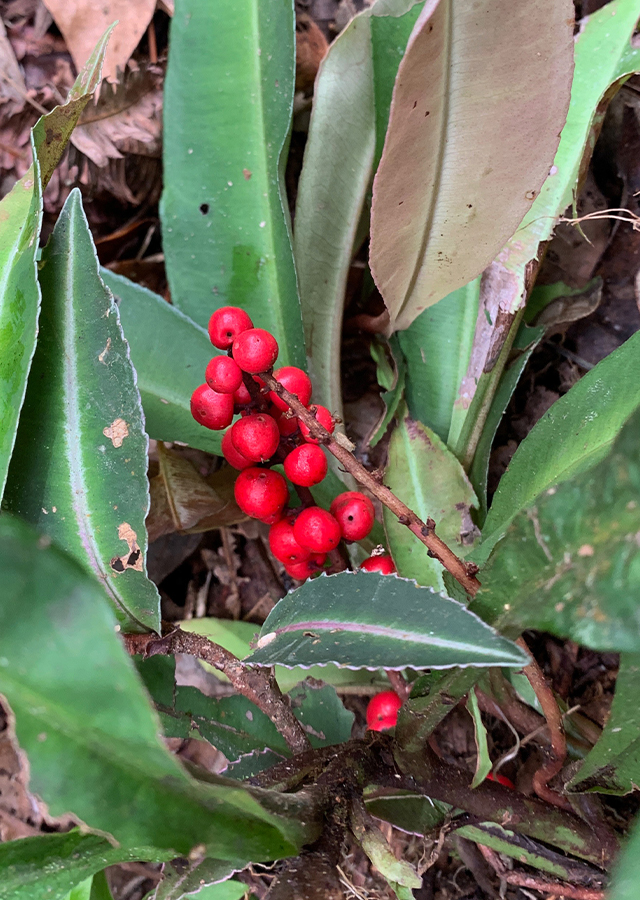
- Leaves - as simply more than 5 per plant, spirally arranged, elliptic or ovate, 10-35 cm long and 4-8 cm wide finely toothed with numerous veins.
- Flowers - very small, generally white or pink, in a spine-like panicle or small clusters, hermaphrodite, 5-merous, zygomorphic, glandular pusticulate, glabrous; sepals 5.
- Fruits - about 5 mm in diameter and red in color when ripe, drupaceous, subglobose to globose.
- Seeds - 1, subglobose to globose, ribbed, endosperm smooth, embryo transverse, cylindric
Cultivation
- The plant propagates from its seed in natural habitat.
- It could be easily propagated by the leaf and petiole cuttings with or without hormone treatment. However, the stem cuttings required the application of hormone for good rooting percentage.
Chemical Constituents
Phenolic, flavonoids (kaempferol, myricetin, naringin, quercetin, rutin), anthoxyanin, β-carotene, askorbic acid, benzoquinone, gallat acid, phytosterol, sapogenin, alkaloids, saponins, steroids, oksitosin
Traditional Medicinal Uses
Medicinal Uses
- It has antioxidant, antityrosinase, antimicrobial, anti-inflammatory and anticancer activities
- L. pumila extract has tremendous potential as an anti-photoaging cosmetic ingredient.
- It is a potential alternative agent for hormone replacement therapy in postmenopausal women (antiosteoporosis).
Traditional Uses
- The decoction of the root or whole plant by the Malay women to induce and facilitate child birth as well as a post partum medicine.
- The treatment of flatulence, dysentery, dysmenorrhoea, gonorrhoea and “sickness in the bones”.
- Men of several ethnic groups in Sarawak, Malaysia are also consumed this herb to maintain and increase stamina.
Part Used
Reference Sources
- Azis, S. (2021). Labisia pumila (PROSEA). https://uses.plantnet-project.org/en/Labisia_pumila_(PROSEA) 1-12.2021.
- Drugs.com. (2020). Kacip Fatimah. https://www.drugs.com/npp/kacip-fatimah.html. 22-02-2021.
- Globinmed. (2021). Labisia pumila (Blume) Fern.-Vill. https://www.globinmed.com/conservation/labisia-pumila-blume-fern-vill/. 1-12-2021.
- Hyun-kyung Choi 1, Dong-hyun Kim, Jin Wook Kim, Sulaiman Ngadiran, Mohamad Roji Sarmidi, Chang Seo Park. (2010). Labisia pumila extract protects skin cells from photoaging caused by UVB irradiation. J Biosci Bioeng. Vol. 109(3): 291. https://pubmed.ncbi.nlm.nih.gov/20159580/. 19-02-2021.
- Kadir, Azidah Abdul, Nik Hussain, Nik Hazlina. et. al. (2012). The Effect of Labisia pumila var. alata on Postmenopausal Women: A Pilot Study. J. Evidence-Based Complementary and Alternative Medicine Vol. 2012. https://www.hindawi.com/journals/ecam/2012/216525/. 19-02-2021.
- Kew Science. (2021). Plants of the World Online. Labisia pumila (Blume) Fern.-Vill. http://www.plantsoftheworldonline.org/taxon/urn:lsid:ipni.org:names:588713-1. 22-02-2021.
- Norhanisah Abdullah, Dr. Siavash Hosseinpour Chermahini, Lee Suan Chua, Mohamad roji Sarmidi. (2013). Labisia pumila: A Review on its Traditional, Phytochemical and Biological Uses. World Appl. Sci. J., Vol. 27 (10): 1297-1306. https://www.researchgate.net/publication/288157909_Labisia_pumila_A_review_on_its_traditional_phytochemical_and_biological_uses. 19-02-2021.
- Rozilawati, S.; Abdullah, N.A.P.; Jaafar, H.Z.E.; Sinniah, U.R.; et al. (2007). Morphological characteristic of Labisia pumila benth. Journal of ISSAAS [International Society for Southeast Asian Agricultural Sciences] (Philippines). https://agris.fao.org/agris-search/search.do?recordID=PH2011000756. 19-02-2021.