
Cracker Plant
Ruellia tuberosa L.
Acanthaceae
Location in our garden
Principal
Synonym
Cryphiacanthus barbadensis Nees
Dipteracanthus clandestinus (L.) C.Presl
Ruellia clandestina L.
Habitus

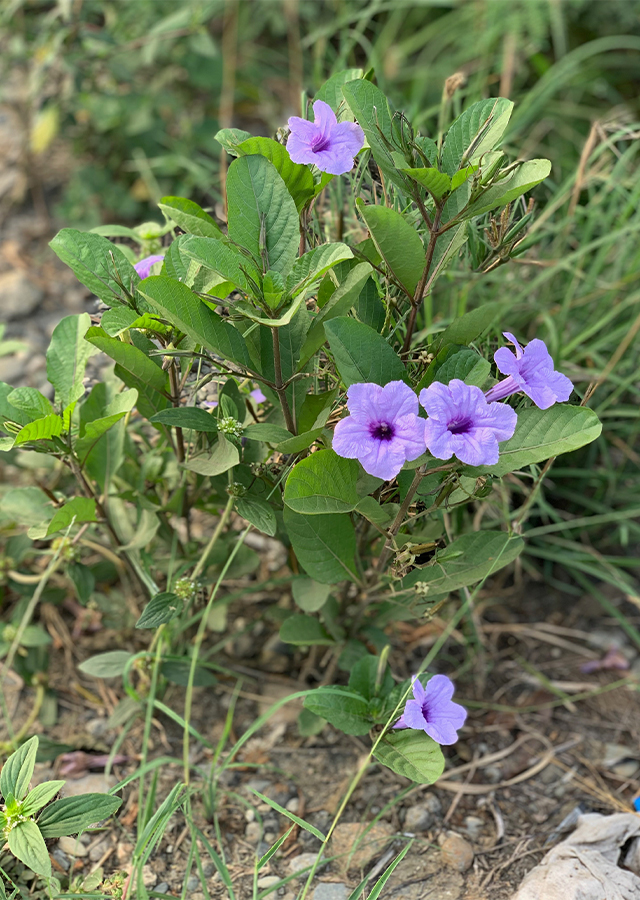
Herbaceous. Herbaceous perennial plant, grows up to about 30 cm in height
Part Used
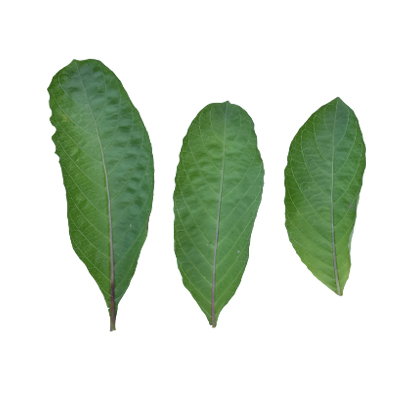
 Leaves
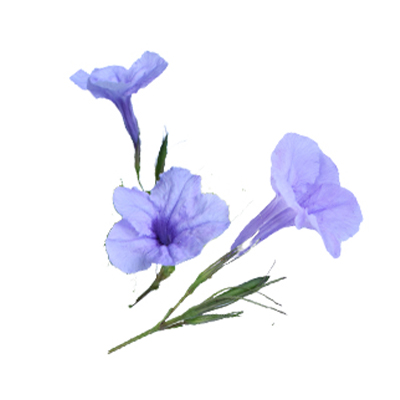
 Flowers
 Roots
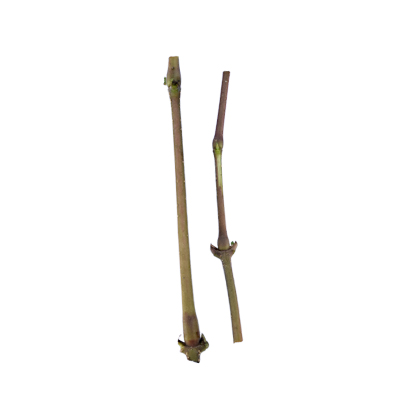
Roots Stem
Stem
Growing Requirements
 Full Sunshine
Habitat
 Shrublands
 Grassland
Overview
The species looks like petunia, is called petunia, but it is not a petunia. It is a member of the Acanthaceae family. This native plant occurs occasionally throughout Illinois. Several species of Ruellia are ornamentals, and others have been noted for their local medicinal uses.
Vernacular Names
Potpoti (Bangladesh), Lu li cao (Chinese), Patate-chandelier (French), Ruellia (Tagalog-Philippines), Espanta suegras (Spanish), Heen amukkara (Sri Lanka).
Agroecology
It is quite adaptable, tolerating full or partial sun, moist to dry conditions, and grows practically on any kind of soil. It can be found in roadside ditches, old abandoned gardens, coconut plantations, secondary grassland; near sea level to 150 m.
Morphology
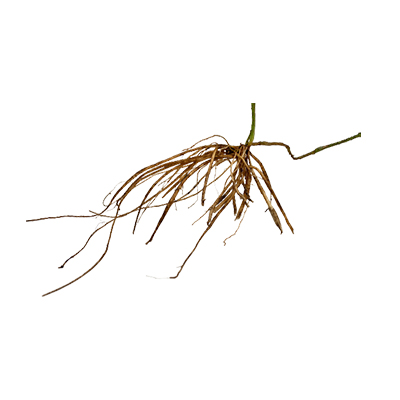
- Roots - tuberous roots.
- Stems - young stems with sparse to dense long and short broad glossy hairs.
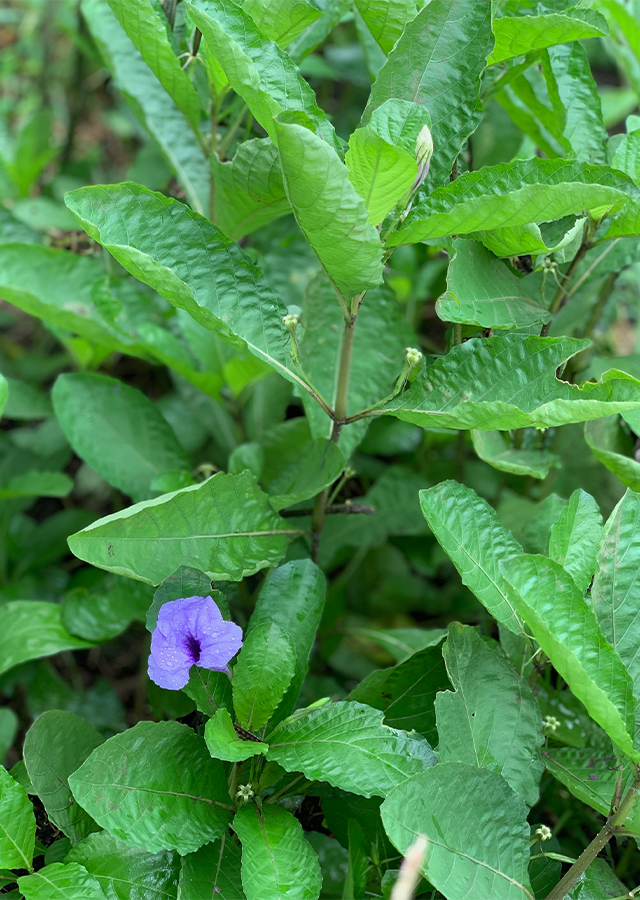
- Leaves - opposite, elliptic, short petiole, abruptly narrowed at the base, with undulate margins, and up to 12 cm long.
- Flowers - showy, with funnel-shaped, 5-lobed corolla, up to 5 cm across, and mauve or light bluish purple.
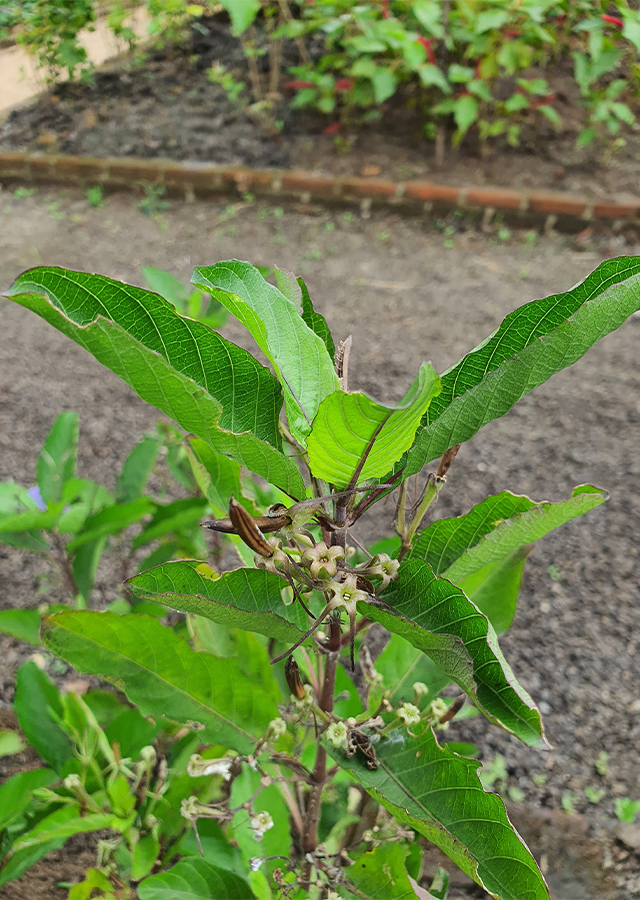
- Fruits - capsule linear, glabrous, 2–3.2 cm long, with more than 20 seeds.
- Seeds - orbicular, brown, ± 2.5 × 2 mm.
Cultivation
- It is easy to grow from seed, but it is not weedy.
- It is reported to be invasive in Florida where it spreads by long-running stolons.
Chemical Constituents
β-sitosterol glukocide, syringaresinol, acteoside, cistanoside F, syringin, roseoside, pectolinargenin, dementhoxycentaureidin 7-O-β-D-glucopyranoside, flavonoids, saponin, tannin, apigenin, luteolin, lupeol, volatile oil.
Traditional Medicinal Uses
Medicinal Uses
- The plant is diuretic, antidiabetic, antipyretic, analgesic, antidotal.
- Studies have suggested anti-inflammatory, antioxidant, antinociceptive, gastroprotective properties.
Traditional Uses
- For the treatment of headaches, dizziness, used to make teas, eye drops, and leaves smoked to induce hallucinations.
- In Trinidad and Tobago, used as a "cooling" agent for urinary problems and high cholesterol.
Part Used
Reference Sources
- NParks. Ruellia tuberosa. https://www.nparks.gov.sg/florafaunaweb/flora/2/4/2404
- Plants of the World Online. Ruellia tuberosa (L.). https://powo.science.kew.org/taxon/urn:lsid:ipni.org:names:54671-1 (Accessed 29-11-2021)
- Chothani, D. L., Patel, M., Mishra, S., & Vaghasiya, H. (2010). Review on Ruellia tuberosa (Cracker plant). Pharmacognosy Journal, 2(12), 506–512. doi:10.1016/s0975-3575(10)80040-9
- Bo Eng Cheong, Mohd. Zulkarnain Waslim, Fui Fui Lem, Peik Lin Teoh. Antioxidant and anti-proliferative activities of Sabah Ruellia tuberose. J App Pharm Sci, 2013; 3 (12): 020-024