
Milkweed
Asclepias curassavica L.
Apocynaceae
Location in our garden
Principal
Synonym
Asclepias aurantiaca Salisb.
Asclepias bicolor Moench.
Asclepias cubensis Wender.
Habitus

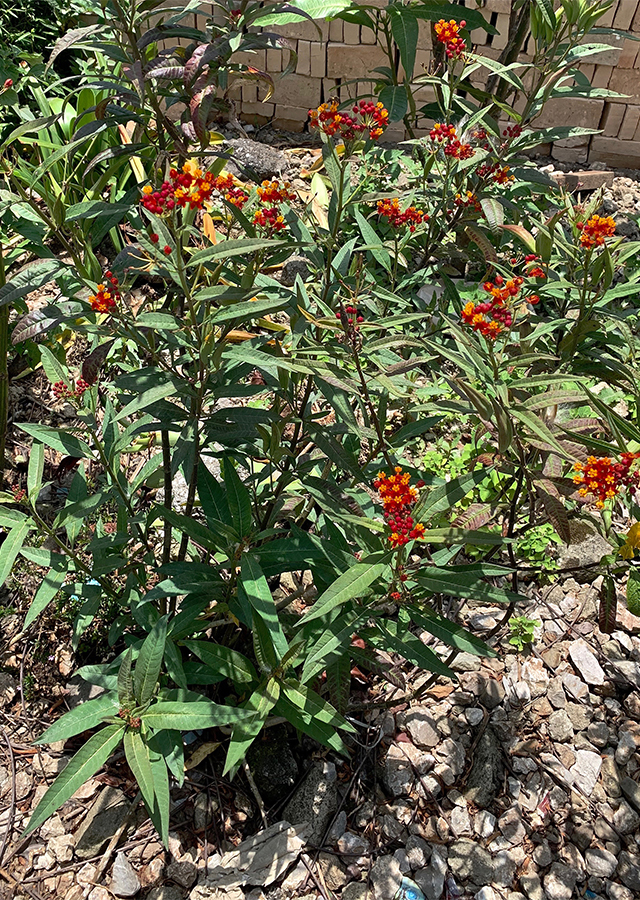
Herbaceous. An erect, glabrous, perennial sub-shrub or herb that grows up to 1-1.5 m high
Part Used
 Leaves
 Flowers
 Latex
Latex Roots
Roots
Growing Requirements
 Need Shade
Habitat
 Wetland
 Riverbanks
 Forest
 Roadside
 Grassland
Overview
Blood flower or Milkweed is native to the American tropics and has a pantropical distribution as an introduced species. The plant is widely cultivated throughout the tropics as an ornamental, but it is also sometimes grown, in places such as China, as a medicinal plant. The plant is suspected to be poisonous to grazing animals. This spesies is reported to be weedy or invasive across many tropical and subtropical regions of the Americas, Australia and Asia, as well as in China, South East Asia and the Pacific. Impacts of this species include the invasion of both native ecosystems and agricultural systems, as well as toxicity to vertebrates.
Vernacular Names
Fang cao hua (Chinese), Frederiksbloem (Dutch), Ipeca sauvsage (French), Curacao seidenpflanze (German), Kakatundi (India), Bunga emas (Malay), Bulak-damo (Philippines), Bastard ipecacuana; cottonbush (Australia), Kapas cinde (Indonesia).
Agroecology
This plant occurs most frequently in pastures, wastelands, and along roadsides at elevations from sea level to over 1,500 m. Succeeds in a range of climates from warm temperate to tropical. Although it requires a well-drained soil and a sunny position, it can succeeds on a wide range of soils.
Morphology
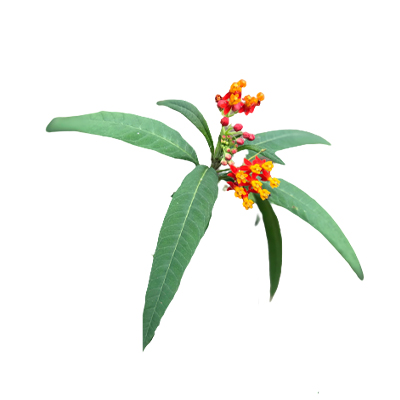
- Stems - smooth, round, dull green or suffused with dull red.
- Leaves - simple, opposite, shortly petioled, lanceolate to narrow-elliptic in shape, acuminate and measure 6 to 15 cm long and 6 to 25 cm wide.
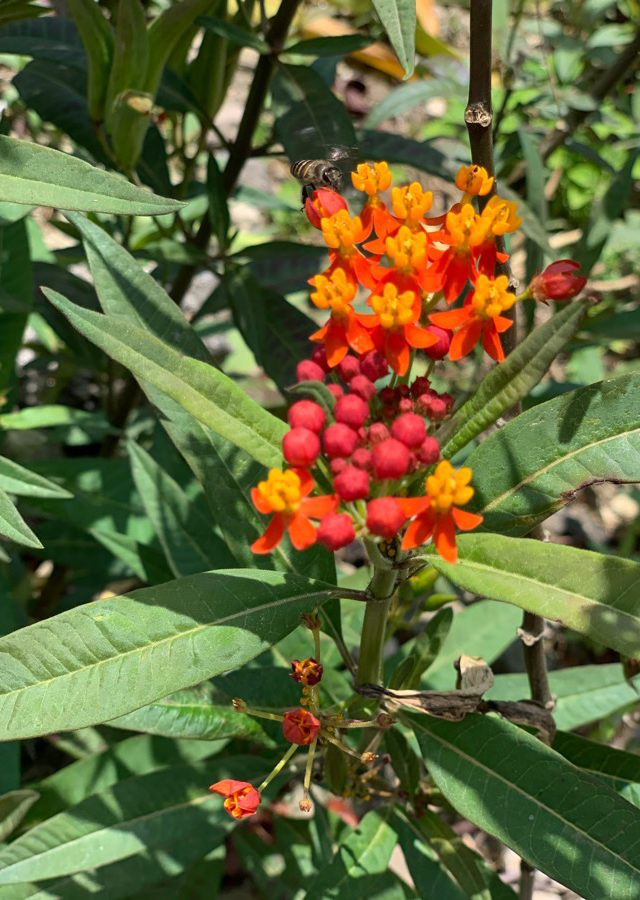
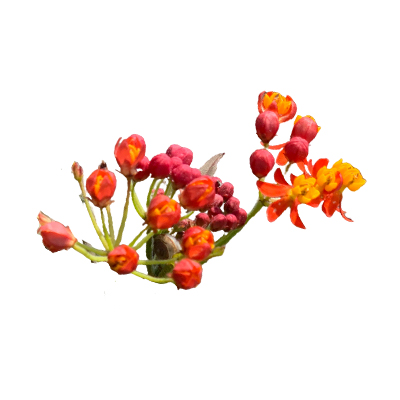
- Flowers - orange-red, 1.2 to 1.4 cm in length. Sepals are linear and green. Corolla lobes are reflexed, oblong, about 8 mm in length.
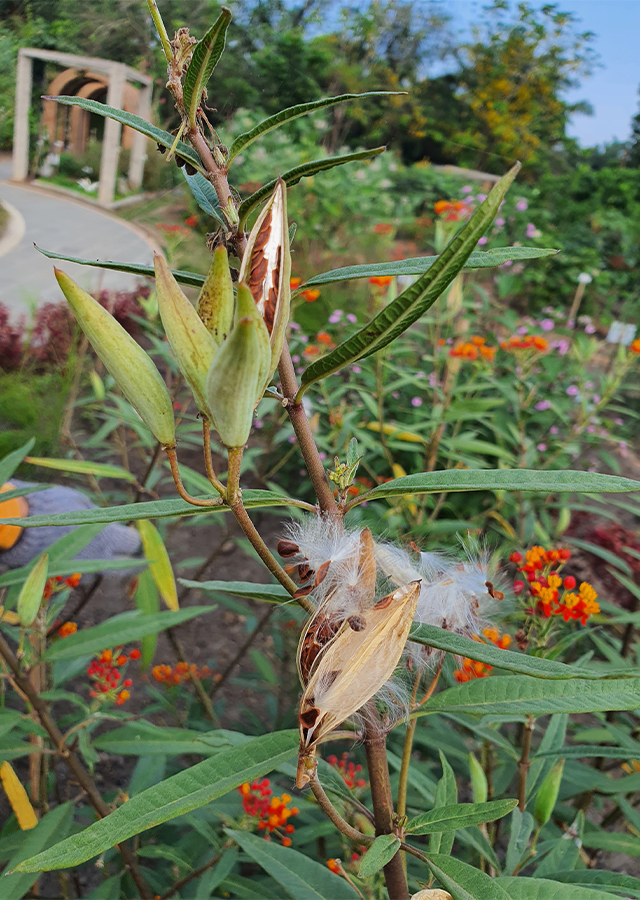
- Fruits- a follicle, narrow and pointed on both ends, lanceolate, 6 to 8 cm in length, 1 to 1.3 cm in diameter at the middle.
- Seeds - numerous, flat, and attached to numerous, long, silky hairs. Light and plumed that can be carried considerable distances in the wind.
Cultivation
Propagated by seeds - surface sow and make sure the seeds are kept moist.
Chemical Constituents
Glycoside, calotropin, uscharidin, calactin, coroglucigenin, uzarigenin, oleanolic acid, quercetin, flavonoids, phenols, caffeic acid, tannins, resin, terpenoids, xanthoprotein, steroids, carboxylic acids, coumarins, ambrettolic acid, β-sitosterol.
Traditional Medicinal Uses
- The plant is antihypercholesterolemic (reduces cholesterol), anti-prostatic, and oestrogenic.
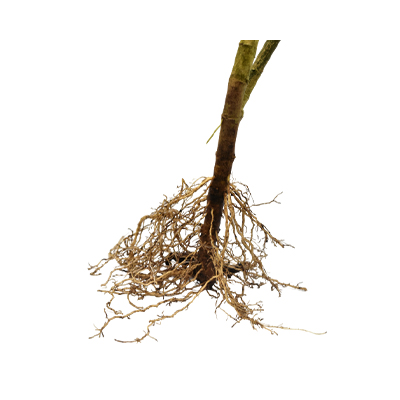
- The root is used as an emetic and purgative. It has been used as a substitute for ipecacuanha.
- The plant is considered cicatrizant (healing cuts, etc. by encouraging the formation of scars)
- The root is febrifuge. A decoction is used in the treatment of dysentery and as an eyewash for infected eyes.
- A paste made of the crushed leaves, combined with salt, vegetable oil, and bread, is used for treating skin ulcers.
- The plant contains an abundant white latex which is applied to warts and corns in order to kill them.
- The juice of the whole plant is used to treat ringworm, sores, rashes, dermatitis, etc.
- The aerial parts of plant are sometimes used in the treatment of dysentery and as an eyewash for infected eyes
Part Used
Reference Sources
- CABI. (No date). Invasive Species Compendium. Asclepias curassavica. https://www.cabi.org/isc/datasheet/7248. (Accessed 12-10-2020)
- StuartXchange. (2018). Philippines Medicinal Plants. Asclepias curassavica Linn. http://www.stuartxchange.com/Bulak-damo.html. (Accessed 12-10-2020).
- Fern, K. (2019). Useful Tropical Plants. Asclepias curassavica L. http://tropical.theferns.info/viewtropical.php?id=Asclepias+curassavica. (Accessed 12-10-2020).