
Rattleweed
Crotalaria retusa L.
Fabaceae
Location in our garden
Beneficial Weed

Synonym
Habitus

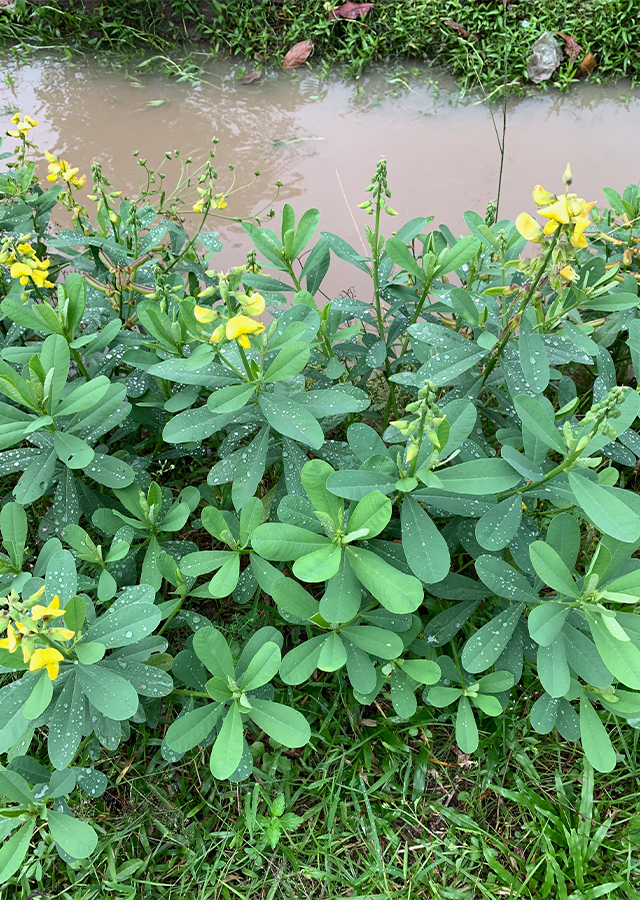
Herbaceous. An erect, annual plant or short-lived perennial with more or less woody stems, grows from 60-120 cm tall
Part Used
 Leaves
 Seeds
Seeds Flowers
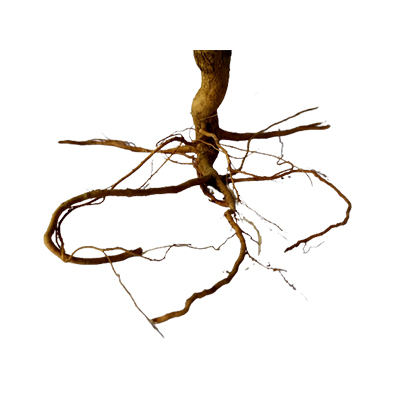
 Roots
Roots Stem
Stem The Whole Plant
Growing Requirements
 Full Sunshine
Habitat
 Riverbanks
 Forest
 Coastal
 Grassland
Overview
The exact native distribution range of rattleweed is obscure. At present, this species is considered native to tropical Asia, Africa and Australia and widely naturalized in the tropics. It is harvested from the wild for local use as a food, medicine and source of materials. and sometimes cultivated for the fibre it provides, as a medicinal plant, also grown as a green manure crop. It is occasionally grown purely as an ornamental, though it is also sometimes considered to be a weed.
Vernacular Names
Kalog-kalog (Philippines), Ao zhu shi dou (Chinese), Hing hai (Thailand), Akidimuo (Afrikaan), Abgestumpfte crotalaria (German), Giring badak (Malaysia), Cachimbito (Bangladesh), Cascavelle jaune (French), Ghunghunia (Hindi)
Agroecology
C. retusa grows best in areas with relatively high humidity. However, it is well adapted to drought and can also grow in hot, semiarid habitats. Within its native distribution range, this plant occurs in areas with temperatures ranging from 15-27 °C. It can tolerate light frosts (-2 °C minimum tolerated without injury) and partial salinity conditions.
Morphology
- Stems - erect, up to 130 cm long, ridged, appressed short-pubescent.
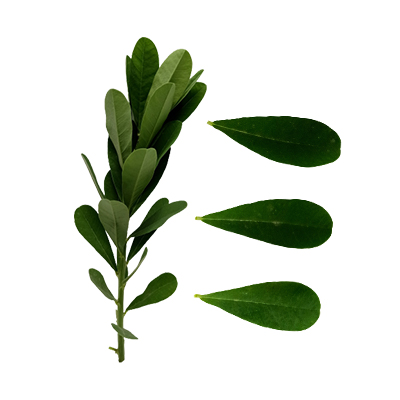
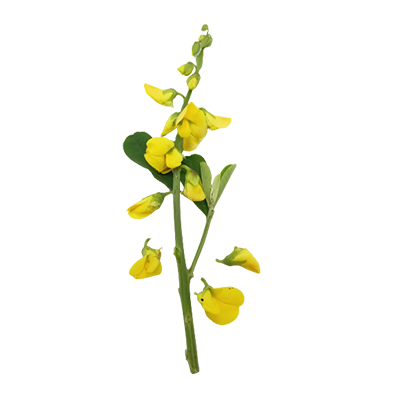
- Leaves - alternate, simple, oblanceolate, 6 to 8 cm long, 2 to 2.5 cm wide, and with rounded ends. Pea flowers are yellow, arranged along a simple terminal flowering stalk (raceme) about 15 cm long.
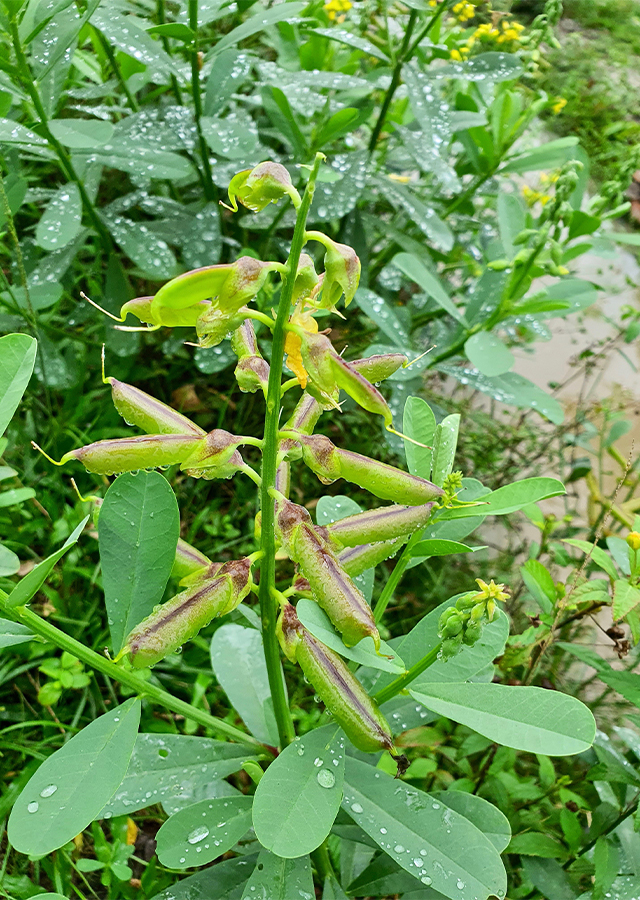
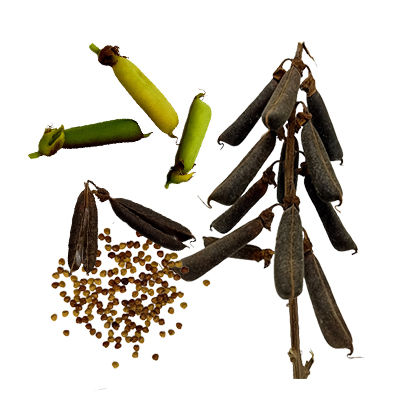
- Fruits - inflated, smooth, cylindrical pods, 4 centimeters long and 1 cm wide,containing several, loose, flattened, black rounded seeds, 3 mm in diameter.
- Seeds - approximately 23 per pod, golden-brown to brown, 4-4.5 mm long, smooth
Cultivation
Propagated by seeds. Sow in situ. Pre-soaking the seed for 12 hours in warm water can help to reduce germination time.
Chemical Constituents
Pyrrolizidine alkaloid, flavonoids, phenolic, tannins, glycoside, sterols, monocrotalin.
Traditional Medicinal Uses
- Studies have suggested clastogenic, leishmanicide, antivenom, neurotoxic, antioxidant, clot lysis, antiproliferative, antimicrobial properties.
- Roots used for hemoptysis.
- The roots are used against coughing up blood
- Powdered seeds mixed with milk used for increasing body strength; also used for skin diseases.
- In Cameroon, plant used in the treatment of eczema.
- In Tamil Nadu, India, plant used for cough, dyspepsia, fever, cardiac disorders, stomatitis, diarrhea, scabies, impetigo.
- Leaves mixed with those of Crotalaria quinquefolia, consumed or applied externally for fever, scabies, lung afflictions, and impetigo.
- In India, seeds used for skin infection, constipation and pain.
- A decoction of the flowers and leaves is used to soothe a cold.
- An infusion of the plant is used to bathe children in order to prevent skin infections and also to treat thrus.
Part Used

Reference Sources
- CABI. (No date). Invasive Species Compendium. Crotalaria retusa (rattleweed). https://www.cabi.org/isc/datasheet/87408 01-03-2021
- Fern, Ken. (2014). Useful Tropical Plants. Crotalaria retusa. http://tropical.theferns.info/viewtropical.php?id=Crotalaria+retusa 01-03-2021
- StuartXchange. (2011). Philippine Medicinal Plants. Kalog-kalog. http://stuartxchange.com/Kalog-kalog.html 01-03-2021