
Ginger Lily
Hedychium coronarium J.Koenig
Zingiberaceae
Location in our garden
Principal
Synonym
Amomum filiforme W.Hunter
Gandasulium coronarium (J.Koenig) Kuntze
Gandasulium lingulatum (Hassk.) Kuntze
Habitus

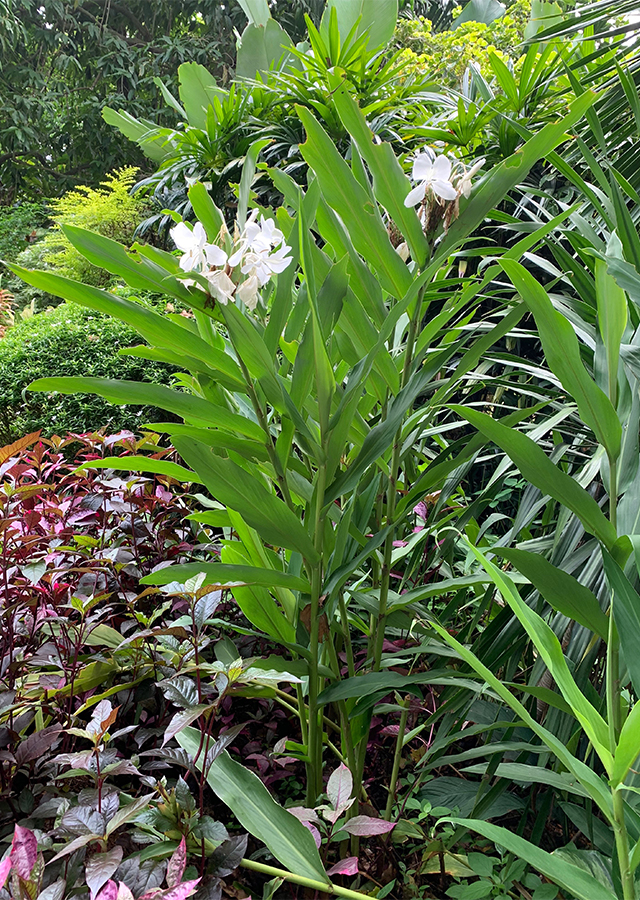
Herbaceous. Erect, rhizomatous, perennial shrub, 0.5–1.5 m tall
Part Used
 Leaves
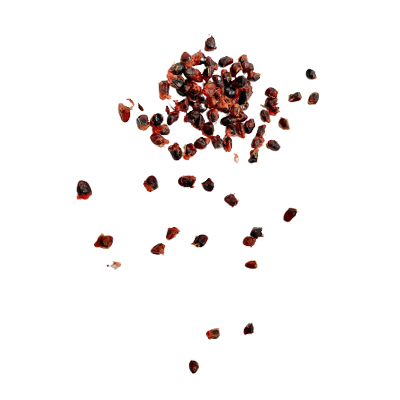
 Seeds
Seeds Flowers
 Roots
Roots Stem
Stem Rhizome
Growing Requirements
 Full Sunshine
 Need Shade
Habitat
 Wetland
 Riverbanks
 Forest
Overview
Ginger lily is probably native to the Himalayas - India and Nepal, Myanmar, Taiwan and south-western China. It is now found naturalised throughout the warm tropics, in eastern Australia, southern Africa, south-eastern United States, Central America, and many oceanic islands.
Vernacular Names
Jiang hua (Chinese), Hédychie couronnée (French), Schmetterlingslilie (German), Hanashukusha (Japanese), Gandasuli (Malaysia), Dolan champa (India).
Agroecology
Ginger lily likes moist habitats and is found in shaded areas in rainforests, mesic forests, pastures, roadside, and stream sides, from near sea level to 3,000 m altitude. It also grows in full sun to partial shade in fertile, moist soil. It is tolerant of mild frost.
Morphology
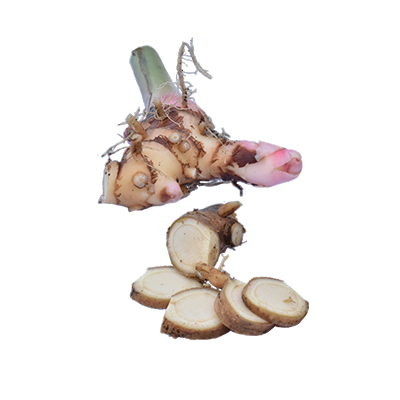
- Root - fleshy, aromatic rhizomes, 2.5–5 cm across and erect pseudostems.
- Leaves - alternate, distichous, glabrous, oblanceolate or narrowly elliptic, acuminate, about 30–60 cm long, 10 cm wide
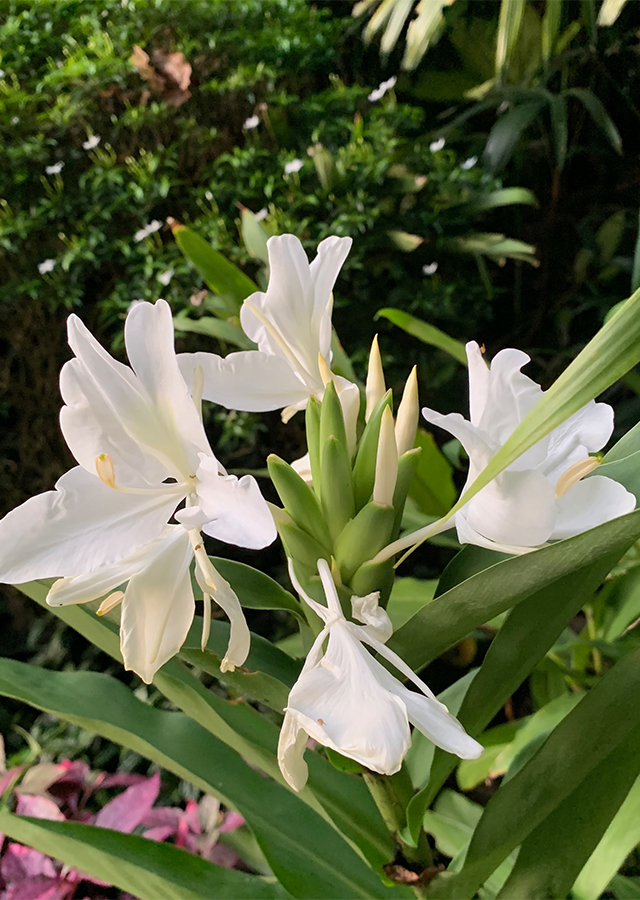
- Flowers - white, sweetly fragrant, to 6–8 cm long. Flowers formed in dense spike-like, terminal, bracteates. Staminodes are white, oblong–elliptic, narrowed at the base.
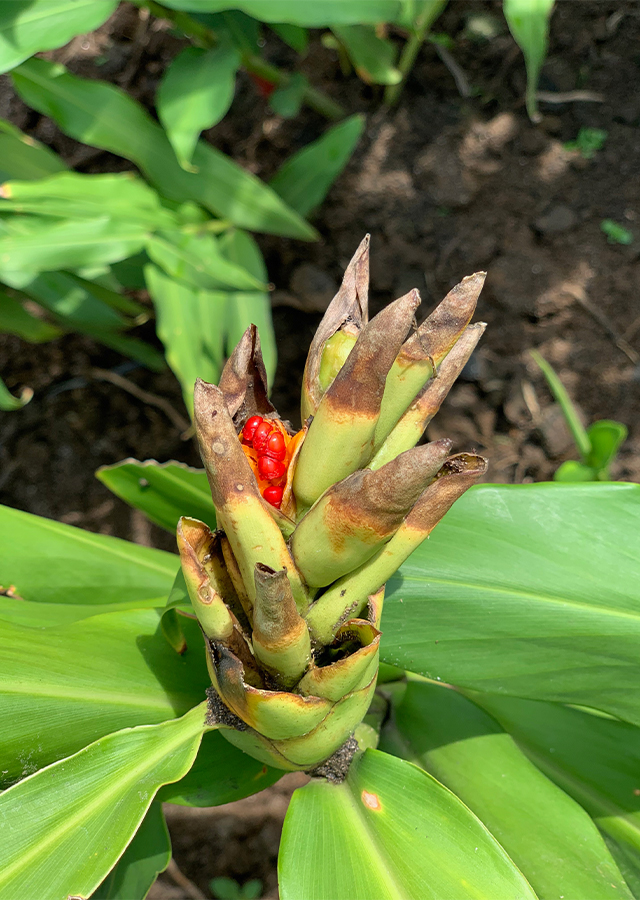
- Fruit/Seeds - in capsule; oblong with numerous seeds.
Cultivation
Propagation is by seed or by division of larger rhizomes.
Chemical Constituents
- Alkaloids, flavonoids, quinones, saponins, steroids, triterpenoids, phenolic, tannins, cardiak glycoside, diterpenoid, essential oils, coronaririn C.
Traditional Medicinal Uses
Medicinal Uses
- H. coronarium is antioxidant, anti-allergic, antihypertensive, diuretic, and antiasthmatic.
- It is used in the treatment of inflammation and tumor, painkiller, and liver protection.
Traditional Uses
- It is used in Asia for a variety of ailments such as to treat cold, headache, arthritis, and injuries.
- The seed is aromatic, carminative, and stomachic.
- Juice from the stem is used for swellings and a decoction used as a gargle. The rhizome contains 1.7 % essential oil and is used medicinally in Ayurvedic medicine as antirheumatic, anthelmintic, carminative, excitant, and tonic.
- The ground root is used as a febrifuge and for treating diabetes. In India, an extract of the rhizomes are sold in bottles used as eye tonic and for the prevention of eye cataracts.
- In Chinese medicine, the rhizome is used for headache, inflammatory pains, rheumatism, and contusion.
- In the Moluccas, the base of the stem is chewed and the juice placed on swellings and a decoction used as a gargle.
Part Used

Reference Sources
- Lim, T. K. (2014). Edible Medicinal and Non Medicinal Plants: Vol. 8, Flowers. Springer. DOI 10.1007/978-94-017-8748-2_1. (pp.pg847-856).
- Fern, Ken. (2019). Useful Tropical Plants. Hedychium coronarium, http://tropical.theferns.info/viewtropical.php?id=Hedychium+coronarium. 09-01-2021
- Stuart Xchange. (2021). Philippine Medicinal Plants. Kamia. http://www.stuartxchange.org/Kamia.html. 09-01-2021.