Three-flowered desmodium
Tadehagi triquetrum (L.) H.Ohashi
Fabaceae
Location in our garden
Principal

Synonym
Aeschynomene triquetra A.St.-Hil. ex Steud.
Desmodium acrocarpum Hance
Desmodium triquetrum (L.) DC.
Habitus

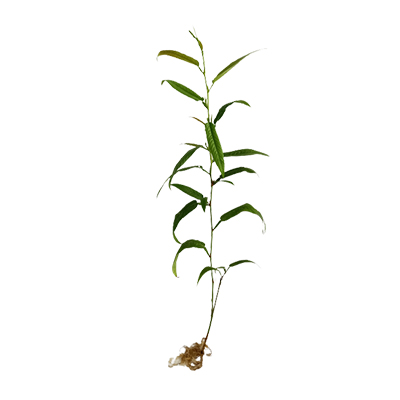
Shrubs. An erect plant with stems that become more or less woody and persist, can grow up to 3 m tall.
Part Used
 Leaves
 Fruit
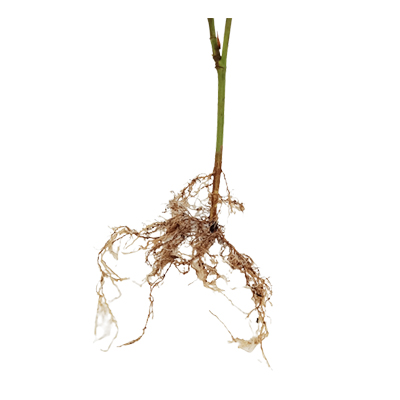
Fruit Roots
Roots The Whole Plant
Growing Requirements
 Full Sunshine
 Need Shade
Habitat
 Riverbanks
 Forest
 Shrublands
 Grassland
Overview
Three-flowered desmodium is native to south China, India, Sri Lanka, Indo-China, Malesia, north Australia, and the southwest Pacific. The plant is often harvested from the wild for local use as a medicine.
Vernacular Names
Ulucha (Assamese), Adkhapanal (Malayalam).
Agroecology
Found on a variety of soils in evergreen or semi-deciduous forest, in the vicinity of watercourses, on bunds of rice fields, savannah, and grasslands; at elevations from sea-level up to 1,500 m, occasionally to 2,000 m, ranging from sands to heavy clays.
Morphology
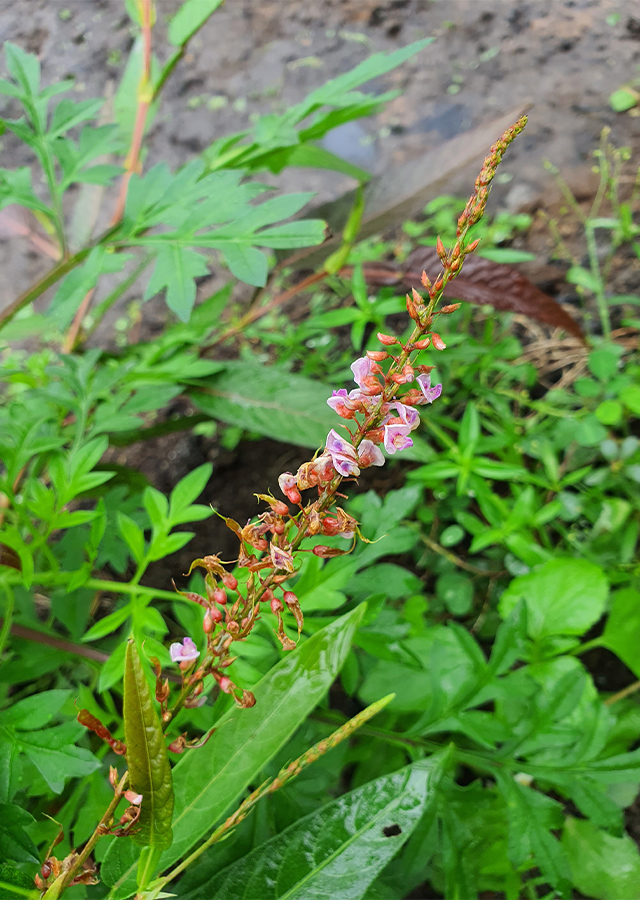
- Stems - branches triquetrous (3-edged) grooved, ciliate with stiff hairs on angles.
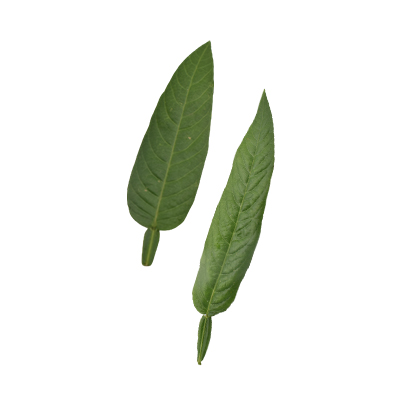
- Leaves - alternate, 1-foliate, winged petiole, Leaflets 4-18 x 2-9 cm ovate-oblong.
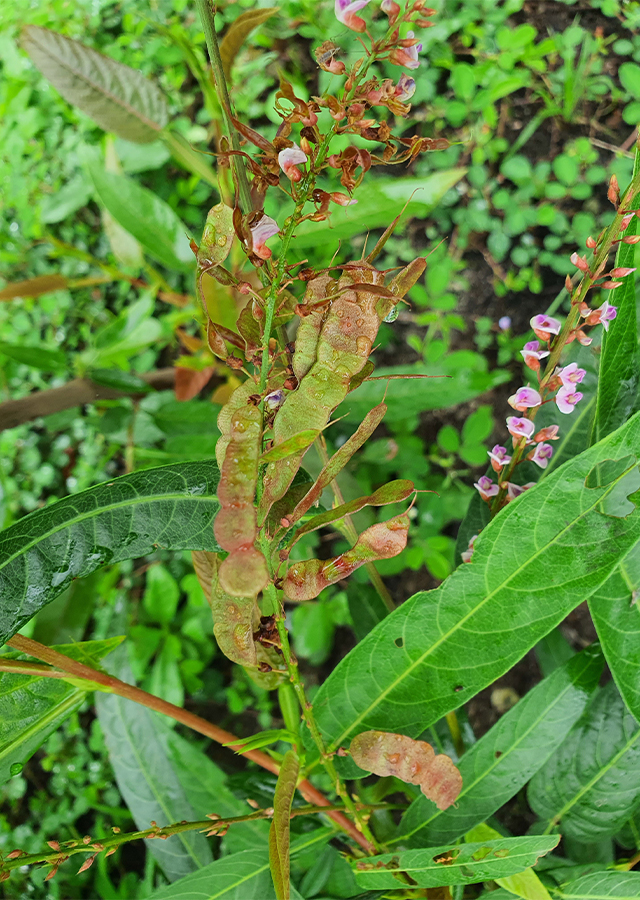
- Flowers - reddish or purplish, in axillary and terminal racemes, small, papilionaceous. Stamens diadelphous, ovary oblong. inflorescences terminal and axillary racemes.
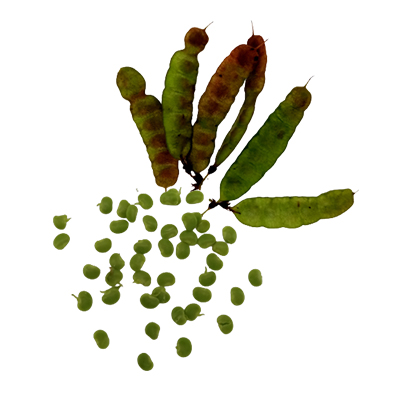
- Pods - linear-oblong, flat, beaked, grey-pubescent, 4-7 jointed, loosely appressed hairy.
- Fruits - slightly curved pods that are hairy, 3-5 jointed, about 1.2-1.3 cm long.
Cultivation
It can be propagated by seeds or stem cuttings.
Chemical Constituents
Leaves contain tannins, alkaloids, hyperforin, trigonelline, silicic. Fuits contain saponins, flavonoids. Roots contain saponins, flavonoids, tannins.
Traditional Medicinal Uses
- An ethanol and water extract of the aerial parts of the plant have shown antiviral and cytotoxic activities.
- Study results that D. triquetrum has potent hepatoprotective and antioxidant activity.
- The roots are febrifuge.
- The plant has an astringent property.
- The leaves are used to treat haemorrhoids, usually in the form of a decoction. An infusion of the leaves is used to treat stomach discomfort. The leaves are applied externally as a treatment for lumbago.
- Both the leaves and the seedpods are used as part of diuretic remedies to treat gravel in the kidneys and bladder
- A decoction or infusion of the roots is used as a treatment for chronic coughs and tuberculosis, to treat kidney complaints. The root is eaten or used in baths as a treatment for gastro-intestinal and urinary problems ranging from an upset stomach to hepatitis. The roots are used to make a poultice for bruises.
- A decoction of the whole plant is used for invigorating the spleen and promoting digestion.