
Queen Coralbead
Cocculus orbiculatus (L.) DC.
Menispemaceae
Location in our garden
Principal

Synonym
Cebatha cuneifolia (Miers) Kuntze
Habitus

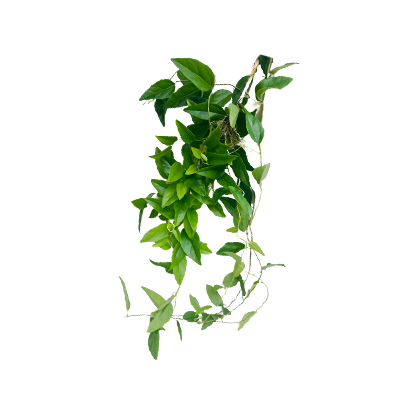
Climbers. A sprawling woody vine, that grows up from 2 m up to 3.5 m tall.
Part Used
 Leaves
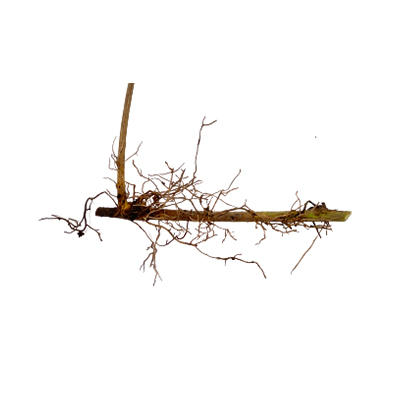
 Roots
Roots Twigs
Twigs
Growing Requirements
 Full Sunshine
 Need Shade
Habitat
 Riverbanks
 Forest
 Shrublands
Overview
Queen coralbead is native to Assam, China North-Central, China South-Central, China Southeast, Cook Is., East Himalaya, Hainan, Hawaii, Japan, Jawa, Korea, Laos, Lesser Sunda Is., Malaya, Nepal, Philippines, Pitcairn Is., Sumatera, Taiwan, Thailand, Tubuai Is., Vietnam. It is harvested from the wild for local use as food, medicine and a source of materials. Its bleached tendrils are used as an ornamental infill in basket making. The leaves are sometimes cooked for emergency food.
Vernacular Names
Huehue (Hawaian), Mộc phòng ky (Vietnamese), Cincau Hijau (Indonesia), Kepleng (Javanese), Camcauh (Sundanese), Daluman (Balinese).
Agroecology
Found in sides of streams, sparse forests, bushes, village sides and forest edges. Easily cultivated in an ordinary garden soil, it prefers a well-drained moisture retentive fertile soil in full sun or semi-shade. This species is hardy to about -10 °C.
Morphology
- Stems - slender, grooved, blackish, that grows up from 2 m up to 3.5 m tall.
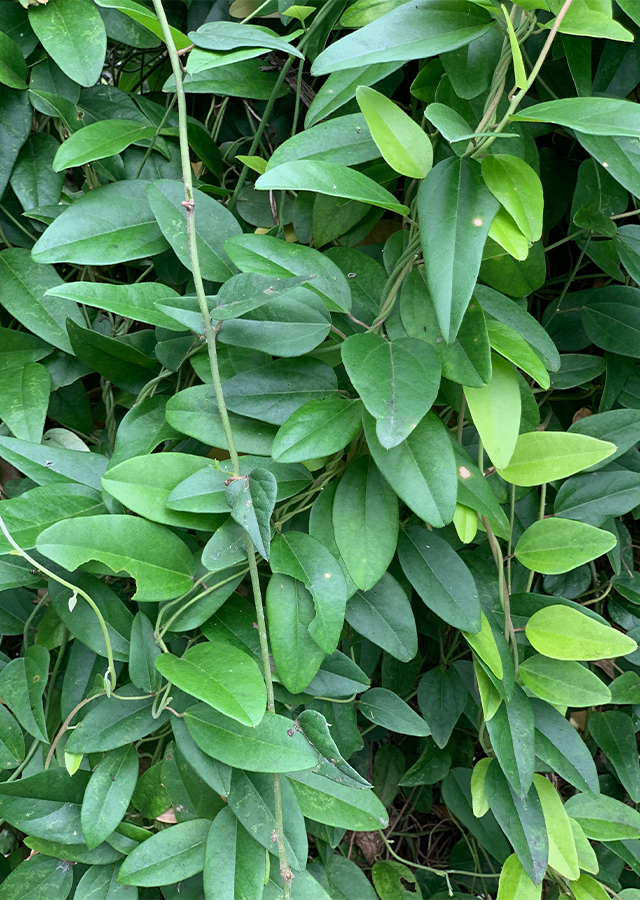
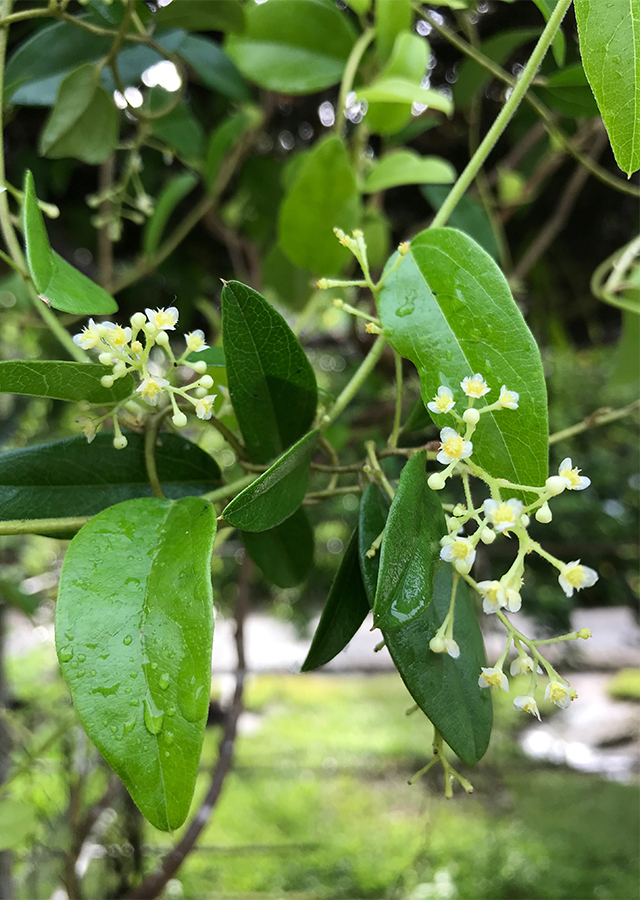
- Leaves - 2.5 to 12 cm long, come in variable shapes from lanceolate to broad ovate and sometimes three-lobed with acute (pointed) apex and rounded to cordate base. Leaf blade is light green to bluish green, glaucous (waxy, greyish blue).
- Flowers - tiny and monoecious, creamy yellowish to white, borne in clusters (axillary panicles).
- Fruits - grape-like clusters, maturing to blue or black, each fruit is no more than 1 cm big.
Cultivation
- By seeds - sow stored seed as soon as possible in a greenhouse. When they are large enough to handle, prick the seedlings out into individual pots and grow them on in the greenhouse.
- By root cuttings.
- By cutting of half-riped wood and by division.
Chemical Constituents
Wattisine A, O-methylcocsoline, cocsoline, cocsuline, magnoflorine, sino-coculine, isosinococuline, coclaurine, daucosterol, β-sitosterol, oleioyl-glycerol.
Traditional Medicinal Uses
- The root is anodyne, antiphlogistic, antirheumatic, carminative, depurative, diuretic and vermifuge.
- The roots is also considered febrifuge and used to treat epilepsy.
- It has also shown antibacterial and anti-amoebic activities.
- A decoction of the stems is used in the treatment of asthma, bronchitis and paralysis.
- In traditional medicine in China, the stems and leaves are applied against flatulence, stomach-ache and oedema.
Part Used
Reference Sources
- Fern, Ken (2014). Useful Tropical Plants. Cocculus orbiculatus. http://temperate.theferns.info/plant/Cocculus+orbiculatus. 22-02-2021
- Biodiversity India. (No date). India Biodiversity Portal. Cocculus orbiculatus. https://indiabiodiversity.org/species/show/245651 22-02-2021
- Research Gate. (2014). Cocculus orbiculatus. https://www.researchgate.net/publication/264644875_Chemical_constituents_of_Cocculus_orbiculatus_var_mollis_root 22-02-2021.
- Setyowati, Francisca M. (2016). Pl@nt Use. Cocculus orbiculatus. https://uses.plantnet-project.org/en/Cocculus_orbiculatus_(PROSEA) 22-02-2021.
- https://powo.science.kew.org/taxon/urn:lsid:ipni.org:names:580605-1