Bush Grape
Cayratia mollissima (Wall.) Gagnep.
Vitaceae
Location in our garden
Principal

Synonym
Cayratia geniculata (Blume) Gagnep.
Cayratia rhodocarpa (Blume) Gagnep.
Cayratia wrayi (King) Gagnep.
Habitus

Climbers. An evergreen, climbing plant producing stems 2-10 m long
Part Used
 Leaves
 Fruit
Fruit
Growing Requirements
 Full Sunshine
 Need Shade
Habitat
 Forest
Overview
Bush grape is native to South West India, East Himalaya to South China and West and Central Malesia. The plant is harvested from the wild for local medicinal use and also an ornamental. The fruit contains calcium oxalate which irritates the skin and mucus membranes.
Vernacular Names
Mermereee lata (Assamese), Lakom gajah (Malaysia)
Agroecology
This plant occurs commonly along forest margins. It grows in tropic and subtropic climates. Prefers full sun. Thrives in fertile, clays, and moist soil. It grows on the fringe and understory of lowland dipterocarp and secondary forests
Morphology
- Stems - has long stiffy hair, 1 cm in diameter, the tendril is green.
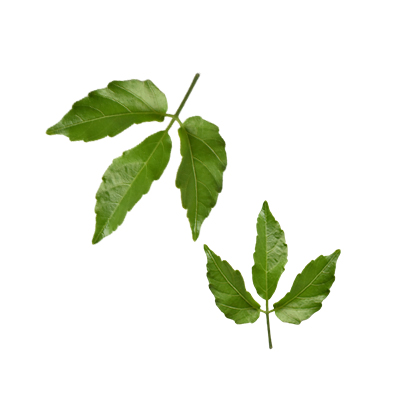
- Leaves - foliage Its spirally arranged, stalked leaves have 3 leaflets. The stalked leaflets have papery and toothed-margined leaf blades. The terminal leaflet blades are oval and 6.5–14 by 2.5–6.5 cm, while the lateral leaflet is asymmetric oblong and 4.5–12 by 1.5–6 cm. They are also sparsely covered with hair above, densely covered with hair below.
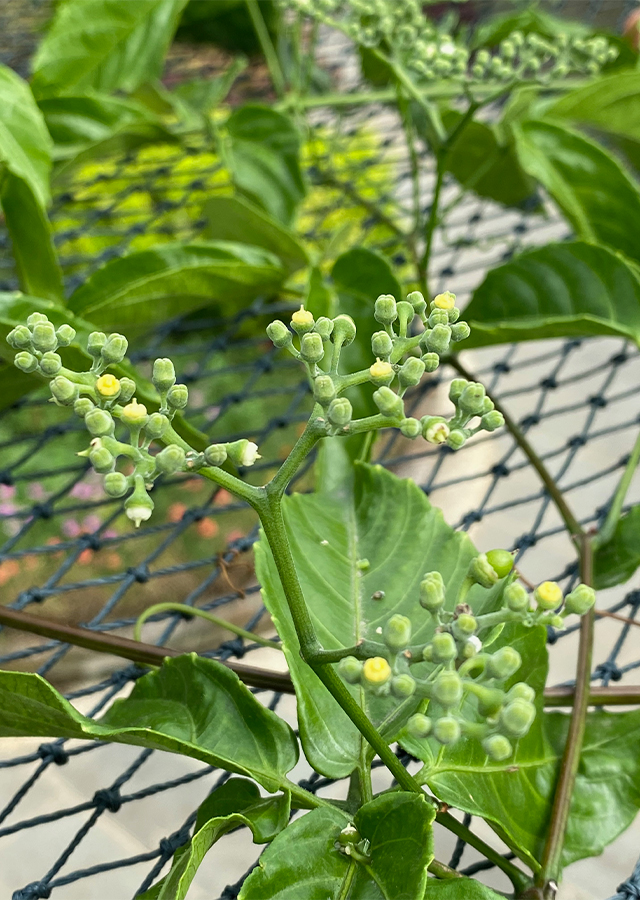
- Flowers - its stalked flowering shoots are found at the leaf axils. Its flowers are about 3 mm wide, with 4 bluish-green petals, a white disc, and a saucer-shaped structure formed by the outer, persistent flower parts (calyx).
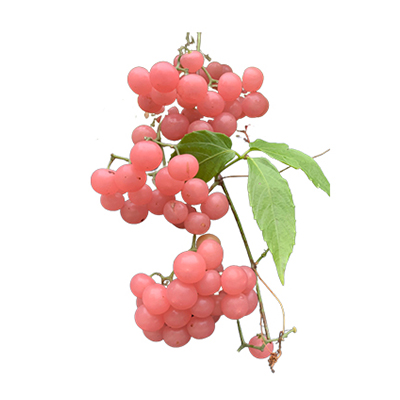
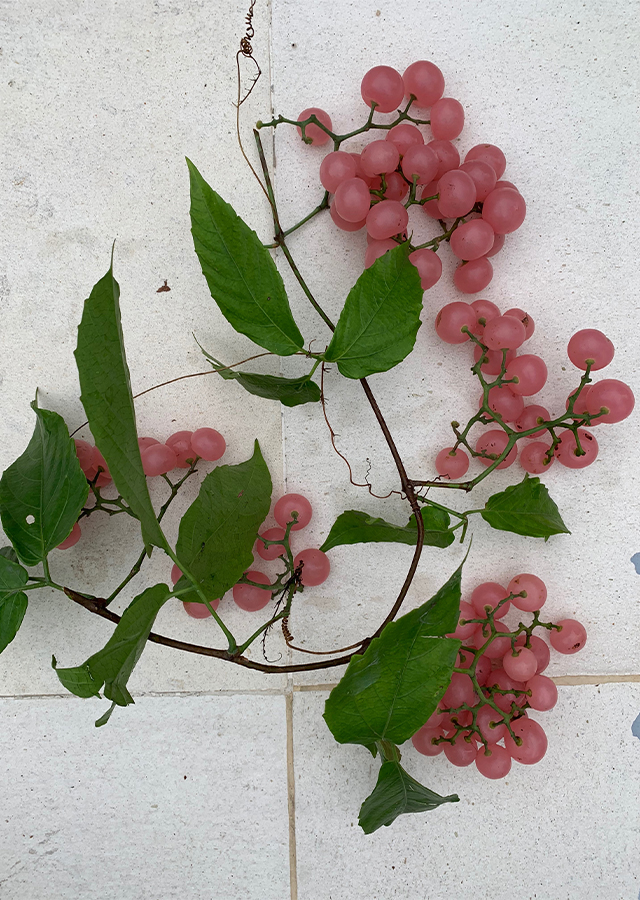
- Fruits - rounded berries, with 2–4 seeds each, maturing pink in colour, measure up to 2.5 cm in diameter, white to pinkish in colour and with crystals.
Cultivation
- By seeds. The germination from seeds take 1–2 months.
- By cuttings.
Chemical Constituents
Calsium oxalat (toxic). Further research is needed.
Traditional Medicinal Uses
Medicinal Uses
- Studies have suggest as anti-inflammatory and analgesic activities.
- It possesses diuretic properties. This has been used in the treatment of various urinary diseases notably urinary tract infections including cystitis, dysuria and strangury. It is also used in cases of oedema including ascites.
Traditional Uses
- The fruits are used as poultice for swellings, aches and fever. They are also rubbed on the belly to ease pain during labour.
- An infusion of the leaves is applied as a cooling lotion.
- The leaves are known to be used to make tea.