
Tridax Daisy
Tridax procumbens L.
Asteraceae
Location in our garden
Principal
Synonym
Amellus pedunculatus Ortega ex Willd.
Balbisia canescens Rich. ex Pers.
Balbisia divaricata Cass.
Habitus

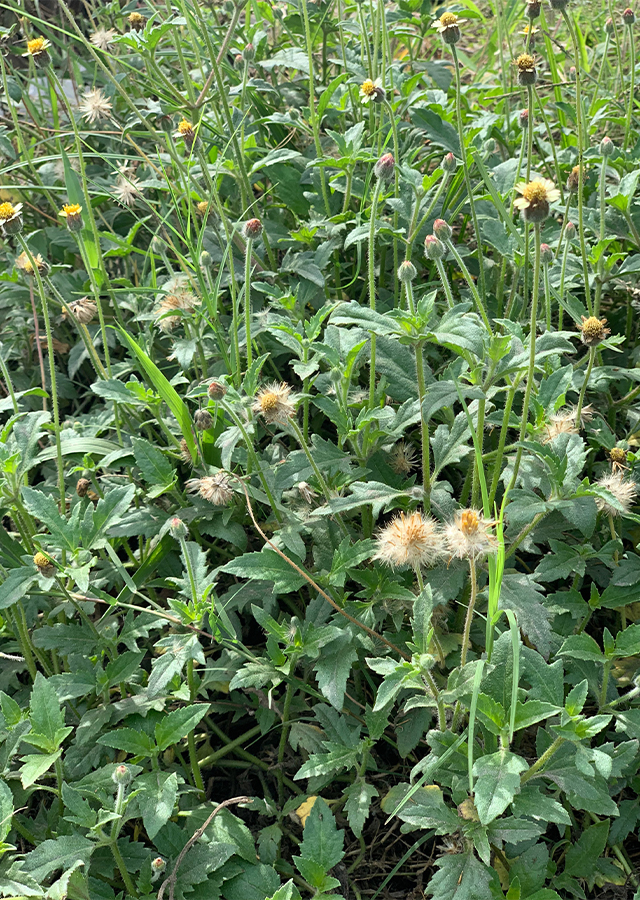
Herbaceous. A herbaceous annual to perennial with creeping stems up to 75 cm long
Part Used
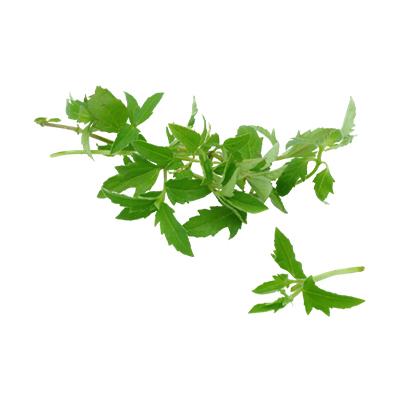
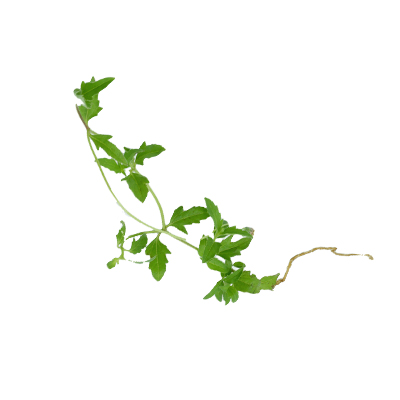
 Leaves
 Roots
Roots Stem
Stem The Whole Plant
Growing Requirements
 Full Sunshine
Habitat
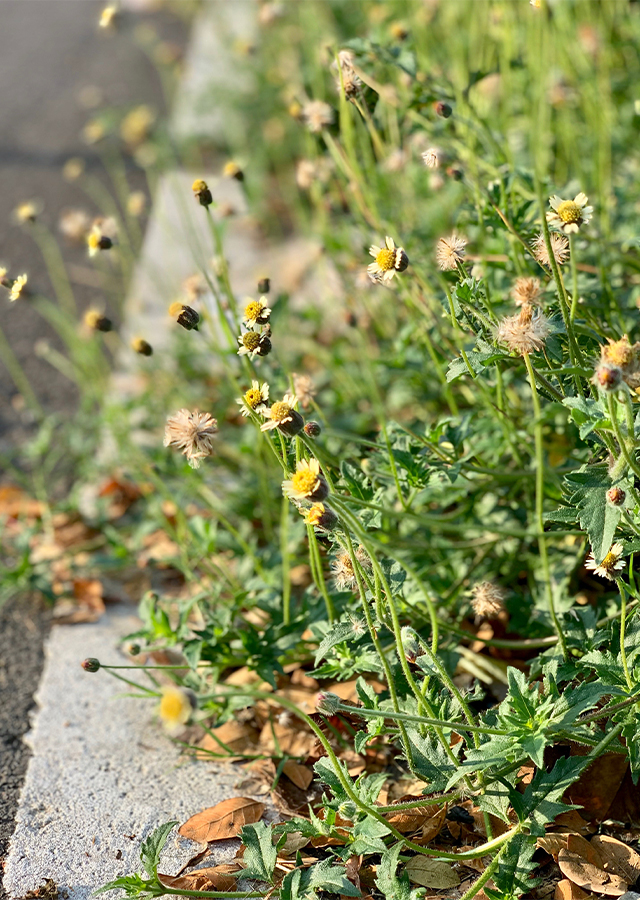
 Roadside
 Rocky Areas
 Grassland
Overview
Tridax daisy is native to tropical Americas, and has become widespread as a weed in tropical and subtropical regions. The plant is sometimes harvested from the wild for local use as a food and medicine. Smoke produced by burning the plant is used to repel mosquitoes. The leaves are used as a hair restorative.
Vernacular Names
Herbe calille (French), Kanching baju (Malaysia), Tin tukkae (Thai), Erva de touro (Brazilian), Flor amarilla (Mexican), Romerillo (Cuban), Mive sok ne-gya (Burmese), Tridhara (Bangladesh), Niu xi ju (Chinese), Kotobukigiku (Japanese), Ghamra (Hindi).
Agroecology
The plant occurs in sunny, dry locations, especially sandy and rocky sites like roadsides, railways, dunes, and waste places, at elevations up to 1,000 m. It is particularly well-adapted to coarse-textured soils.
Morphology
- Roots - firm taproot.
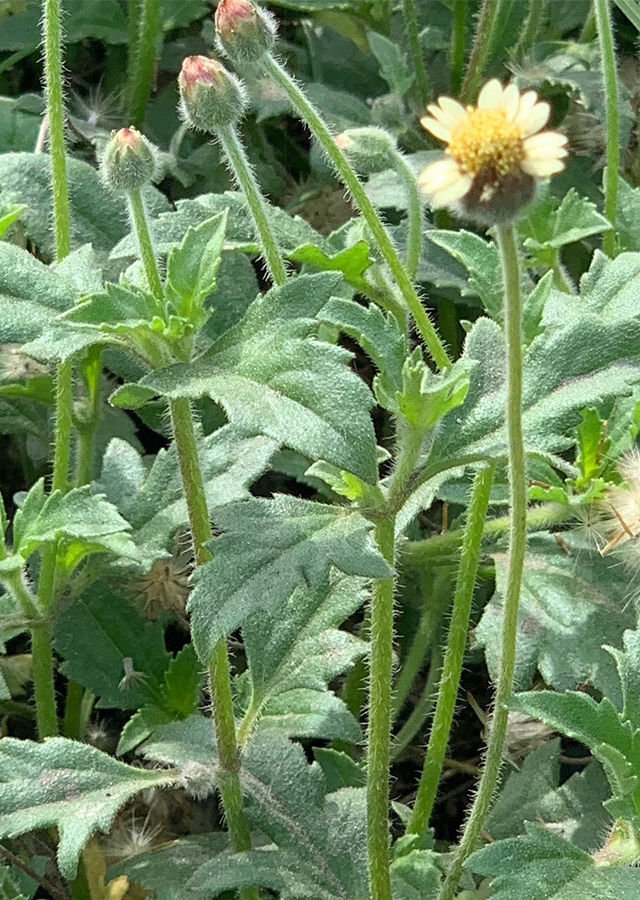
- Stems - branches ascending from a creeping base, brittle, 20-75 cm long. Stem cylindrical, often purplish, sparsely and patently long- and white-pubescent.
- Leaves - opposite, oblong-ovate, herbaceous or somewhat succulent; pinnately nerved, 2.5-6 x 2-4.5 cm, midrib strongly prominent below, both sides sparsely and patently long white-hirsute; petiole concave, long-hairy, 0.8-2.5 cm long.
- Flowers - heads terminal and axillary, 2 x 1 cm, erect-patently long-peduncled (10-40 cm), ray flowers 5-6, female; corolla 8-9 mm long with greenish-yellow limb, 3-4 lobed, pale yellow or white; ovary long, white, hairy. Disc flowers numerous, dense, erect; corolla 6-7.5 mm long, bright yellow, lobes 5, anthers cuneate, yellow with apical valve, 1.5 mm long.
- Fruits - a hard achene covered with stiff hairs, with a feathery, plume-like white pappus at one end.
Cultivation
Propagated by seeds and cutting.
Chemical Constituents
Flavonoids, tannins, phytosterol, sitosterol, sterol, triterpen pentasiklik, steroids, carotenoid, saponins, luteolin, quercetin, fumaric acid.
Traditional Medicinal Uses
Medicinal Uses
- The plant is astringent.
- It is considered anticancer, antidiabetic, anticoagulant, and vulnerary.
- Studies have shown antibacterial, hypotensive, bradycardic, hypoglycemic, antioxidant, anti-inflammatory, wound healing, hepatoprotective, immunomodulatory, Central Neuro System (CNS) depressant properties.
Traditional Uses
- In India, leaf juice is used on fresh wounds, to stop bleeding, and as hair tonic. In Ayurveda, it is used for liver disorders, arthritis, heartburn. Also used for hair growth.
- In Nigeria, local Yoruba population use the leaves for treatment to reduce blood pressure.
- In Guatemala, leaf juice is used for colds, inflammation, vaginitis, stomach pains, diarrhea. Whole plant used for protozoal infections, treatment of chronic ulcers caused by.
- In Africa, dried whole plant is used for fever, cough, back ache, diarrhea, epilepsy. Dried leaves is used for malaria, gastrointestinal mycosis, and for dressing wounds.
Part Used
Reference Sources
- CABI. (No date). Tridax procumbens (coat buttons). https://www.cabi.org/isc/datasheet/55072 01-03-2021
- Fern, Ken. (2019). Useful Tropical Plants. Tridax procumbens. http://tropical.theferns.info/viewtropical.php?id=Tridax+procumbens 01-03-2021
- Herbpathy. (No date). Tridax procumbens Herb Uses, Benefits, Cures, Side Effects, Nutrients Repertory. https://herbpathy.com/Uses-and-Benefits-of-Tridax-Procumbens-Cid6089 01-03-2021
- James Cook University. (No date). Tridax procumbens. https://www.jcu.edu.au/discover-nature-at-jcu/plants/nq-weeds-by-common-name/tridax-procumbens 01-03-2021
- Kewscience. (No date). Tridax procumbens. http://www.plantsoftheworldonline.org/taxon/urn:lsid:ipni.org:names:257735-2 01-03-2021
- Stuartxchange. (2018). Philippine Medicinal Plants. Coatbuttons. http://stuartxchange.org/CoatButtons 01-03-2021