
Golden Champa
Magnolia champaca (L.) Baill. ex Pierre
Magnoliaceae
Location in our garden
Principal


Synonym
Michelia champaca L.
Habitus

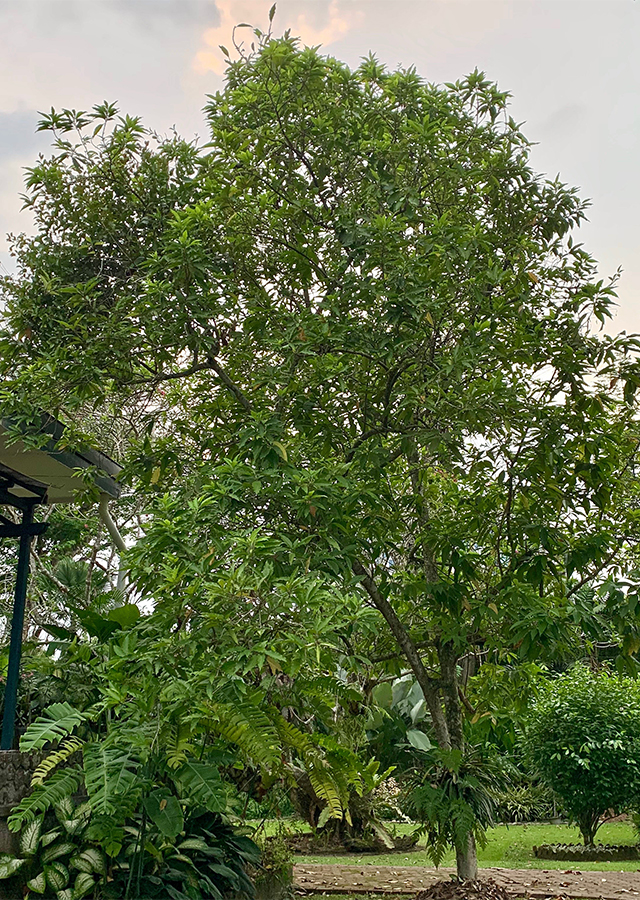
Trees. Large evergreen tree with a close tapering conical to cylindrical crown, it can grow 33 m tall.
Part Used
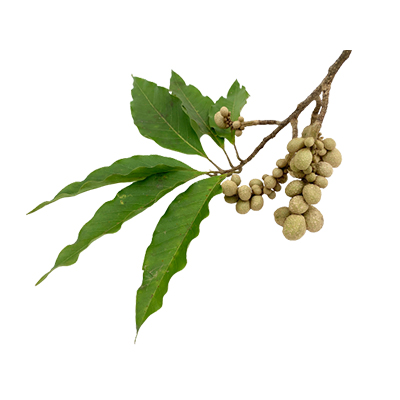
 Leaves
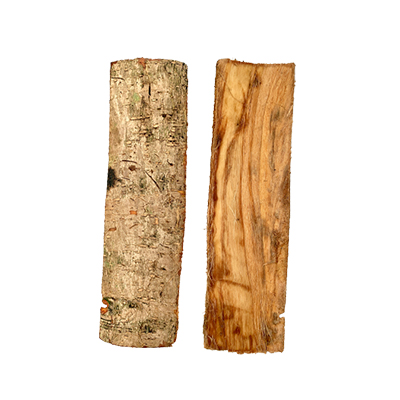
 Bark
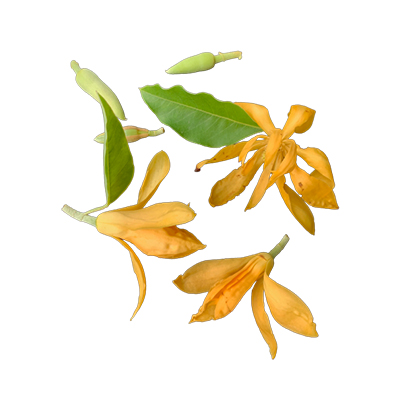
Bark Flowers
 Roots
Roots
Growing Requirements
 Full Sunshine
Habitat
 Forest
Overview
Golden champa is native to tropical Asia. The tree has a wide range of uses, being harvested locally as a source of medicines and a range of commodities. It is commonly cultivated as an ornamental and wayside tree throughout the tropics, being valued especially for its fragrant flowers, which are often used in religious ceremonies.
Vernacular Names
Champa (Bangladesh, India), Saga (Myanmar), Ouliachamp (Nepalese), Tsampakang pula (Tagalog-Philippines), Chempaka (Malaysia), Huang yu lan (Chinese), Champaca (Spanish), Cham pa (Laos).
Agroecology
A plant of the wet tropics and subtropics, also able to be grown in the warm temperate zone. It is found growing at elevations from near sea level to 2,100 m. It grows best in areas where annual daytime temperatures are within the range 30-37 °C. It prefers a mean annual rainfall in the range 3,000-4,000 mm. Requires a sunny position in a moist but well-drained, fertile, loamy to sandy soil. Prefers a pH in the range 4.5-5.5.
Morphology
- Roots - taproot with a lot of lateral roots.
- Stems - long straight bole, clean and cylindrical for 18-21 m, without buttresses, 80-120 cm in diameter.
- Leaves - ovate/oblong-lanceolate, gradually narrowing upward to a long pointed apex, 12-20 cm long, 2.5-6 cm wide.
- Flowers - very fragrant, pale yellow or orange, 4 to 5 cm long. Perianth segments are usually 15 to 20, deciduous, in whorls of 3, the outer ones oblong, the inner ones linear. Fruiting spike is 8 to 15 cm long.
- Fruit - made up 3-20 brown follicles, dry at maturity and split open at one side.
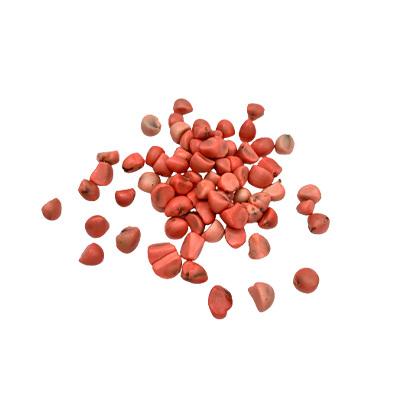
- Seeds - each follicle containing 2-6 seeds, brown when old,polished and variously angled.
Cultivation
- By seeds: the seeds are oily and quickly lose their viability, so should be sown as soon as possible after harvesting.
- By grafting and cuttings.
Chemical Constituents
Tannins, phlobatanin, saponins, flavonoids, antraquinones, poliphenol, glikoside, triterpenoids, steroids and fatty acid.
Traditional Medicinal Uses
- Considered antitumor, anti-inflammatory, wound healing, antifungal, antihyperglycemic, diuretic, antimicrobial, anthelmintic, antioxidant, cardioprotective properties, emmenagogue, purgative, demulcent, tonic, astringent, antiperiodic and alterative.
- In Mexico, flowers, seeds and bark used for renal affections and as abortifacient.
- In India, flower buds used for diabetes and kidney diseases, the plant for fertility regulation.
- In Ayurveda, used for dyspepsia, nausea, vitiated conditions of pitta, vatta, hemoptysis, pruritus, skin diseases, cough, malaria fever, and general debility.
- Whole plant is traditionally used for the treatment of constipation, bronchitis, abdominal colic, diabetes, amenorrhea, and rheumatism.
- Flowers used for fever, leprosy, colic, eye disorders; mixed with sesamum oil is externally applied for vertigo and foetid discharges from the nostrils.
Part Used
Reference Sources
- Fern, Ken. (2019). Useful tropical Plants. Magnolia champaca. http://tropical.theferns.info/viewtropical.php?id=Magnolia+champaca&redir=Michelia+champaca. 01-03.2021.
- Stuartxchange. (2021). Philippine Medicinal Plants. Tsampakang pula. http://stuartxchange.com/TsampakangPula. 26-02-2021.
- CABI. (2019). Invasive Species Compendium. Magnolia champaca (golden champa). https://www.cabi.org/isc/datasheet/33923. 01-03-2021.
- Britannica. (No date). Joy perfume tree. https://www.britannica.com/plant/joy-perfume-tree. 01-03.2021.