
Queensland Arrowroot
Canna indica L.
Cannaceae
Location in our garden
Principal

Synonym
Canna achiras Gillies ex D.Don
Canna altensteinii Bouché
Canna amabilis T.Koyama & Nob.Tanaka
Habitus

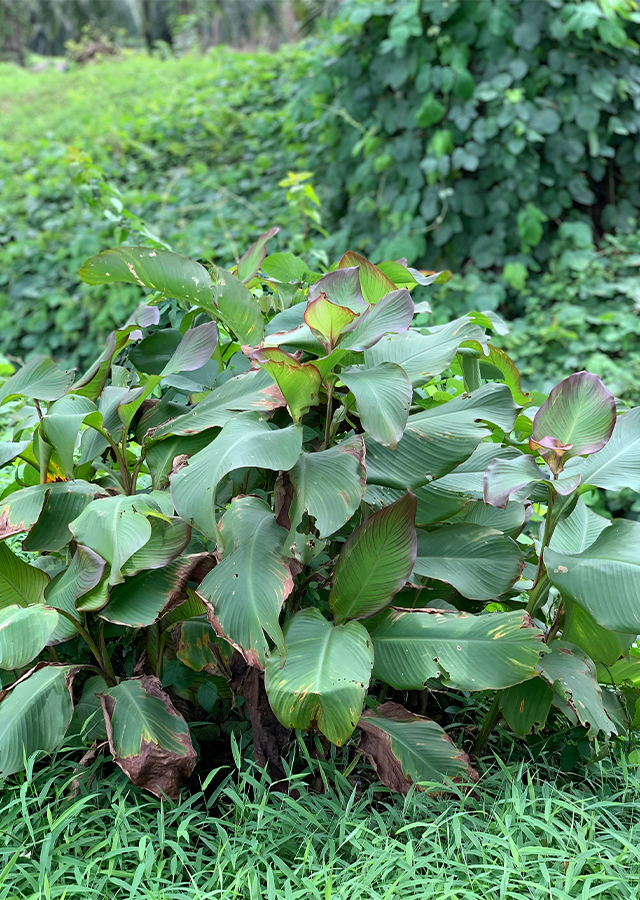
Herbaceous. An upright perennial rhizomatous, herbaceous, 1 –2 m high
Part Used
 Leaves
 Seeds
Seeds Flowers
 Roots
Roots Stem
Stem Rhizome
Growing Requirements
 Full Sunshine
Habitat
 Wetland
 Riverbanks
 Forest
 Coastal
 Roadside
Overview
The plant is native to Central, South America (Peru, Chile) and the Caribbean (Antilles). It has widely naturalised in other warm tropical and subtropical countries and is now widely cultivated throughout the tropics. It is commonly cultivated as food plant in South and Central America, Libya, tropical Africa, India, Vietnam, the Philippines, Cambodia and Papua New Guinea.
Vernacular Names
Daun Tasbeh (Malaysia), Sarbajaya (India), Akabana dan doku (Japanese), Shi yong mei ren jiao (Chinese), Balisier Comestible (French), Indisches Blumenrohr (German), Eetbaar Bloemriet (Dutch).
Agroecology
Queensland arrowroot grows in various climatic conditions from sea level to 2900 m altitude at the equator. It prefers areas with a well-distributed mean annual rainfall of 1000–2000 mm. It grows best in full sun but will tolerate partial shade and is sensitive to drought. It will grow normally at low temperatures above 10 °C and high temperature from 30 to 32 °C. It favors deep, fertile, well-drained and well-aerated sandy loams rich in humus and tolerates a wide pH tolerance from 4.0 to 8.0. It occurs in thickets, in wet areas along riversides, riparian zones, water courses, in wastelands, disturbed areas and fallow fields and in rubber plantations as a weed.
Morphology
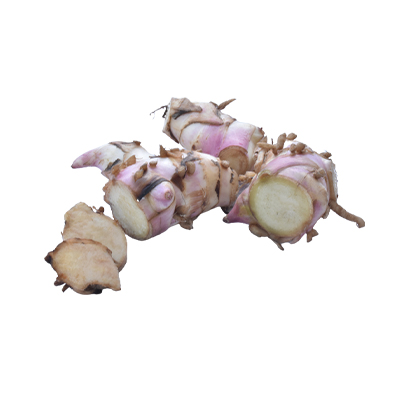
- Root - system of succulent lateral-spreading subterranean rhizomes with fibrous roots
- Stem - sturdy, glabrous, green.
- Leaves - large, attractive, 20–60 cm long by 10–35 cm wide, ovate–oblong, alternate, thick, green often with reddish tinge along the thin entire margin, with arching parallel veins.
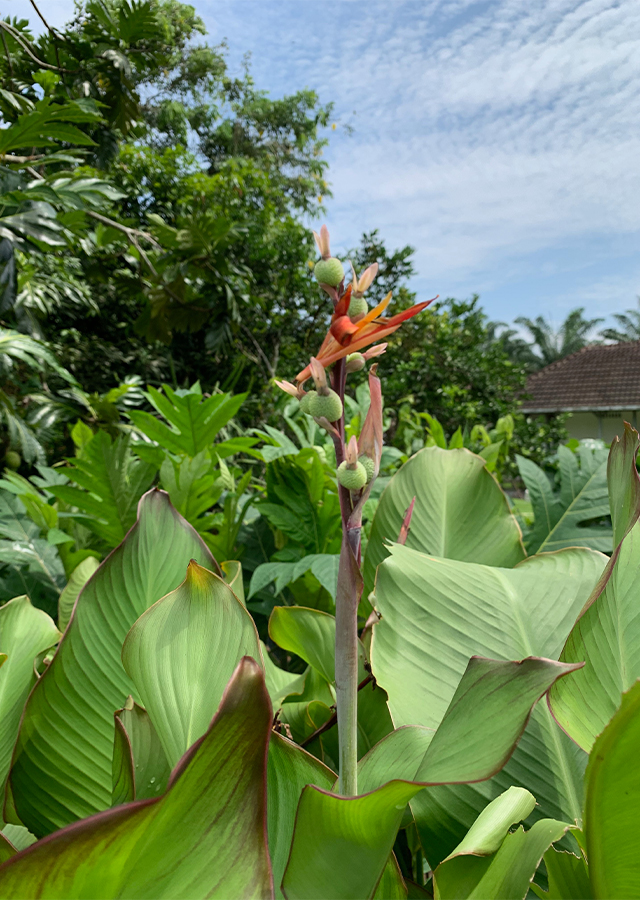
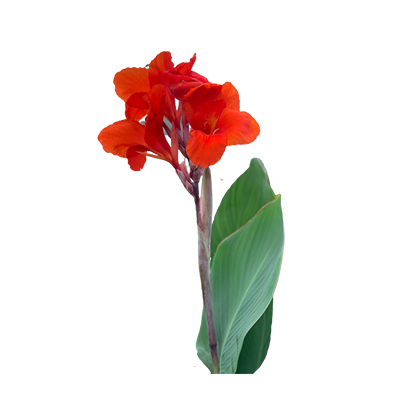
- Flowers - in a lax, terminal raceme that arises from leaf sheath, often in pairs, red, yellow or red and yellow. They have three types of pseudo-petals The petals are reduced to three, narrow, bract-like structure below the pseudo-petals, 4–6.5 cm long, 0.4– 0.7 cm wide.
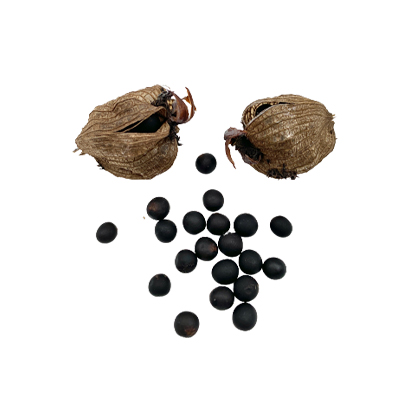
- Seeds - round to ovoid, shiny, and black 5–8 mm × 4–7 mm.
Cultivation
- It can be propagated from seed, but to ensure to breed true the use of divisions of division.
- The root clump as the plant comes into growth should be preferred. Each portion must have at least one growing point.
Chemical Constituents
2-terpene, 4-coumarin, alkaloids, flavonoids, tannins, sterols, terpenoids, cardiac glycoside, steroids, saponins, phlobatanins, lutein, cyanidin.
Traditional Medicinal Uses
- Antioxidant, anti-inflammatory, treatment of parasites, antimicrobial, inhibits sensation of pain, antiviral, anti-cancer, protection of liver, molluscidal, antimalarial.
- A decoction of the root with fermented rice has been used in the treatment of gonorrhoea and amenorrhoea.
- The dried flowers have been used in a decoction to stop external wound bleeding. The root is given as a demulcent and stimulant and used as a diaphoretic and diuretic in fevers and dropsy.
- In Kampuchea, leaf bases are medicinally used for furuncles, syphilis.
- In Java, the seeds were pounded into a paste for poulticing headache, and extract of the rhizome used as therapy for diarrhoea.
- In India, the rhizomes are diuretic, diaphoretic, stimulant and demulcent; a decoction of the rhizomes has been used in fevers, dropsy and dyspepsia.
- In the Philippines, the rhizome in decoction was used as a diuretic, and, when macerated in water, is said to relieve nose- bleed.
Part Used
Reference Sources
- Fern, Ken. (2019). Useful tropical plants. Canna indica, http://tropical.theferns.info/viewtropical.php?id=Canna+indica. 16-01-2021
- Lim, T K . (2016). Edible Medicinal and Non Medicinal Plants Volume 10, Modified Stems, Roots, Bulbs, p69. 16-01-2021
- StuartXchange. (2020). Philippine Medicinal Plants. Canna indica. http://www.stuartxchange.org/Tikas.html. 16-01-2021